Why Dental Disease Is So Common in Dogs
Periodontal disease — infection and inflammation of the structures supporting the teeth — is considered one of the most prevalent health conditions in domestic dogs. Veterinary organizations estimate that the majority of dogs show early signs of it by age three. Despite this, dental care remains one of the most frequently skipped elements of routine dog ownership.
Part of the problem is visibility. Unlike a limp or a skin rash, oral disease often develops out of sight and progresses slowly. Dogs also don't complain about tooth pain the way people do — they tend to continue eating and behaving normally even when their mouths are in significant discomfort. That stoic quality, while admirable, means problems tend to be caught late. This pattern mirrors the broader issue of preventive care gaps that quietly accumulate over time.
~80%
Dogs with periodontal disease by age 3
According to the American Veterinary Medical Association, most dogs show early signs of dental disease by their third year of life.
#1
Most diagnosed condition in dogs overall
Periodontal disease is consistently cited by veterinary organizations as the most common clinical finding in adult dog exams.
Daily
Recommended brushing frequency
Veterinary dental specialists recommend daily brushing as the gold standard for controlling plaque before it hardens into tartar.
What's Actually Happening in Your Dog's Mouth
After a dog eats, bacteria in the mouth form a sticky film on tooth surfaces called plaque. If not removed within a day or two, plaque mineralizes into tartar (also called calculus) — a hard, yellowish-brown deposit that can't be brushed away and requires professional scaling. Tartar buildup pushes bacteria below the gumline, triggering inflammation (gingivitis) and eventually destroying the bone and ligaments that anchor teeth (periodontitis).
What makes this more than a mouth problem is what happens when bacterial toxins enter the bloodstream. Research has linked chronic oral infections in dogs to changes in kidney, liver, and heart tissue. While the exact mechanisms are still being studied, veterinarians generally treat dental disease as a whole-body health concern, not just a cosmetic one.
Diet plays a role here too. The texture of what your dog eats affects plaque accumulation. For more on how food choices intersect with oral health, see our guide to wet food vs. dry kibble.
Signs of Dental Problems Owners Often Miss
Bad breath is the most recognizable signal, but it's far from the only one. Dogs with dental disease may show:
- Reluctance to chew on one side of the mouth, or dropping food while eating
- Pawing at the face or rubbing the muzzle along furniture
- Visible brown or yellow buildup along the gumline, especially on back teeth
- Red, swollen, or receding gums
- Loose or missing teeth in adult dogs
- Decreased interest in chew toys they previously enjoyed
Many of these overlap with other conditions, so a veterinary exam is the only way to confirm what's going on. Because dogs rarely cry out in pain, subtle behavioral shifts are often the only clue available — something explored in detail in our article on signs of pain in dogs that owners frequently overlook.
Don't Dismiss Bad Breath as Normal
A mild "dog breath" odor can be normal, but strong, persistent, or foul-smelling breath is usually a sign of active oral disease — not just what dogs smell like. If your dog's breath has changed noticeably or is consistently offensive, schedule a veterinary dental exam rather than waiting for the next routine visit.
At-Home Care: What Makes a Real Difference
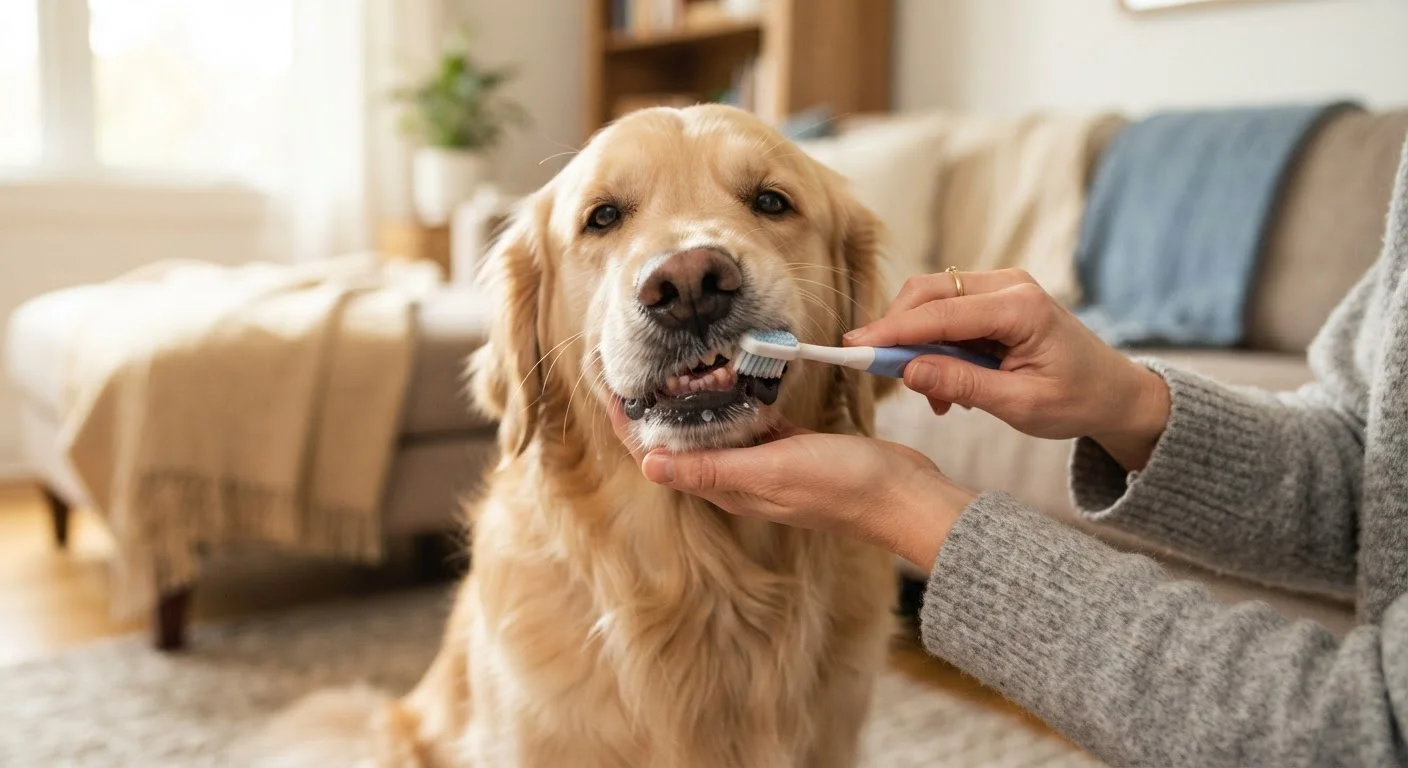
Daily tooth brushing with a toothpaste formulated for dogs is consistently cited by veterinary dentists as the most effective at-home intervention. Human toothpaste contains fluoride and foaming agents that are unsafe for dogs — only use veterinary-approved products. Finger brushes or soft-bristled pet toothbrushes both work; the key is reaching the outer surfaces of the upper back teeth, where tartar accumulates fastest.
Building a brushing habit takes patience. Start by letting your dog taste the toothpaste, then gradually introduce the brush over several sessions. Aim for daily brushing, but even three to four times per week provides meaningful benefit compared to no brushing at all.
When introducing brushing, focus on the outer surfaces of the upper canine and back teeth first — these are where tartar accumulates fastest and where your effort has the biggest payoff.
The upper cheek teeth (premolars and molars) are the most common sites for significant tartar buildup, largely because the parotid salivary gland empties near them, accelerating mineral deposits.
Look for the VOHC (Veterinary Oral Health Council) seal on any dental chew or product — it's the most reliable indicator that a product has been independently tested for effectiveness.
Many dental chews make vague marketing claims without supporting evidence. The VOHC seal means the product met specific plaque or tartar reduction benchmarks in controlled trials.
Beyond brushing, there are supplemental tools worth discussing with your vet:
- Dental chews bearing the Veterinary Oral Health Council (VOHC) seal have met evidence standards for plaque or tartar reduction.
- Water additives and dental gels may support oral hygiene when brushing isn't possible, though they're less effective as standalone approaches.
- Raw or dental-formula kibble may provide some mechanical cleaning, though no food fully replaces brushing.
Professional Cleanings: What to Expect
A professional veterinary dental cleaning — called a prophylaxis — involves scaling tartar above and below the gumline, polishing tooth surfaces, probing for periodontal pockets, and taking dental X-rays to evaluate roots and bone. This cannot be safely or thoroughly performed on an awake dog, which is why general anesthesia is required.
Anesthesia-free dental cleanings are marketed by some groomers and pet spas, but they are not recognized as adequate care by veterinary dental organizations. Scraping visible tartar without subgingival (below-gumline) cleaning leaves the most harmful disease untreated and creates a false sense of security.
Anesthesia-Free Cleanings Are Not Adequate Care
Cosmetic tartar removal performed without anesthesia cannot address disease below the gumline, where the most serious damage occurs. The American Veterinary Dental College explicitly states that anesthesia-free dental procedures are inadequate and potentially harmful. If cost is a concern, speak with your vet about payment options or scheduling — but don't substitute a non-anesthetic cleaning for a proper prophylaxis.
How often a dog needs professional cleaning varies based on breed, size, age, and home care consistency. Small and toy breeds tend to develop dental disease more rapidly. Your veterinarian will recommend a cleaning schedule based on your dog's individual exam findings — typically once a year for most adult dogs, but sometimes more frequently.
Dental Health Across Life Stages
Dental care needs shift as dogs age:
- Puppies (under 1 year)
- Focus on establishing habits. Introduce mouth handling and brushing early, before adult teeth fully erupt. Puppies lose their baby teeth between 3 and 6 months — retained puppy teeth may need veterinary removal to prevent crowding.
- Adult dogs (1–7 years)
- This is when consistent at-home brushing pays the greatest dividends. Annual dental exams allow your vet to catch early-stage gingivitis before it progresses.
- Senior dogs (7+ years)
- Older dogs are more likely to have advanced periodontal disease, tooth root abscesses, or oral tumors. Pre-anesthetic bloodwork becomes especially important before any cleaning. Pain from untreated dental disease in seniors can significantly affect quality of life and appetite.
Dental care fits within a broader picture of routine veterinary prevention. Keeping up with annual exams and core vaccinations as part of your dog's regular visits makes it easier to catch oral changes early. Good dental health isn't a separate concern — it's part of how you keep your dog comfortable and healthy throughout their life.
This article is for general informational purposes only and is not a substitute for professional veterinary advice. Always consult your veterinarian regarding your dog's specific health needs.