
What the Research Actually Says
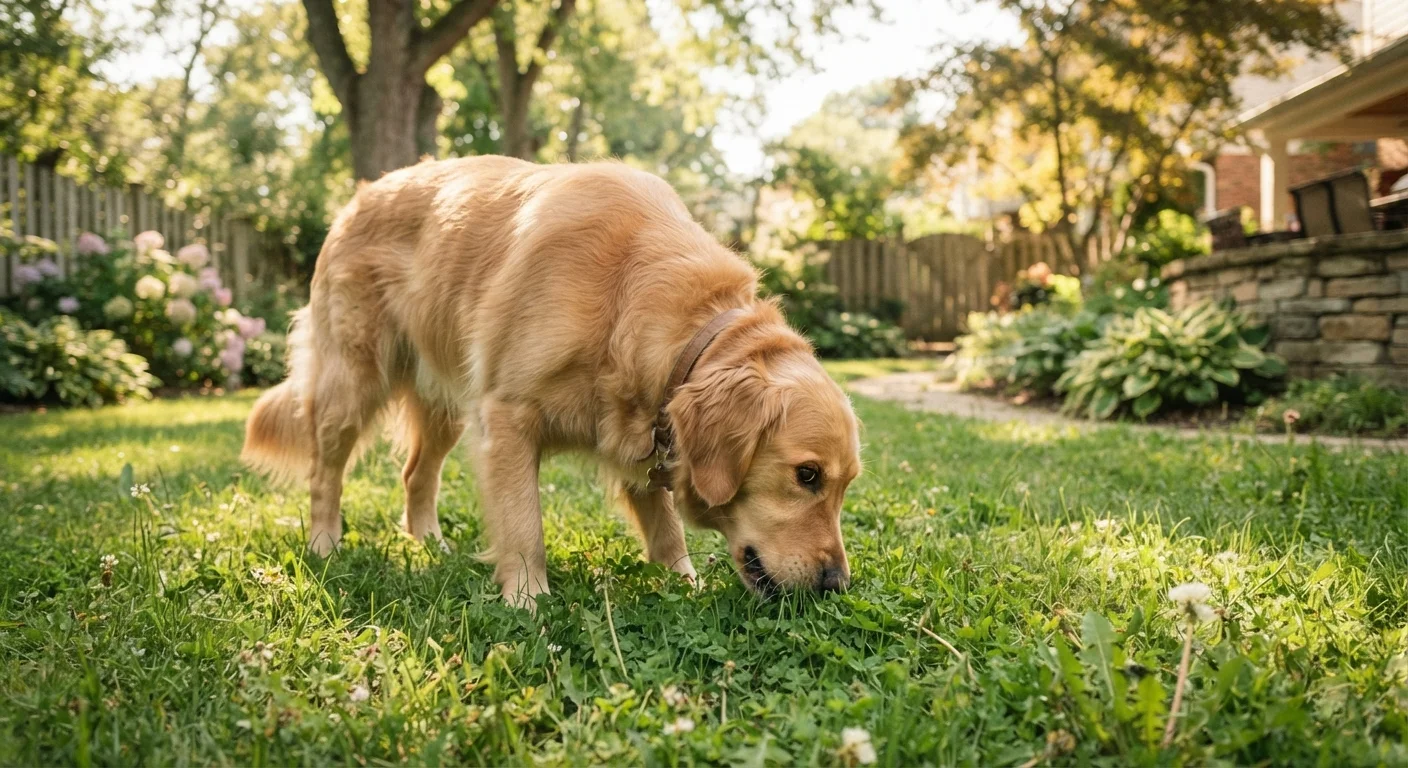
If you've watched your dog deliberately work their way across a patch of lawn, you're far from alone. Grass-eating is one of the most commonly reported dog behaviors in veterinary practice, yet it remains genuinely poorly understood. Several competing theories exist, and the honest answer is that no single explanation fits every dog.
One widely cited survey published in a veterinary journal found that grass-eating was reported in the majority of dogs studied — and that most owners described it as frequent. Critically, fewer than 25% of those dogs vomited afterward, and fewer than 10% appeared ill before eating grass. This finding challenges the popular assumption that dogs eat grass specifically to make themselves vomit.
~79%
Dog owners who report their dog eats plants
A survey published in Applied Animal Behaviour Science found plant-eating was common across dog populations, with grass being the most frequently consumed plant.
<25%
Dogs that vomit after eating grass
The same research indicated that vomiting after grass consumption is the exception, not the rule, contradicting the widespread belief that dogs eat grass to induce vomiting.
For a broader look at unusual dog behaviors and what drives them, see our guide to puzzling dog behaviors decoded.
The Leading Theories Behind the Behavior
Veterinary researchers and animal behaviorists have put forward several explanations, none of which is conclusive on its own:
- Instinct and ancestry: Wild canids have been observed consuming plant material, including the stomach contents of prey. Some researchers suggest domestic dogs retain this ancestral tendency.
- Fiber and digestive regulation: Grass adds roughage to the gut. Some dogs may eat more grass when their diet is lower in fiber, though this isn't proven universally.
- Boredom or enrichment-seeking: Dogs left understimulated outdoors may graze simply because it's something to do. This is especially plausible in dogs with limited exercise or mental engagement.
- Taste and texture: Some dogs simply appear to enjoy the taste of fresh grass, particularly in spring when it's young and tender.
Try Increasing Enrichment First
If your dog's grass-eating seems linked to boredom — especially during low-activity periods outdoors — increasing exercise, play, and mental stimulation may reduce the behavior naturally. Puzzle feeders, training sessions, and structured outdoor activities are all worth trying before assuming a medical cause.
If diet plays a role for your dog, it's worth a conversation with your vet. Our article on how to think about your dog's diet covers the key trade-offs in dog food formats.
When Grass-Eating Actually Warrants Concern
Most grass-eating is benign, but there are specific circumstances where it signals something worth investigating.
Watch for these red flags:
- Repeated vomiting after eating grass — not just once, but consistently
- Compulsive, frantic eating of grass that seems driven by distress
- Accompanying symptoms: lethargy, loss of appetite, diarrhea, or bloating
- Possible exposure to lawns treated with pesticides, herbicides, or fertilizers
Subtle discomfort in dogs doesn't always look the way owners expect. For a broader picture, see signs of pain in dogs that owners frequently overlook.
Not All Grass Is the Same Risk
The primary danger with grass-eating isn't the grass itself — it's what may be on it. Many residential and public lawns are treated with fertilizers, herbicides, or insecticides that are harmful to dogs. If your dog grazes regularly, keeping them to untreated areas you control is a practical precaution.
This article is for general informational purposes only and is not a substitute for veterinary advice. If you have concerns about your dog's health or behavior, consult a licensed veterinarian.