
What Thumping Actually Means
When a rabbit slams one or both hind feet against the ground, it's called a thump — and it's one of the most deliberate signals in a rabbit's communication repertoire. In the wild, rabbits use this behavior to warn others in their group about a potential predator. Your pet rabbit retains this instinct fully intact.
Common triggers include:
- Loud, sudden noises (thunder, fireworks, a slamming door)
- The scent or sight of a predator animal, even through a window
- Unfamiliar people or objects introduced to their space
- Feeling startled while sleeping or resting
Occasional thumping is normal. If your rabbit thumps persistently or seems unable to settle, look for ongoing stressors in the environment — another pet's proximity, consistent noise, or an enclosure that doesn't give them a sense of security. See our complete guide to rabbit care setup for housing tips that support calmer behavior.
Reduce Thumping With Environmental Calm
If your rabbit thumps frequently, check whether their enclosure is near a TV, speaker, or exterior wall where traffic noise carries. Moving the setup to a quieter area of your home and providing a covered hide box inside the enclosure gives rabbits a tangible sense of safety and can significantly reduce stress-related thumping.
Binkying: The Language of Joy
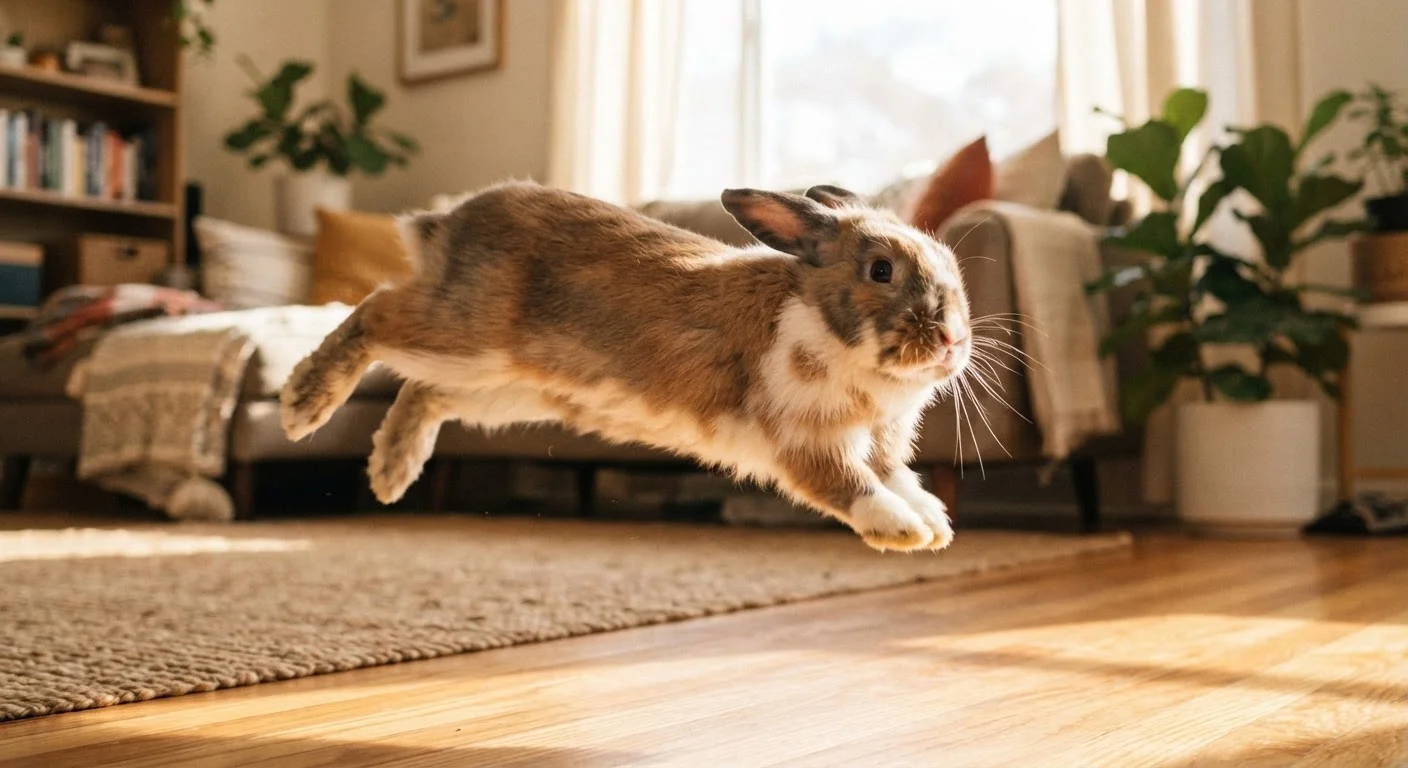
If you've never seen a binky, it's unmistakable — the rabbit launches into the air and twists or kicks its body mid-flight, sometimes changing direction entirely when it lands. It looks chaotic, but it means one very specific thing: your rabbit is genuinely happy.
Binkies typically happen during free-roam time, after a favorite food, or when a rabbit is excited to see someone they trust. Unlike most behaviors, binkies aren't driven by need or alarm — they're purely expressive. A rabbit that binkies regularly is well-socialized, feels safe, and has adequate space and enrichment.
Half binkies — a quick head flick or ear twist without a full leap — carry the same meaning in a smaller package. Both are worth celebrating as signs of a thriving rabbit.
~4 hrs
Minimum daily free-roam time rabbits need
Rabbit welfare organizations generally recommend at least 3–4 hours of supervised exercise outside an enclosure daily to support physical and behavioral health.
Prey animal
Rabbits' evolutionary status affecting behavior
Because rabbits evolved as prey, they instinctively hide signs of weakness — making behavioral observation especially important for catching early health changes.
Hiding: Normal or Worrying?
Rabbits are prey animals, and having a private retreat space is a fundamental psychological need, not a behavioral problem. A rabbit that regularly retreats to a hide box or behind furniture for rest is doing exactly what comes naturally to them.
The line between healthy hiding and a health concern is drawn by change and duration:
- Normal hiding: The rabbit retreats, rests, then re-emerges alert and hungry on their regular schedule.
- Concerning hiding: The rabbit stays hidden for prolonged periods, skips meals, resists gentle interaction, or shows a slumped or hunched posture while hiding.
Rabbits are famously skilled at masking illness — a trait that served them well as wild prey animals. By the time a rabbit's hiding becomes obvious, they may have been unwell for longer than it appears. If you notice a cluster of changes (hiding plus reduced droppings plus loss of appetite), treat it as urgent. Learn which signs warrant a prompt vet visit for small pets.
Other Body Language Worth Knowing
Thumping, binkying, and hiding are the most dramatic signals, but rabbit communication is rich with subtler cues:
- Loafing
- A rabbit sitting with feet tucked fully under their body is relaxed. This compact position means they're comfortable but not in deep sleep.
- Flopping
- A sudden dramatic collapse onto one side startles many new owners, but it signals complete contentment. Confirm the rabbit is breathing normally and otherwise acting fine — it's almost always a happy flop.
- Grooming you
- If your rabbit licks your hand or arm, this is an affectionate bonding gesture. It's how rabbits groom companions they trust.
- Chinning objects
- Rabbits have scent glands under their chin. Rubbing their chin on furniture, food bowls, or even you is territorial marking — normal and harmless.
- Tooth grinding
- Soft, rhythmic tooth grinding (sometimes called purring) signals relaxation. Loud, grating tooth grinding can indicate pain and warrants veterinary attention. Consult this reference for recognizing illness signs in small pets.
Every Rabbit Has a Personality
Individual rabbits vary considerably in how expressive they are. Some binky daily; others rarely do even when healthy and happy. The goal isn't to hit a behavioral checklist — it's to understand your specific rabbit's baseline so that any meaningful change stands out. Getting to know your rabbit's normal routine is one of the most useful things a new owner can do.
This article is for general informational purposes and does not constitute veterinary advice. Always consult a qualified veterinarian if you have concerns about your rabbit's health or behavior.