
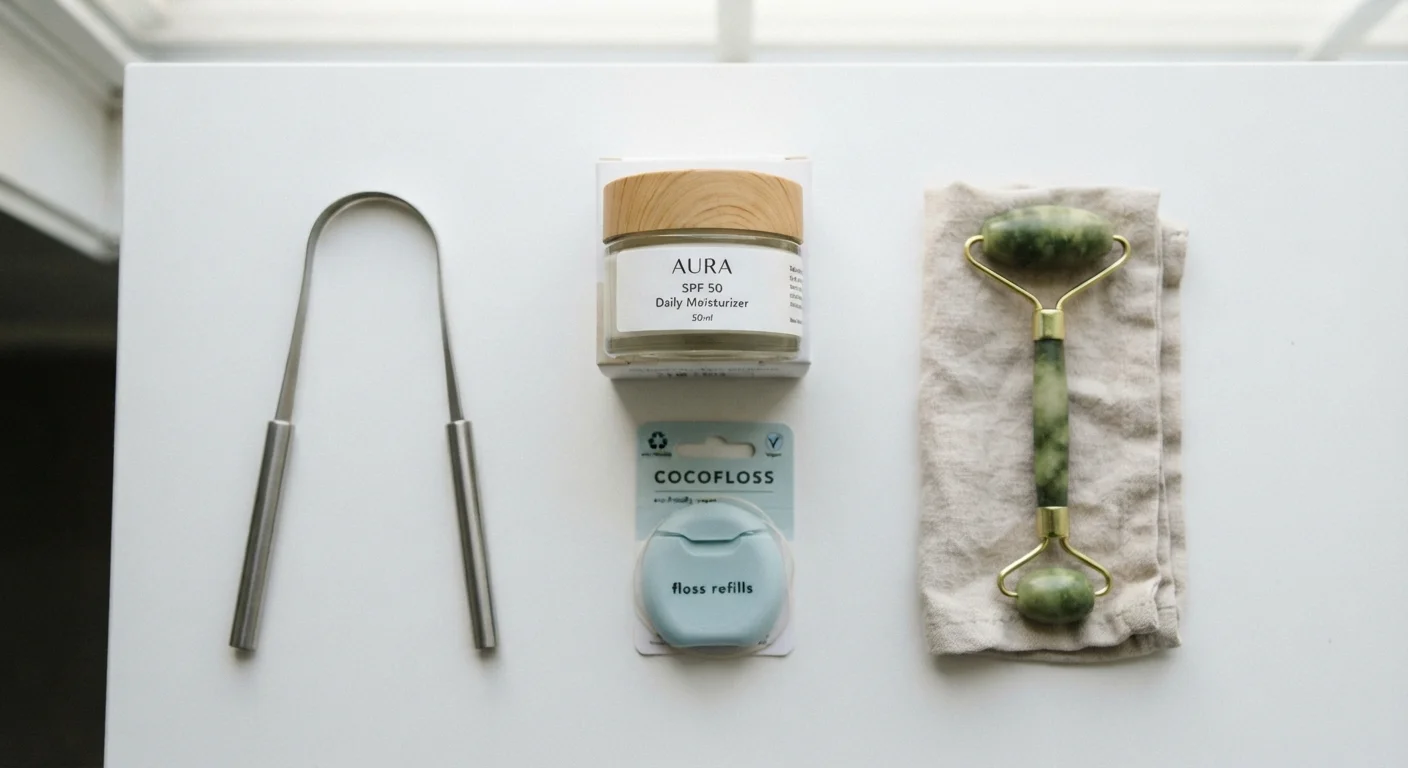
The Gaps in Our Routines Most of Us Don't Notice
Most people have a personal care routine — shower, brush teeth, maybe moisturize. But between the well-worn steps, there are a handful of habits that quietly fall through the cracks. Some feel like extras; others just never made it onto the list. The thing is, several of them have surprisingly strong cases for inclusion.
This isn't about overhauling your morning or stacking seventeen new steps. It's about identifying the overlooked practices that deliver real return on minimal time investment. Whether your routine is already stripped back or fairly involved, there's likely at least one habit here worth adding.
These Habits Aren't Medical Treatments
The practices covered here are general personal care habits, not medical treatments or substitutes for professional care. Everyone's skin, oral health, and body are different. If you have specific health concerns — persistent skin issues, oral pain, scalp conditions — a qualified healthcare provider or specialist is the right point of contact.
This article is for general informational and educational purposes only. It is not medical advice. For any personal health concerns, please consult a qualified healthcare professional.
Habits Worth Picking Up
Apply SPF Every Single Day
UV exposure occurs year-round, even on overcast days and through windows — which means skin can accumulate damage on days that don't feel sunny at all. Daily SPF use is one of the most consistently recommended skin-protective habits among dermatologists, and it applies across all skin tones. Darker skin tones are not immune to UV damage or the long-term effects of unprotected sun exposure.
The gap most people have isn't awareness that sunscreen exists — it's the daily application habit. Learn more about how UV exposure works and where people typically miss when applying. For broader skin health habits, year-round skin health guidance is a useful companion read.
UV exposure accumulates year-round, making daily SPF one of the most impactful skin habits available.
Scrape Your Tongue in the Morning
Tongue scraping has roots in Ayurvedic practice but has attracted genuine interest from oral health researchers for its role in reducing bacteria that contribute to bad breath. A soft coating can build up on the tongue overnight, and brushing alone doesn't remove it as effectively as a dedicated scraper.
The habit takes about 15 seconds and is widely considered safe for most adults. It's a small add-on to your brushing routine that addresses an area most toothbrushes can't reach effectively. If you have any oral health conditions, checking with your dentist before adding new tools is always a reasonable step.
Tongue scraping takes 15 seconds and targets oral bacteria that brushing alone can miss.
Floss — or Use an Interdental Tool — Daily
Flossing is one of the most recommended habits in dentistry, and also one of the most skipped. The spaces between teeth are real zones of bacterial buildup that a toothbrush bristle simply can't reach. Interdental brushes and water flossers are effective alternatives for people who find string floss difficult to use consistently.
The specific tool matters less than the consistency. Building the habit around an existing anchor — like brushing before bed — tends to improve follow-through more reliably than treating it as a separate step.
The tool you use matters far less than making interdental cleaning a consistent daily habit.
Pay Attention to Your Scalp
Scalp care is the quiet gap in most hair routines. The scalp is skin — it can become dry, oily, or irritated — and what happens at the root affects the health of the hair shaft that grows from it. Yet most people only address the scalp when something goes noticeably wrong, like flaking or itching.
Gentle scalp massage during washing can support circulation, and ensuring you rinse shampoo fully is a basic step many people rush. If you're noticing persistent scalp issues, a dermatologist or trichologist is the right person to consult rather than self-diagnosing.
The scalp is skin — neglecting it is one of the most common oversights in hair care routines.
Moisturize Your Body, Not Just Your Face
Facial moisturizing tends to get all the attention, while the rest of the body is often treated as an afterthought. Applying a basic moisturizer to damp skin after showering can support the skin barrier across the whole body — particularly in dry climates or during winter months when indoor heating strips moisture from the air.
This habit connects directly to sustainable preventive care habits — it's low-effort, takes about 60 seconds, and pays dividends in skin comfort over time. Elbows, heels, and shins tend to be the areas that dry out fastest and benefit most.
Moisturizing damp skin post-shower supports the skin barrier across the entire body, not just the face.
Wash Your Hands at the Right Moments
Handwashing is well-understood as a health habit, but it's the timing that most people get inconsistent with. Before eating, after using your phone in public, after touching your face repeatedly — these moments add up to meaningful exposure risk that soap and water can significantly reduce.
The preventive care perspective on handwashing is clear: it's one of the most evidence-backed ways to reduce transmission of common pathogens. Twenty seconds with soap — including between fingers and under nails — is the standard recommendation from public health bodies.
Handwashing is proven, but timing it correctly around key daily moments is where most people fall short.
Habit Stacking Makes It Easier
If you're trying to add a new habit, attaching it to something you already do consistently tends to make it stick faster. Tongue scraping right after brushing, body moisturizer immediately post-shower, or flossing while watching a TV show in the evening are all low-friction approaches. Small anchors make the difference between a habit that holds and one that fades after a week.
Start Small, Stay Consistent
None of these habits requires a significant time commitment or a complete routine overhaul. The challenge is usually awareness — once you know the gap exists, it's much easier to fill it. If you're looking to go deeper on how daily habits connect to broader wellness, the research on consistent everyday habits is worth exploring.
Personal care isn't one-size-fits-all, and building habits that actually stick means choosing ones that genuinely fit your life. Think of this list as a menu, not a mandate — pick one or two to try and see what resonates.