Why Secondhand Clothing Has Gone Mainstream
Thrift stores have been around for decades, but the secondhand clothing market has expanded dramatically with the rise of resale apps and consignment platforms. What was once seen as a niche budget move is now a common strategy for shoppers across all income levels. Whether you're looking to stretch your clothing budget, find unique vintage pieces, or simply reduce waste, secondhand shopping has real appeal.
That said, it's not a frictionless experience. Each channel — thrift stores, online resale platforms, and consignment shops — comes with its own set of trade-offs worth understanding before you commit. For a broader look at how this compares to buying new, see our side-by-side breakdown of fast fashion vs. secondhand shopping.
Significantly lower cost than buying new retail
Many secondhand garments sell for a fraction of their original retail price, particularly at thrift stores. This makes it possible to build a varied wardrobe on a tight budget.
Access to discontinued or vintage styles
Secondhand channels are often the only place to find older styles, limited-edition pieces, or garments that are no longer produced. For style-conscious shoppers, this is a genuine advantage.
Reduced environmental impact of clothing consumption
Buying used extends a garment's life cycle and reduces demand for new production. This is widely cited by environmental researchers as a more sustainable consumption pattern, though individual impact varies.
High-quality fabrics available at lower price points
Older garments were frequently made with denser, more durable fabrics. Secondhand shopping can surface well-constructed pieces that would cost significantly more if bought new today.
No pressure sales environment
Thrift stores and consignment shops don't typically employ commission-based salespeople, so browsing is low-pressure and self-directed.
What to Watch Out For
The biggest friction points in secondhand shopping come down to condition, fit, and return limitations. Unlike retail purchases, used garments have a history — and that history isn't always visible at a glance.
Condition is not guaranteed and varies widely
Even items listed as 'good condition' may have hidden flaws — stretched fabric, invisible staining, or subtle odors that aren't apparent until you inspect closely. Careful in-person or photo review is essential.
Return policies are often final-sale or nonexistent
Most thrift stores and peer-to-peer resale platforms do not accept returns. If an item doesn't fit or has a flaw you missed, you may have no recourse beyond reselling it yourself.
Sizing inconsistency requires extra effort
Label sizes in older and vintage clothing frequently don't match current sizing conventions. Shoppers who skip trying items on — especially when buying online — risk significant mismatches.
Time investment can be substantial
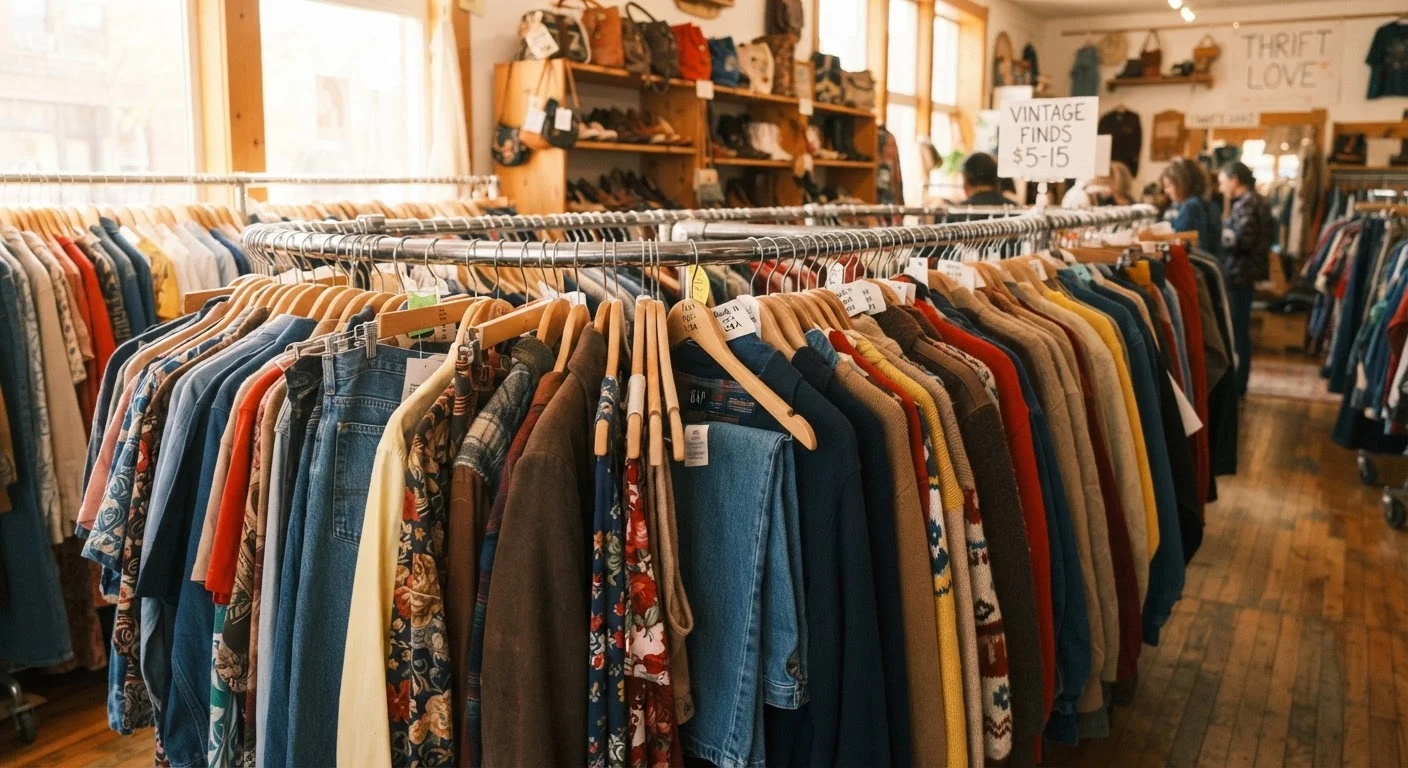
Unlike browsing a curated retail site, thrift stores require sorting through large, unorganized inventory. Finding worthwhile pieces often takes multiple visits and patience.
Online resale relies heavily on seller accuracy
Photos and descriptions on peer-to-peer platforms depend entirely on the seller's honesty and photography skills. Color, texture, and condition can look quite different in person.
Before purchasing any secondhand item, check seams for fraying, test zippers and buttons, look for staining under natural light, and smell the fabric for mustiness that may not wash out. With online purchases, photos can be flattering in ways the actual garment is not. Always read seller descriptions carefully and check feedback ratings. For guidance on what recourse you have if something goes wrong, our article on reading a return policy before you buy is worth a look — especially since final-sale terms are common in secondhand markets.
Shopping by Channel: Thrift Stores, Resale Apps, and Consignment Shops
Each secondhand channel suits different priorities:
- Thrift stores offer the lowest prices and the widest variety, but require the most time. Inventory turns over unpredictably, so repeat visits often yield better finds than a single trip.
- Resale apps (peer-to-peer platforms where individuals list their own items) give you access to a massive, searchable inventory. The downside: you're relying on photos and written descriptions, and shipping adds cost and wait time. Shopping online vs. in-store involves the same photo-accuracy gamble whether the clothing is new or used.
- Consignment shops typically curate their inventory, meaning items have been vetted for condition. Prices are higher than thrift stores, but you'll spend less time sorting through lower-quality pieces.
$351B
Projected global secondhand apparel market value by 2028
According to ThredUp's 2023 Resale Report, the global secondhand apparel market was projected to reach approximately $351 billion by 2028, driven by consumer interest in value and sustainability.
~50%
Share of consumers who have bought secondhand clothing
ThredUp's annual resale reports have consistently found that roughly half of consumers surveyed reported purchasing secondhand clothing at some point.
Natural fibers — wool, denim, linen, and cotton — tend to age better than synthetic blends, making them a smart focus when shopping secondhand.
Building a Secondhand Strategy That Actually Works
Going in without a plan is how secondhand shopping becomes a source of clutter rather than value. A few practical habits make the difference:
- Know your measurements. Vintage and older garments often run small, and sizing labels vary widely by era and origin. Bring a soft tape measure or know your key measurements before shopping.
- Focus on quality fabrics and construction. A well-made secondhand blazer or pair of jeans will outlast a cheaper new alternative.
- Set a purpose before you browse. Buying without a specific wardrobe need in mind is how impulse purchases pile up — even at low prices.
- Budget realistically. Secondhand shopping can meaningfully reduce clothing costs, but it's not free, and the broader habit of mindful spending matters just as much as where you shop.
A Note on Laundering Before Wearing
Regardless of how clean a secondhand garment looks, it's a good habit to wash or dry-clean it before wearing — especially items that have been in storage. Check care labels first, as some fabrics require specific treatment. When in doubt, hand-washing or a gentle cycle with cold water is a safer starting point than high-heat options that can cause shrinkage or damage.