Why This Decision Is More Complicated Than It Looks
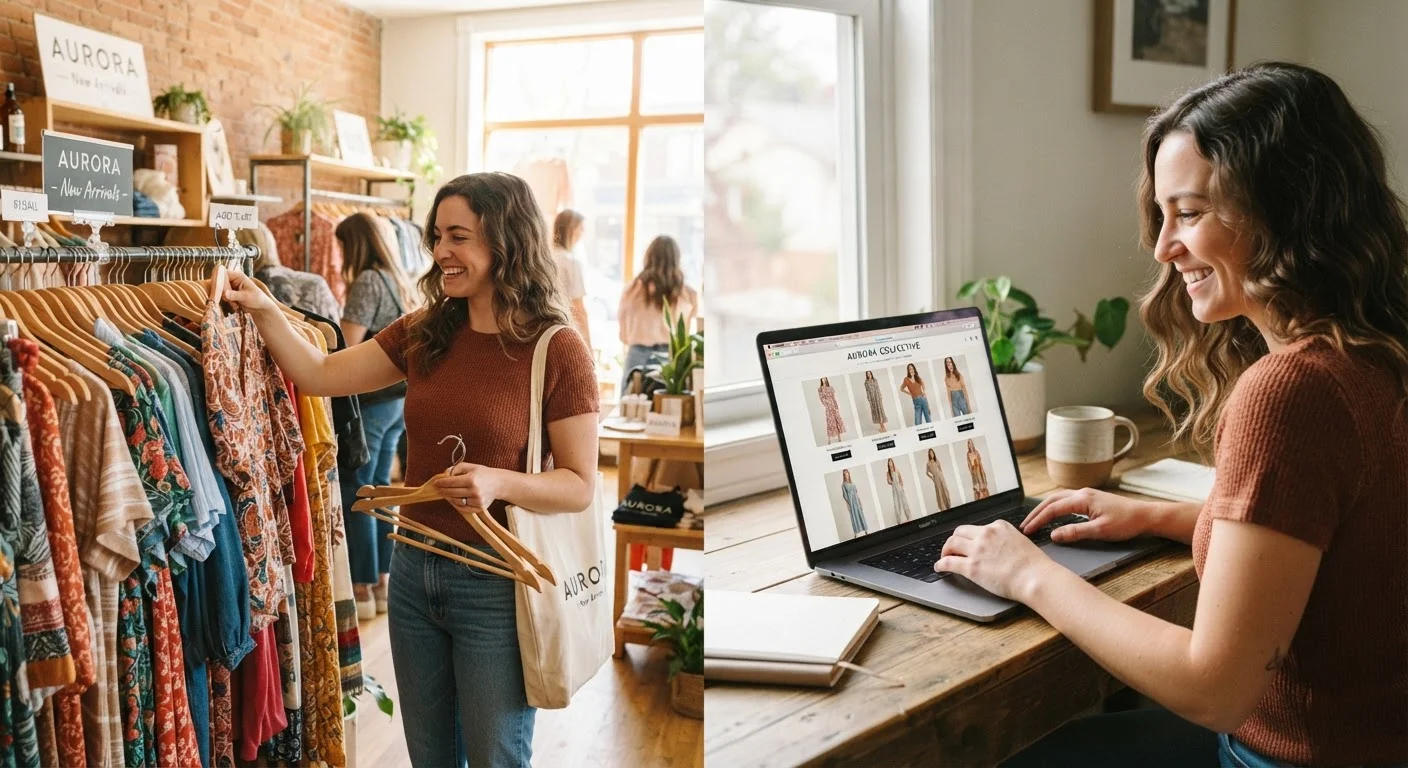
Where you buy clothes shapes far more than just convenience — it affects fit accuracy, impulse spending, environmental impact, and the real cost of returns. With American shoppers spending billions annually across both channels, the stakes for getting this right are genuinely meaningful. Understanding the trade-offs in each format helps you make purchases you'll actually feel good about wearing — and keeping.
For a broader look at how these channels compare across product categories beyond clothing, see what each shopping format does better. This article focuses specifically on the nuances that apply to clothing.
Try before you buy eliminates fit guesswork
Fitting rooms let you evaluate how a garment sits on your actual body, assess comfort, and catch sizing inconsistencies before spending a cent. This dramatically reduces the likelihood of a purchase you'll regret or return.
Accurate color and texture assessment in person
Screen calibration and studio lighting frequently make online product colors appear different from reality. Seeing and touching a garment in store gives you reliable information about what you're actually purchasing.
Online shopping offers a vastly wider selection
Physical stores are limited by floor space and regional inventory decisions. Shopping online gives access to extended sizing, niche styles, and options that simply aren't stocked locally.
Shop at any hour without travel or time investment
Online shopping removes the commute, parking, and store-hours constraints that can make in-store trips impractical for busy schedules. Browsing can happen in whatever time windows you have.
In-store purchases are immediate and certain
You leave with the item in hand — no waiting for shipping, no delivery delays, and no uncertainty about whether what arrives matches what you ordered.
Easy side-by-side comparison online
Comparing styles, reading user reviews across a category, and switching between options is far faster online than walking between stores or racks. This can support more deliberate, informed decisions.
The Real Downsides You Should Know About
Every shopping channel has friction — it's just different friction. Knowing where each format falls short helps you anticipate problems before they cost you time or money.
Online returns are time-consuming and sometimes costly
Returning an online clothing order typically requires repacking, printing labels, and dropping off at a carrier — and some retailers charge restocking fees or deduct return shipping from refunds. The process can take days or weeks to resolve.
In-store selection is often limited by location
What's available in a physical store depends entirely on regional inventory decisions, floor space, and current stock. Extended sizes, less common styles, or seasonal carryovers may simply not be present.
Online garments frequently look different in person
Color shifts, unexpected fabric weight, and construction quality that isn't visible in product photos are among the most common disappointments with online clothing orders. Size charts don't always account for brand-to-brand variation.
In-store shopping takes significant time and energy
Travel, parking, wait times for fitting rooms, and navigating crowded stores add friction that makes in-store shopping genuinely demanding — particularly for people with limited time or mobility.
Online checkout is engineered to encourage overspending
Recommendation algorithms, flash sale notifications, and frictionless checkout are designed to keep sessions going longer and carts fuller. This can make it harder to stick to a planned purchase.
Return policies deserve special attention in either channel. Before you commit to a purchase, it's worth understanding what you're agreeing to. Our guide to reading return policies before you buy breaks down what to look for.
Fit, Fabric, and the Problem With Photos
Fit is the most common reason clothing gets returned, and it's also where the two channels diverge most sharply. In a physical store, you can try something on, feel how the fabric moves, and evaluate the color under realistic lighting before walking out the door. That tactile information is genuinely hard to replicate online.
Size Charts Are a Starting Point, Not a Guarantee
Brand sizing varies significantly — even within the same retailer's product line. A size medium in one cut may fit very differently from a medium in another style made from a different fabric. User reviews that mention fit (e.g., 'runs small,' 'true to size') can be more useful than size charts alone when shopping online. When in doubt, checking a brand's specific fit notes or customer Q&A sections can help narrow down your choice before ordering.
Online product photos are typically taken under studio conditions on specific body types — neither of which reflects how a garment will look on you in natural light. Fabric weight, drape, and texture are invisible in photographs. Even detailed size charts can't account for differences in cut between brands or the way a specific fabric stretches or holds shape over time.
That said, in-store selections are limited to what a particular location stocks — which may not reflect your size range, style preferences, or local availability. Online shopping compensates for that limitation with access to a far wider range of options, including extended sizing that many physical stores don't carry on the floor.
~40%
Online clothing return rate
Industry estimates suggest roughly 40% of clothing purchased online is returned, compared to lower rates for in-store purchases, according to retail research reports.
56%
Shoppers who check sizing varies by brand
Consumer surveys have consistently found that inconsistent sizing across brands is one of the top frustrations reported by online clothing shoppers.
How Each Channel Affects Spending Habits
Both formats create their own spending pressures. In-store shopping can lead to impulsive decisions driven by the physical experience of browsing — touching fabrics, trying on more than you intended, or responding to in-store merchandising designed to encourage add-on purchases. The immediacy of the environment makes it easier to rationalize spending in the moment.
Online shopping shifts that pressure to a different context: infinite scroll, targeted recommendations, and easy one-click checkout remove friction in ways that can make spending feel almost abstract. Sale notifications and curated "you might also like" suggestions are engineered to keep you browsing longer than planned.
Neither channel is inherently more budget-friendly — the difference is where the temptation lives. For context on how clothing sourcing connects to broader spending habits, understanding the hidden costs of fast fashion is a useful companion read. And if you're curious about how secondhand options compare across both channels, see what to know before shopping secondhand.