The Core Difference Between These Two Approaches
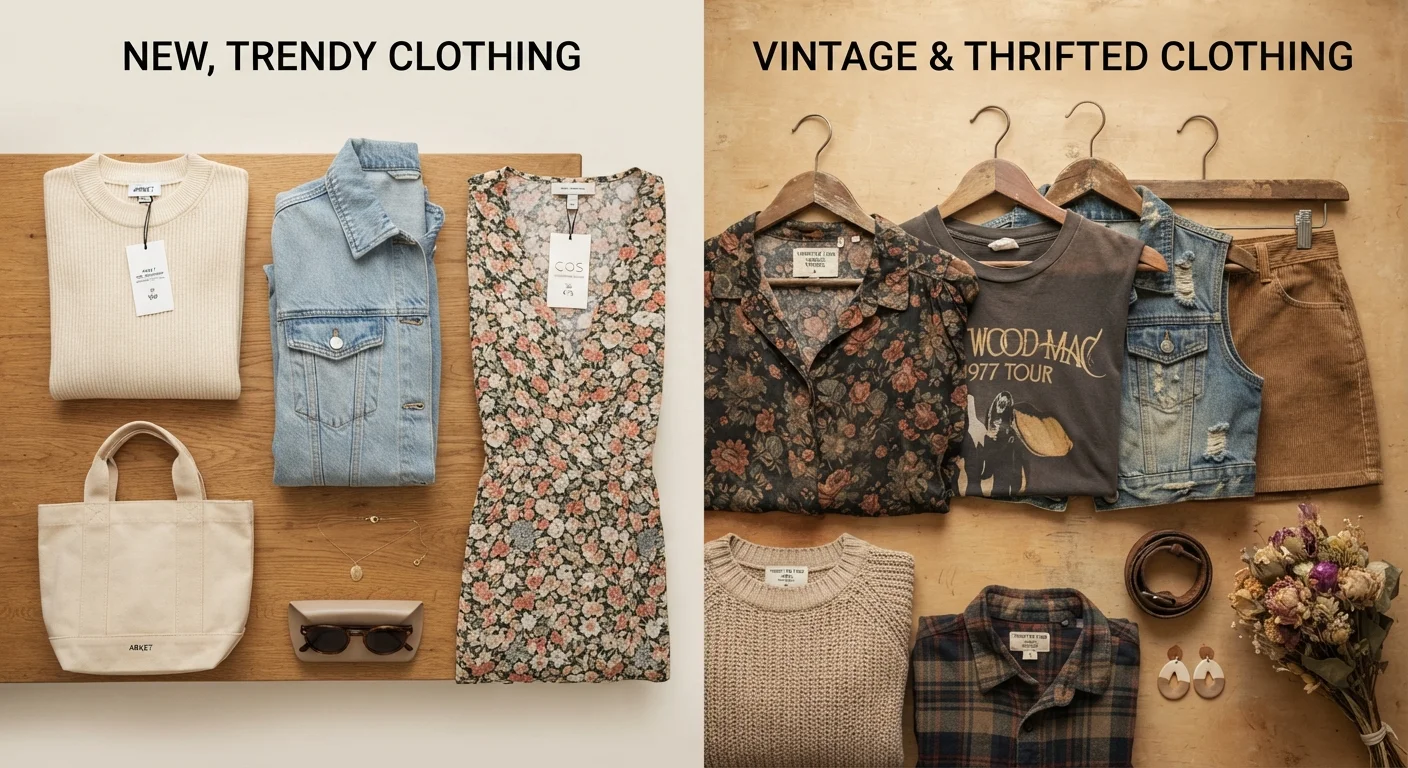
Fast fashion describes a retail model built around rapidly producing high volumes of trend-driven clothing at low price points. Secondhand shopping — whether through thrift stores, consignment shops, or resale apps — means buying clothing that has already had at least one previous owner.
These aren't just different price tiers. They represent genuinely different relationships with clothing: how it's made, how long it lasts, what it costs over time, and what finding it requires from you. Understanding that distinction helps you make choices that actually fit your life — not just your budget. For a broader look at how upfront price compares to long-term cost across everyday purchases, see our guide to durable vs. disposable products.
| Criterion | Fast Fashion | Secondhand Shopping |
|---|---|---|
| Price per item | Low to moderate, consistent | Often lower, but variable |
| Size availability | Predictable, standardized | Inconsistent, hit-or-miss |
| Time to find items | Fast, low effort | Can require significant searching |
| Garment durability | Often lower construction quality | Varies widely; pre-tested by wear |
| Trend availability | High — designed around current trends | Unpredictable; depends on donations |
| Environmental footprint | Higher (new production, fast turnover) | Generally lower (extends garment life) |
| Unique or one-of-a-kind finds | Rare — mass-produced inventory | Common — each piece is individual |
Quality and Durability: What You're Actually Getting
Fast fashion garments are typically engineered for low manufacturing cost, which often — though not always — means lighter fabrics, simpler construction, and shorter expected lifespans. That doesn't mean every fast fashion piece falls apart quickly, but the structural priorities are different from those of higher-end manufacturing.
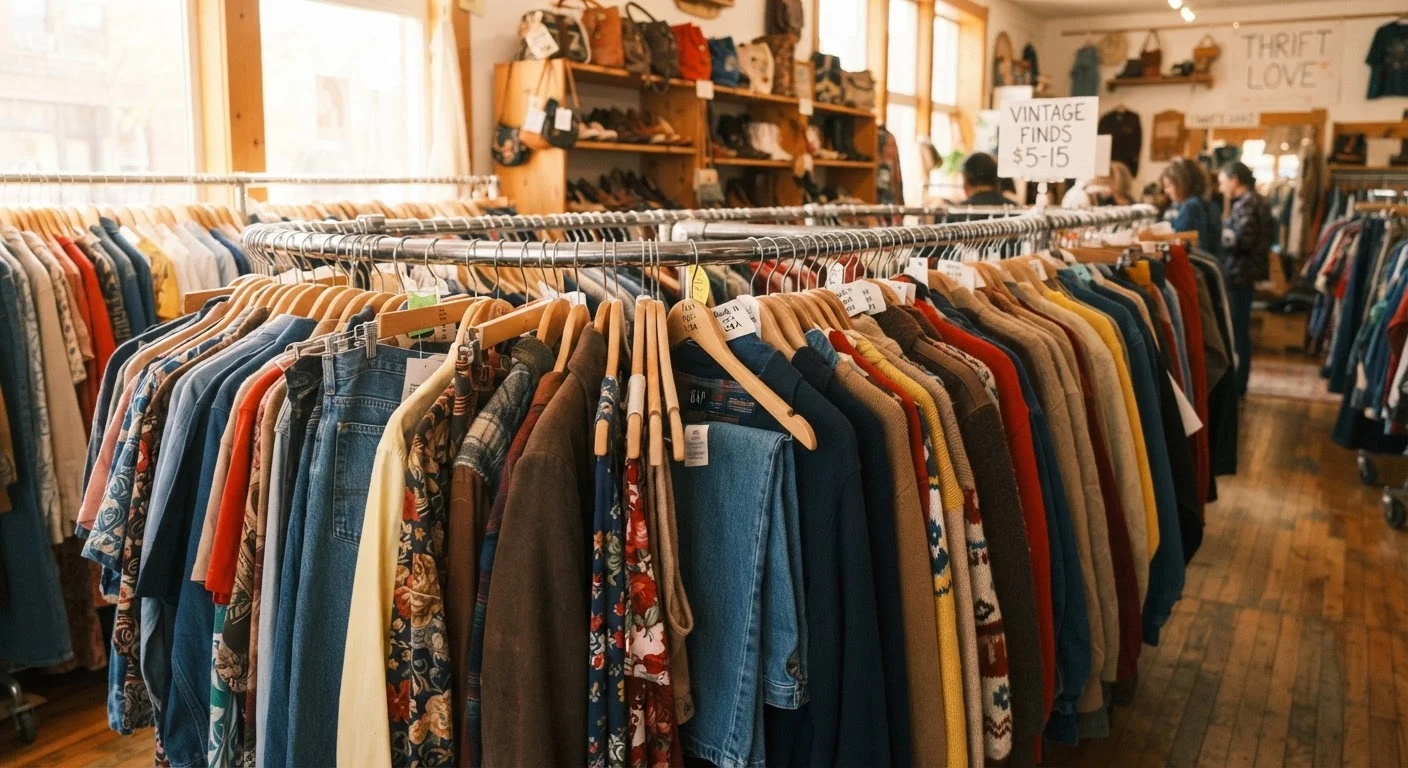
Secondhand items span an enormous quality range. A thrift store rack might hold a barely-worn synthetic blouse alongside a decades-old wool blazer with serious longevity left in it. The key difference is that secondhand garments have already been tested by real-world wear, so visible wear or damage is usually apparent during inspection — what you see is what you get. For a deeper breakdown of what to look for, our article on buying secondhand clothing covers the specifics.
~11M
Tons of textile waste in US landfills annually
The U.S. Environmental Protection Agency has estimated that Americans discard millions of tons of textiles each year, with clothing making up a significant portion.
~$21B
US secondhand apparel market size (estimated)
Industry research from ThredUp's annual resale reports has tracked significant growth in the US secondhand clothing market across both online and offline channels.
3x
Longer average wear per item in higher-quality garments
Research by sustainability groups including the Ellen MacArthur Foundation has suggested that doubling garment use time could meaningfully reduce fashion's environmental footprint.
Cost and Time: The Full Equation
Fast fashion's main appeal is transparent: low prices, predictable availability, and minimal effort to locate what you want. You can often find a complete outfit in one store visit or a single online session. The trade-off is that low per-item cost can encourage more frequent purchasing, which adds up over time — and items that wear out quickly need replacing sooner. Our breakdown of fast fashion's hidden costs explores this pattern in more detail.
Secondhand shopping can deliver meaningful savings per item, but it costs time. Inventory is unpredictable, sizing is inconsistent across eras and brands, and finding something specific may take multiple visits or searches. That time investment is real — it's worth factoring in honestly rather than assuming thrifting is always the more economical choice in practice.
Both channels also exist online now, which changes the effort calculation. Buying clothes online vs. in-store comes with its own set of trade-offs regardless of which shopping approach you favor.
Environmental Impact: What the Evidence Suggests
The fashion industry broadly is a significant source of resource use, water consumption, and textile waste — that's well-documented. Fast fashion's high-volume, low-cost model tends to intensify those effects through rapid production cycles and shorter garment lifespans that contribute to more frequent disposal.
Secondhand shopping extends the usable life of existing garments, which generally reduces demand for new manufacturing. That's a real environmental benefit, though it's not unlimited: shipping purchased through resale apps, packaging, and the frequency of purchases all influence the actual footprint. The environmental picture is genuinely more favorable for secondhand in most direct comparisons, but it's worth being clear-eyed that no clothing purchase is impact-free.
A Note on "Sustainable" Claims
Both fast fashion brands and secondhand platforms have increasingly used sustainability language in their marketing. It's worth reading those claims critically. "Recycled materials" or "conscious collections" from fast fashion retailers don't necessarily offset high production volume. Similarly, secondhand shopping's environmental benefits diminish if it encourages buying more clothing overall. The most reliable sustainability lever, according to most textile researchers, is simply buying and keeping fewer garments for longer.
What Stays the Same Either Way
Regardless of where you shop, a few principles stay constant. Buying less — and wearing what you own more often — tends to reduce both cost and environmental impact more than switching channels alone. Choosing garments that suit your actual lifestyle rather than aspirational scenarios reduces the likelihood that items sit unused. And inspecting what you're buying carefully, whether it's a new piece or a thrifted find, saves headaches later.
If trends factor into your buying decisions, it's worth thinking through which ones genuinely add value to your wardrobe versus which are fleeting. Our framework for evaluating trends can help with that decision regardless of where you're shopping.
Fast fashion and secondhand shopping are tools, not identities. Most people find a mix — using each where it genuinely serves them — works better than committing entirely to one approach.