Why a Framework Beats Gut Instinct
Most households don't struggle with obvious overspending — they struggle with the accumulation of small, seemingly reasonable purchases that collectively strain a budget. A kitchen gadget here, a storage solution there. Each feels justified at the moment. The problem isn't individual decisions; it's the absence of a consistent process for making them.
A practical evaluation framework doesn't slow down shopping — it sharpens it. By running any purchase through the same set of questions, you filter out items that don't hold up to scrutiny, spend more confidently on those that do, and gradually develop better instincts about what actually belongs in your home. For a broader foundation, the Budgeting Basics hub offers grounding strategies that complement this approach.
This Framework Works at Every Budget Level
Whether you're managing a tight household budget or simply trying to spend more intentionally, the same evaluation questions apply. The goal isn't to discourage spending — it's to make purchases that genuinely improve your daily life rather than add to clutter or financial strain. Adjusting thresholds (like how long to wait, or what cost-per-use is acceptable) based on your own circumstances is appropriate.
The Core Evaluation Questions
Before any purchase — regardless of price — run it through these five questions:
Ask whether the item solves a current, specific problem
Purchases driven by vague future utility or optimism about habits you don't yet have tend to sit unused. Tying a purchase to a concrete, present need keeps your home functional rather than cluttered.
Identify where it will live before you buy it
Storage is a finite resource. An item without an immediate, designated home usually ends up on a counter, in a pile, or donated within a year. Space constraints are a real purchase criterion.
Calculate cost-per-use over the expected lifespan
Dividing the purchase price by realistic number of uses reveals the actual value proposition. High cost-per-use on rarely used items is a clear signal to reconsider.
Wait at least 24 hours before purchasing non-essential items
Impulse decisions are driven by novelty and in-the-moment enthusiasm. A brief pause allows initial excitement to settle and gives you time to assess whether the item still makes sense.
Check whether you can borrow, rent, or repurpose something you already own
Many household purchases solve temporary or infrequent needs that don't justify ownership. Borrowing or renting costs less, avoids clutter, and is often the more practical solution.
Understanding True Cost
Sticker price is the starting point, not the whole picture. A cheaper item that needs replacing twice as often isn't necessarily the better value. Similarly, a bulky item that requires reorganizing storage has a real cost in time and space.
~$400
Estimated average annual household spending on unused items
Consumer behavior research consistently finds that a meaningful share of household purchases — particularly in home goods and apparel — go unused or underused within the first year of ownership.
2x
How often low-cost replacements are repurchased vs. durable alternatives
Studies on consumer durables suggest budget-tier items in categories like cleaning tools, cookware, and storage solutions are replaced roughly twice as often as their mid-range counterparts.
Consider what the item will cost over its useful life, including batteries, replacement parts, consumables, or professional maintenance. For some categories, the math clearly favors spending more upfront. Our article on where spending more actually pays off breaks down which household staples tend to earn back their premium price.
Quick Actions You Can Take Before Your Next Purchase
These habits are easy to start immediately and consistently deliver results for shoppers who stick with them.
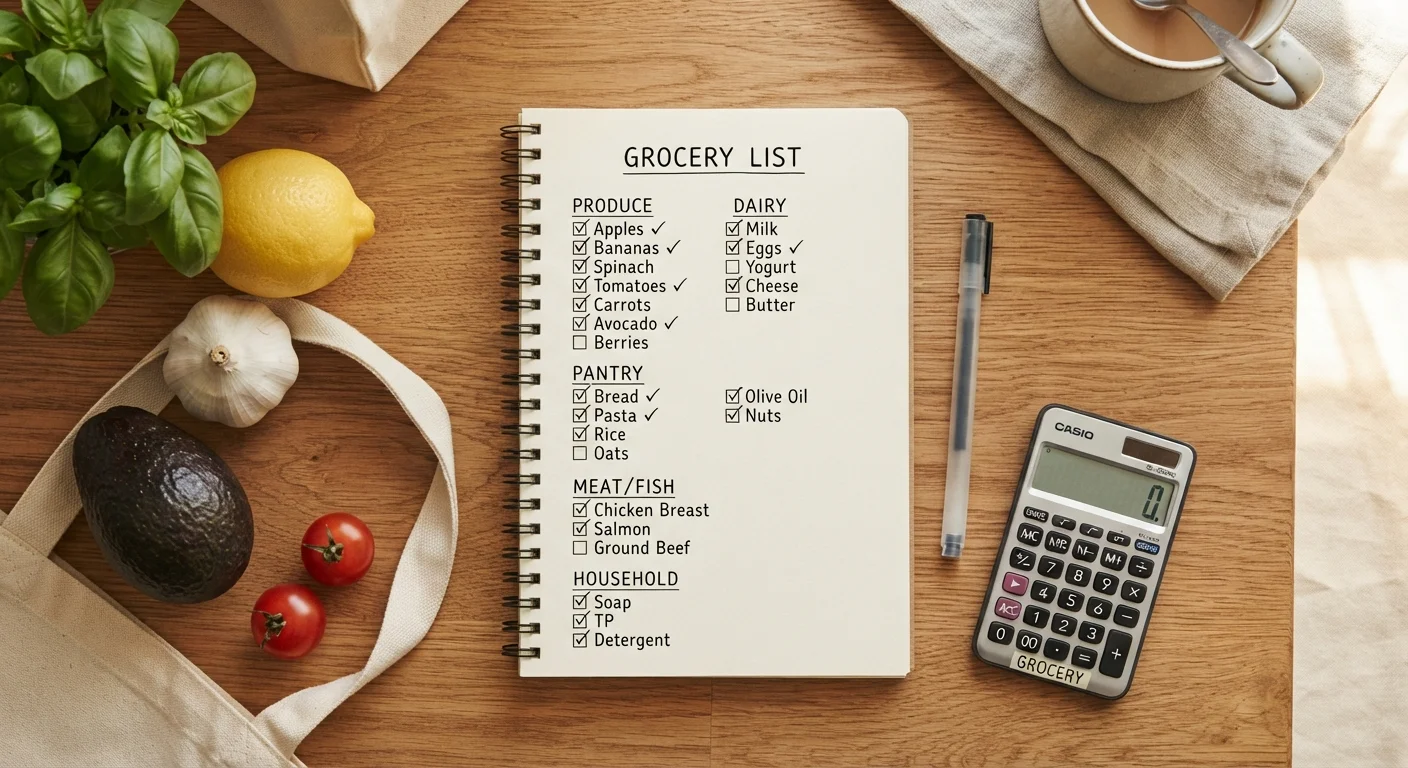
Before shopping, it also helps to know what you already have. A quick home audit prevents duplicate purchases and impulse additions — see our pre-shopping home audit guide for a practical walkthrough. And if list-making is part of your routine, building a shopping list that keeps you on budget covers how to structure it so impulse additions are harder to justify.
Applying the Framework at Any Price Point
The same logic that governs a large appliance purchase applies to a $12 organizer bin. If it doesn't solve a real, current problem — and you don't have a clear place for it — it likely doesn't belong in your cart.
“The most expensive thing you can own is something you don't use. Every unused purchase represents both money spent and the opportunity cost of what you didn't spend it on.”
— Consumer Financial Protection Bureau, U.S. federal agency focused on consumer financial education and protection
For pre-checkout discipline, a structured checklist can reinforce these habits. The pre-purchase checklist for everyday shoppers is a useful companion to this framework, walking through return policies, necessity checks, and other practical filters before you finalize any order.
Used consistently, this framework doesn't just save money — it makes you a more deliberate, less reactive buyer across every category.