What the Shelf Tag Is Actually Telling You
Most shoppers focus on the large number — the total price of the package. But tucked into the shelf label is a second figure that does far more analytical work: the unit price. This number standardizes the cost across package sizes, formats, and brands, giving you a common denominator for comparison.
A 32-oz bottle of dish soap priced at $4.79 and a 20-oz bottle priced at $2.99 look like different purchases entirely. Strip them down to cost per ounce, and the picture shifts. The larger bottle may work out to about $0.15/oz versus $0.15/oz for the smaller — or one may be measurably cheaper. Without that calculation, you're guessing.
For a broader look at how price relates to actual value, see the real difference between price and value in everyday shopping.
~30%
Shoppers who regularly use unit pricing
Research on grocery shopping behavior consistently finds that a minority of consumers actively consult unit prices when making purchase decisions, despite widespread label availability.
2–3 sec
Time to calculate unit price manually
Dividing a total price by package quantity on a phone calculator typically takes only a few seconds — roughly the same time as glancing at a sale tag.
How to Read a Unit Price Label
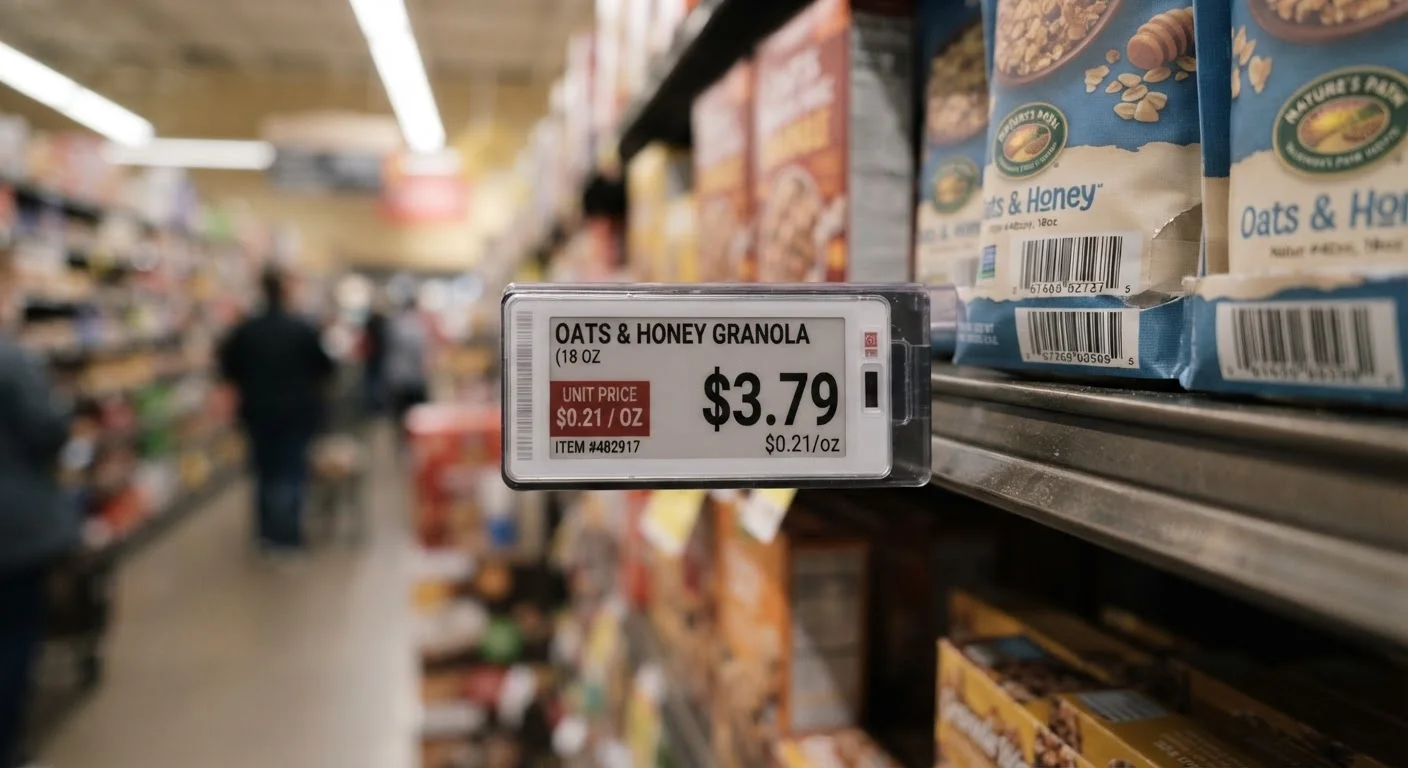
Shelf tags vary by retailer, but unit pricing typically appears in one of two ways: as a small secondary line on the price tag itself, or on a separate label strip below the product. The format usually reads something like $0.18 / oz or $0.04 / sheet.
Three things to confirm before using a unit price for comparison:
- The unit of measure — ounces, count, liters, pounds. Two competing products must share the same unit for the comparison to be valid.
- What's being measured — weight vs. volume can differ for liquids; "per serving" is not the same as "per ounce."
- Whether a sale price is reflected — some retailers update unit prices for promotions; others show the regular unit price even when the shelf tag shows a markdown.
If unit pricing isn't displayed, divide the total price by the number of units (ounces, count, etc.) listed on the package. A basic phone calculator makes this a two-second task.
Make Unit Price Your Default Comparison
Before placing any grocery or household item in your cart, take five seconds to check the unit price rather than the total price. Over a full shopping trip, this habit can meaningfully shift which products you choose — especially across sizes and brands you compare regularly.
When Unit Pricing Changes the Decision
There are several shopping scenarios where unit pricing has the most impact on which choice actually makes sense.
Bulk vs. Standard Sizes
The assumption that bulk is always cheaper is widespread — and frequently wrong. Retailers sometimes price club-size items at a higher unit cost than mid-size packages, particularly for perishables or items with limited shelf stability. Checking unit price before defaulting to the largest size is a habit worth building.
Sale Items
Promotional pricing creates the appearance of value but doesn't always deliver it. A "buy one, get one 50% off" deal may or may not beat the everyday unit price of a competing brand. Unit pricing converts the promotion into a comparable number so you can evaluate it honestly. For more on how sale pricing works, what "sale price" actually means — and when it isn't a deal breaks down the mechanics.
Store Brands vs. Name Brands
Store brands are often lower in unit cost, but not universally. Comparing unit prices between private-label and branded products removes brand bias from the equation and grounds the decision in actual numbers.
Limitations Worth Knowing
Unit pricing is a powerful tool, but it has real constraints. It measures cost efficiency, not overall value. A higher unit price product might still be the right choice based on concentration (a more concentrated cleaner used in smaller amounts), quality, dietary preferences, or shelf life.
Unit pricing also doesn't account for how much of a product you'll actually use before it expires or runs out. Buying 64 oz of a perishable item at a great unit price only saves money if you use all of it.
For context on what shapes retail prices in the first place, what drives retail pricing and why the same item can cost very different amounts offers useful background. And if you're working to apply smarter shopping habits more broadly, the Smart Shopping Tips hub covers a range of practical strategies.
Unit Pricing Laws Vary by State
Not every state requires retailers to display unit prices, and where it is required, the rules about which products must be labeled and which units to use differ. If unit prices aren't shown in your store, you can always calculate them yourself using the package weight or count. Some retailer mobile apps and loyalty platforms also display unit pricing in their digital shelf views.