How 'Sale Price' Is Constructed
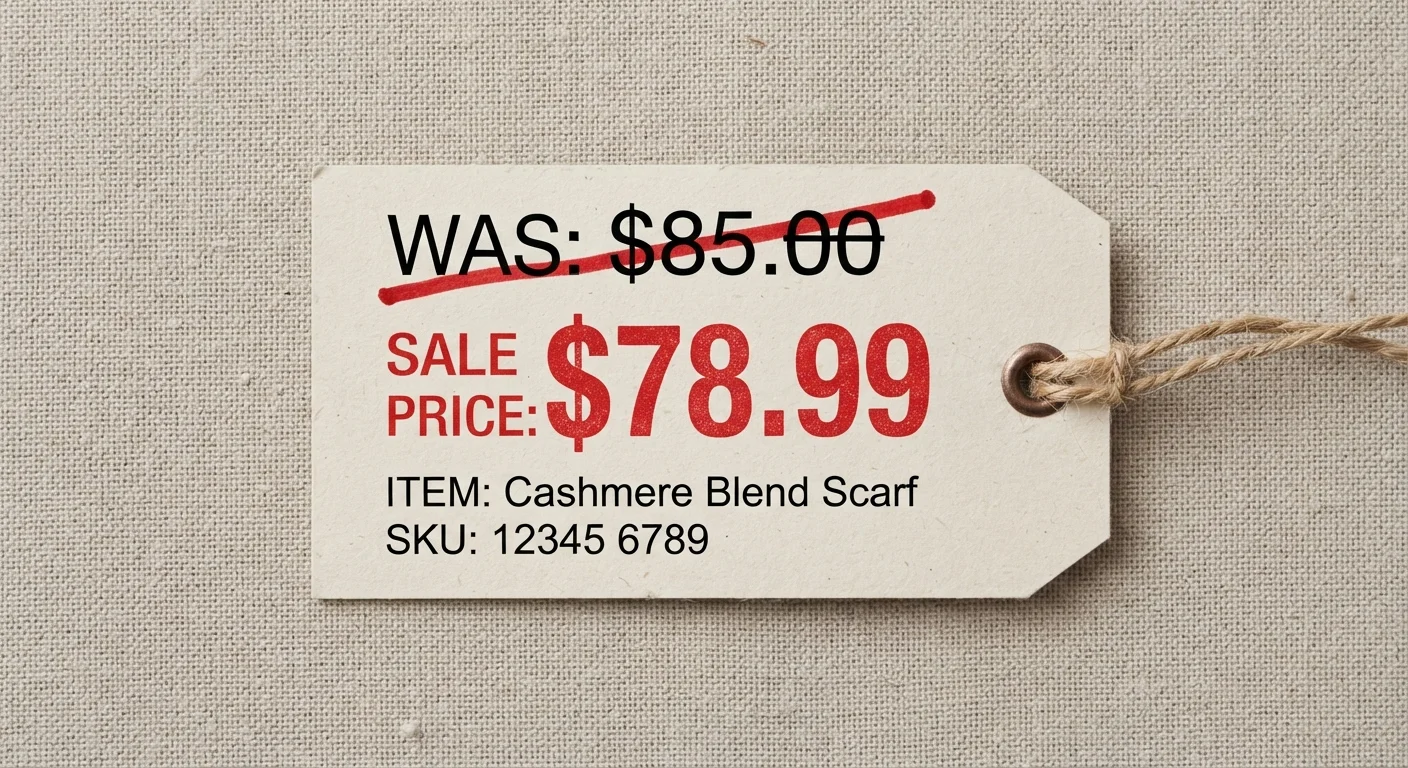
When a tag shows a price crossed out beside a bold, lower number, it communicates a simple story: this item used to cost more, and now it costs less. That narrative is often incomplete — and sometimes misleading.
The crossed-out figure is called a reference price (also called a compare-at or original price). Retailers set it to anchor your perception of value. The problem is that reference prices aren't always tied to a real transaction. Some items are priced high briefly — or never sold at that price at all — before being marked down. The 'sale' is then permanent in all but name.
This practice has drawn regulatory scrutiny. The FTC and various state attorneys general have pursued cases where advertised original prices were inflated or fictitious. Still, enforcement is inconsistent, and shoppers encounter questionable reference pricing regularly.
Understanding this mechanism is the first step to evaluating any markdown honestly. See also how sale pricing tactics are designed to trigger action — and how to recognize them.
Common Myths About Sale Prices
Several durable misconceptions make sale pricing more effective than it deserves to be. Working through them can meaningfully sharpen your judgment at checkout.
Myth
If a price is crossed out and replaced with a lower number, the item must have genuinely sold at that higher price.
Fact
Reference prices are set by the retailer and don't necessarily reflect actual past transactions or market rates.
There is no universal legal requirement in the U.S. that a 'was' price reflect a price at which significant sales occurred. Some retailers set a high reference price when a product launches, allow it to sit briefly, then mark it down — creating the appearance of a discount without a real price reduction relative to market value. Others use manufacturer suggested retail prices (MSRP) as references even when no one in the market charges that amount.
Myth
A larger percentage off always means a better deal.
Fact
The percentage discount only has meaning if the reference price is accurate and the final price is competitive.
Anchoring bias — a well-documented cognitive tendency — makes us judge numbers relative to an initial figure we're given, regardless of whether that figure is accurate. A 50% discount off an inflated reference price can leave you paying more than the everyday price at another retailer. The percentage is a ratio, not an independent measure of value. Always evaluate the final price in absolute terms against alternatives.
Myth
Sale events like clearance or seasonal promotions always offer the lowest prices of the year.
Fact
Promotional sale events sometimes involve selective markdowns and can include items with temporarily raised reference prices.
Analysis of large retail pricing datasets has repeatedly shown that some items during high-profile sale events are not priced lower than their non-sale-period levels — and in some cases, reference prices are adjusted upward before the event to make the markdown appear steeper. Clearance genuinely does move end-of-line stock at reduced prices, but general 'sale events' are a mixed picture that rewards price-history checking.
Myth
If a deal is time-limited, acting fast is the smart move.
Fact
Urgency framing is a persuasion technique; most time-limited offers either recur or are matched by competitors.
Countdown timers and 'only X left' indicators create psychological pressure to decide quickly — which tends to reduce the scrutiny applied to the purchase. In practice, many promotional prices repeat across sale cycles, and comparable pricing is often available elsewhere without the deadline. Urgency is a merchandising signal worth treating with skepticism rather than as information about genuine scarcity.
Myth
Buying something on sale is always saving money.
Fact
Spending money — even at a discount — is not the same as saving money unless the purchase replaced a planned, necessary expenditure.
This is a framing issue retailers understand well. If you spend $60 on an item marked down from $100, you have spent $60 — not saved $40. The $40 'saving' only materialises if you had a genuine, pre-existing plan to buy that specific item at the full price. Impulse purchases driven by discount framing represent unplanned spending regardless of the markdown shown.
~40%
Items priced higher before major sale events
A study by the nonprofit advocacy group U.S. PIRG examining online retail found a notable share of 'sale' items had reference prices that were raised before promotional periods began.
87%
Shoppers influenced by a crossed-out price
Consumer behavior research consistently finds that the presence of a reference price — even an arbitrary one — measurably increases purchase likelihood and perceived value.
How to Evaluate a Discount on Its Own Terms
Rather than accepting the store's framing, you can apply a few practical tests before deciding whether a sale price represents genuine value.
- Check the item's price history. Price-tracking tools for online retail show whether a 'sale' price is actually lower than what the item has sold for over time — or whether the markdown coincides with a prior price hike.
- Compare across retailers. A 30% discount off a reference price that is higher than every competitor's everyday price is not necessarily a saving. The absolute price matters more than the percentage removed.
- Ask whether you need it. Buying something you wouldn't have otherwise purchased is spending, not saving — regardless of the percentage shown on the tag. This is the clearest test of whether a deal is real for you specifically.
- Consider cost-per-use. A discounted item that wears out quickly or goes unused isn't a bargain. Buying cheaper sometimes costs more long-term when durability and frequency of use are factored in.
For purchases where price-per-unit matters — groceries, household supplies — cross-referencing the unit price on the shelf tag often cuts through markdown noise entirely.
Percentage-Off Framing Can Distort Judgment
Focusing on how much you're saving (as a percentage) rather than what you're actually paying is one of the most reliable ways to overspend during sale events. Before completing a purchase, state the final price aloud or in writing and ask whether you'd pay that amount without any sale framing present. If the answer is no, the discount is doing persuasion work, not reflecting genuine value.
Ultimately, price and value are not the same measure. A lower sticker price doesn't automatically mean better value — and a sale framing doesn't change that equation.