The Problem With Shopping by Sticker Price Alone
When you're standing in an aisle or scrolling through a product listing, price is the most immediate signal available. It's concrete, easy to compare, and instant. The problem is that sticker price only reflects one moment in a product's life — the point of purchase — not what it actually costs to own and use over time.
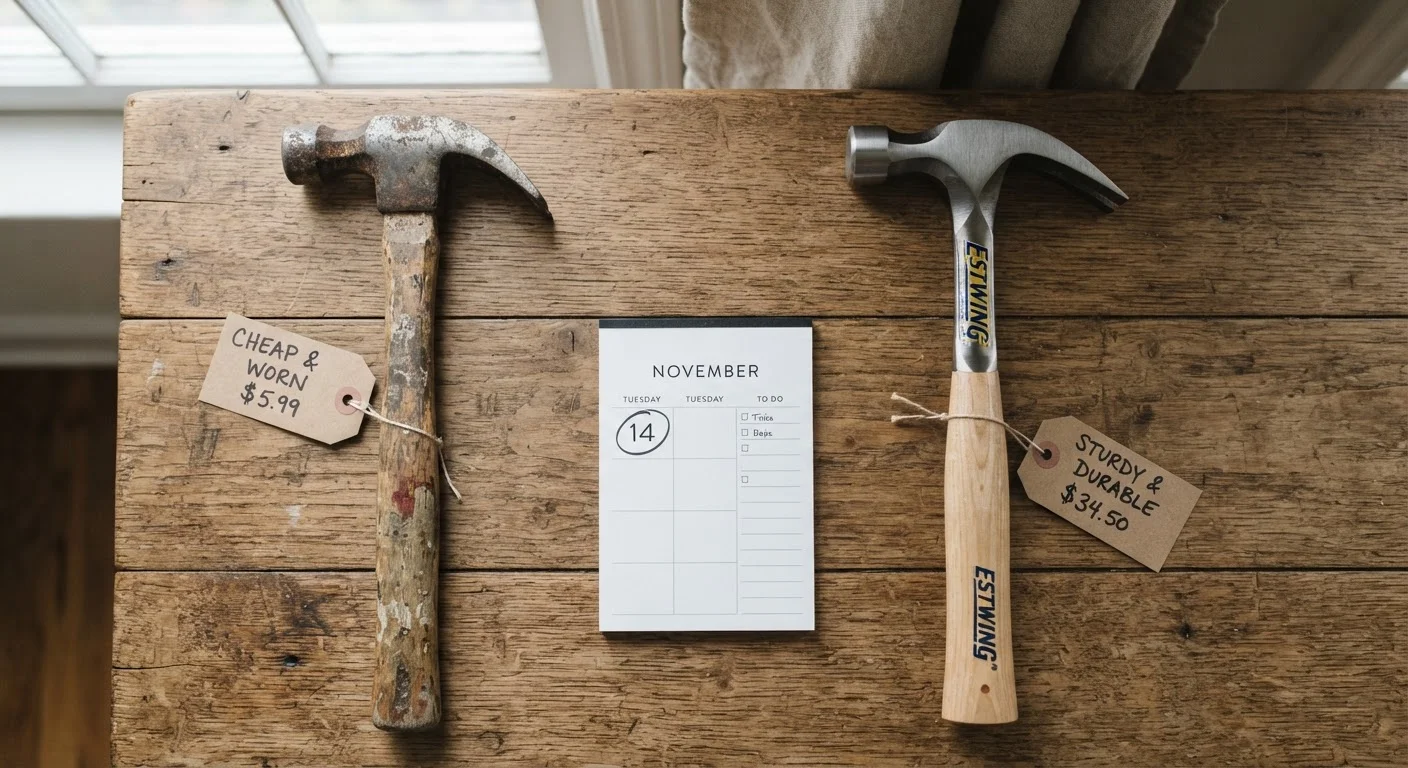
This is where a lot of spending decisions go sideways. A product that looks like a deal at $12 may need replacing every six weeks. A comparable item at $45 might last two years. Over that same two-year window, the cheaper option costs you roughly $208 while the pricier one costs $45. The math isn't complicated, but it requires thinking past the checkout screen.
For a deeper look at specific household categories where this plays out, the hidden costs of cheap household items are worth understanding before you buy.
4–6x
Typical replacement frequency for budget vs. durable household items
Consumer durability research consistently shows that low-cost versions of high-use household items are replaced significantly more often than mid-tier or quality alternatives over a two-to-three year window.
~30%
Estimated share of household purchases driven by price alone
Behavioral economics studies suggest that a significant portion of consumer product decisions anchor on upfront price without accounting for lifespan, maintenance, or replacement cost.
How Cost-Per-Use Changes the Calculation
Cost-per-use is a straightforward way to reframe a purchase decision. Divide what you paid by the number of times you actually use the item before it wears out or needs replacing. A higher number means you're paying more for each use — even if the item seemed inexpensive upfront.
This framework works especially well for items you use frequently: cookware, shoes, bags, bedding, hand tools, and daily-use appliances. In these categories, the performance gap between a budget item and a better-built one tends to be significant, and the frequency of use amplifies that gap over time.
It works less well for items you use rarely. A rarely used specialty tool, a seasonal decoration, or something needed for a single project is a poor candidate for this kind of analysis — here, the lower purchase price often does reflect the better overall value. The rent vs. own vs. borrow framework can also help when usage will be limited.
Start With Your Use Frequency
Before calculating cost-per-use, estimate honestly how often you'll use the item in a typical month. If the answer is daily or near-daily, durability matters a lot and the cost-per-use gap between cheap and well-made options grows quickly. If the answer is once or twice a year, the calculation usually favors the lower-priced option.
Categories Where This Principle Matters Most
Not every purchase deserves a deep durability analysis. But some categories have wide quality gaps between price tiers and high use frequency — a combination that makes the cost-per-use calculation particularly meaningful.
- Footwear: Shoes with poor construction often wear out in months. Well-made pairs can last years with basic care.
- Cookware: Thin pans warp, lose their coating, and become ineffective quickly. Heavier, better-made options hold up across thousands of uses.
- Power tools: Budget versions can underperform on demanding jobs and fail sooner, especially under regular use.
- Clothing: As explored in the hidden costs of fast fashion, very low-cost garments often have a cost-per-wear that rivals or exceeds more considered purchases.
- Mattresses and bedding: These are high-use items with direct impacts on sleep quality and health. Replacement costs add up fast if a mattress underperforms.
The home essentials where spending more pays off covers these trade-offs in practical terms across common household categories.
How to Apply This Thinking Before You Buy
You don't need a spreadsheet to put cost-per-use thinking to work. A few honest questions before purchasing can shift the outcome significantly:
- How often will I actually use this? Frequent use amplifies the cost gap between a durable item and a fragile one. Rare use shrinks it.
- What's the realistic lifespan difference? Look at construction quality, materials, and where possible, what other buyers report about longevity.
- What happens when it fails? Is replacement easy and cheap, or will you face the same buying decision again in six months?
- Is the price difference proportional to the durability difference? Sometimes a mid-tier option offers most of the durability at a much smaller price premium over the budget option.
It's also worth recognizing that a higher price doesn't automatically mean better value — marketing, branding, and retail positioning all influence pricing. The goal is to evaluate durability and performance, not just assume correlation between price and quality. For a practical look at how pricing signals can mislead, see what sale price actually means.
For more structured guidance on weighing upfront cost against lifetime value, durable vs. disposable thinking offers a useful framework for everyday products.