Why Inspection Matters More With Used Appliances
Secondhand appliances can represent real value — a gently used refrigerator or dishwasher at a fraction of retail price can make a lot of sense for budget-conscious households. But unlike new appliances, they come without a factory warranty, a return window, or any guarantee of condition. What looks fine on the outside may have hidden wear, a failing component, or a history of hard use.
Skipping a proper inspection is one of the most common — and costly — mistakes buyers make. A non-functional control board, a worn door seal, or corroded hoses can turn a "deal" into an expensive headache. Taking 20–45 minutes to work through a structured checklist before you commit gives you a much clearer picture of what you're actually buying.
This checklist focuses on the major appliance categories most commonly sold secondhand: refrigerators, washing machines, dryers, dishwashers, and ranges. For broader guidance on evaluating durable goods, see our quality signals guide for durable purchases.
Flashlight or phone torch
Illuminates the interior, underneath, and behind the appliance to spot rust, leaks, and hidden damage.
Tape measure
Confirms the appliance will fit your space, including door swing clearance and ventilation gaps.
Smartphone with internet access
Lets you look up the model number on-site to check recall status, known issues, and part availability.
Notepad or phone notes app
Records the model and serial number, any defects observed, and questions for the seller.
The Inspection Checklist
Work through these items in order. The first two groups can be done before you even touch the appliance — research and visual checks eliminate obvious problems quickly. Only move to operational tests once the basics clear.
Pre-Visit Research
Visual and Physical Inspection
Operational Testing
Final Checks Before Agreeing
Never Skip a Live Operational Test
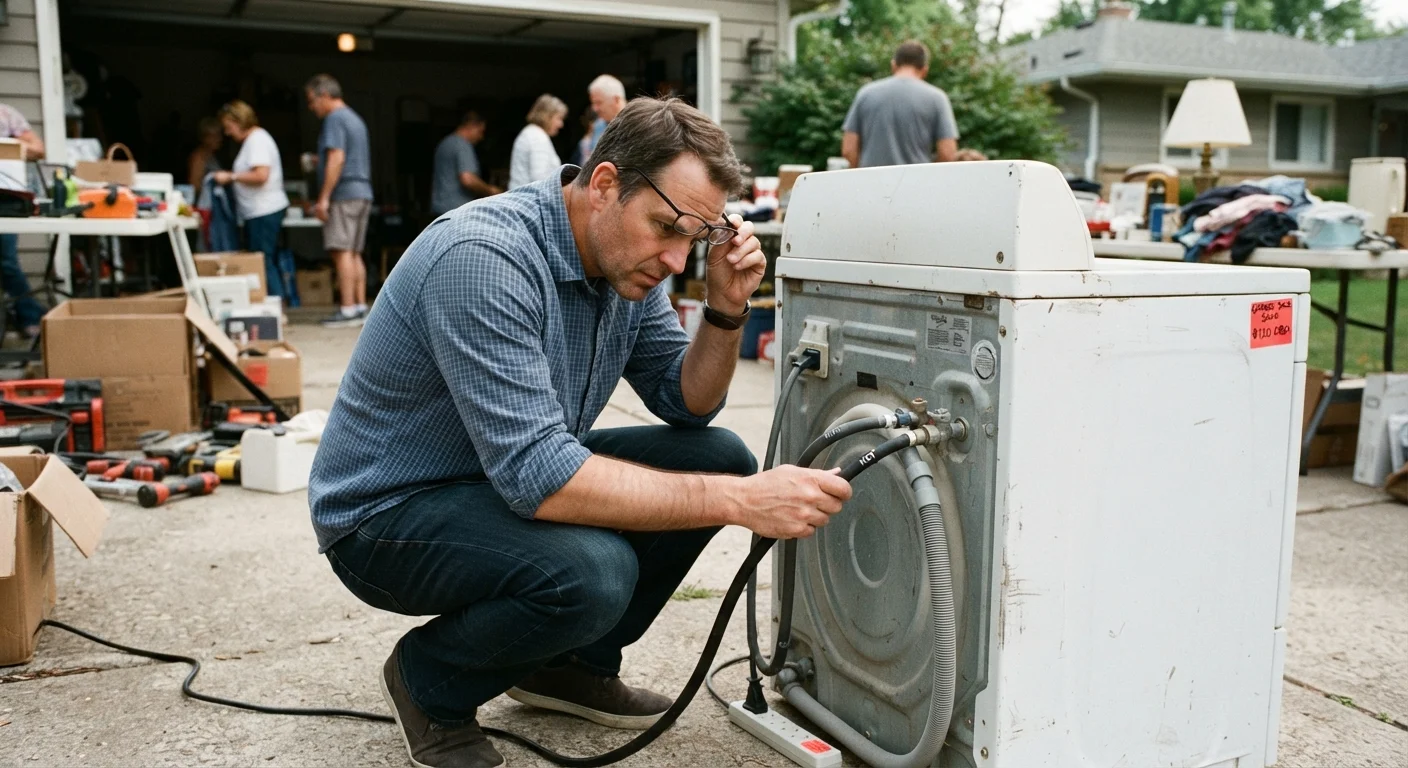
If a seller won't let you run the appliance through a real cycle — not just power it on — treat that as a serious red flag. A machine that powers on but fails mid-cycle, leaks water, or makes abnormal sounds during operation may have a fault the seller is aware of. A legitimate seller with nothing to hide will generally accommodate a basic test.
Once you've finished, use the model number to cross-reference repair history and part costs. If a critical component is discontinued or priced close to what a replacement unit would cost, that changes the value calculation significantly. For ongoing care once you've made a purchase, routine appliance maintenance habits can help extend the life of whatever you bring home.
Making the Final Call
After completing your inspection, tally up any issues you found. Minor cosmetic flaws — a small dent, a faded label — rarely affect function and are worth accepting at the right price. Functional concerns are a different matter: factor in a realistic repair estimate before deciding whether the price still makes sense.
Negotiate based on what you find. A seller who claims the appliance works perfectly but can't demonstrate it during your visit is a meaningful red flag. Similarly, if a seller can show you utility bills or give a clear account of the appliance's history, that context adds credibility.
Gas Appliances Require Professional Installation
If you're buying a gas range or gas dryer, connection and disconnection must be handled by a licensed professional. Attempting to connect or move a gas appliance without proper training and tools creates a serious safety risk. Factor professional installation costs into your total budget before agreeing on a price.
Also consider the full cost of acquisition: delivery fees, installation (especially for gas ranges or hardwired appliances), and disposal of your old unit. These can add $50–$200 or more depending on your location and the appliance type, and they affect the true cost comparison against buying new or refurbished.
If you're evaluating whether it even makes sense to buy versus renting for occasional-use items, renting versus buying household items is worth reviewing before you commit. And if you're doing a broader household audit before any major purchase, a pre-shopping home audit can help you avoid duplicate or unnecessary purchases.