Why Home Water Filtration Matters
Most Americans receive tap water that meets federal safety standards set by the EPA under the Safe Drinking Water Act. But "meets minimum standards" is not the same as "contains nothing you'd want to filter out." Regulated contaminants are kept below legal thresholds, but trace amounts of chlorine byproducts, heavy metals like lead (especially from aging pipes), sediment, and agricultural runoff can still be present in measurable quantities.
Well water, used by roughly 13% of the U.S. population according to EPA data, receives no municipal treatment at all — making filtration even more relevant for rural households. And beyond safety, many homeowners filter water simply for taste and odor: chlorine used in disinfection is effective but leaves a noticeable flavor that some find unpleasant.
Water quality also has ripple effects throughout your home. If you've noticed scale buildup on appliances or dull laundry, that's likely hard water at work — a topic covered in depth in our guide on hard water vs. soft water. Filtration and softening solve different problems, and understanding the distinction helps you spend wisely.
Lead in Pipes Is a Separate Problem
Even if your municipality delivers clean water, lead can leach into it from older service lines or household plumbing. Homes built before 1986 are more likely to have lead solder or pipes. A point-of-entry test and a filter certified to NSF/ANSI Standard 53 for lead reduction are both worth considering if your home's plumbing age is uncertain. This is a case where testing first — rather than assuming — is genuinely important.
Types of Water Filtration Systems
Water filters fall into a few well-defined categories, each with different installation requirements, throughput, and price points.
- Pitcher and countertop filters: The lowest barrier to entry. These use activated carbon to reduce chlorine taste, odor, and some organic compounds. They require no installation, but capacity is small and filtering is slow.
- Faucet-mounted filters: Attach directly to a standard faucet and filter water on demand. Convenient and inexpensive, though flow rate can be reduced and not all faucet styles are compatible.
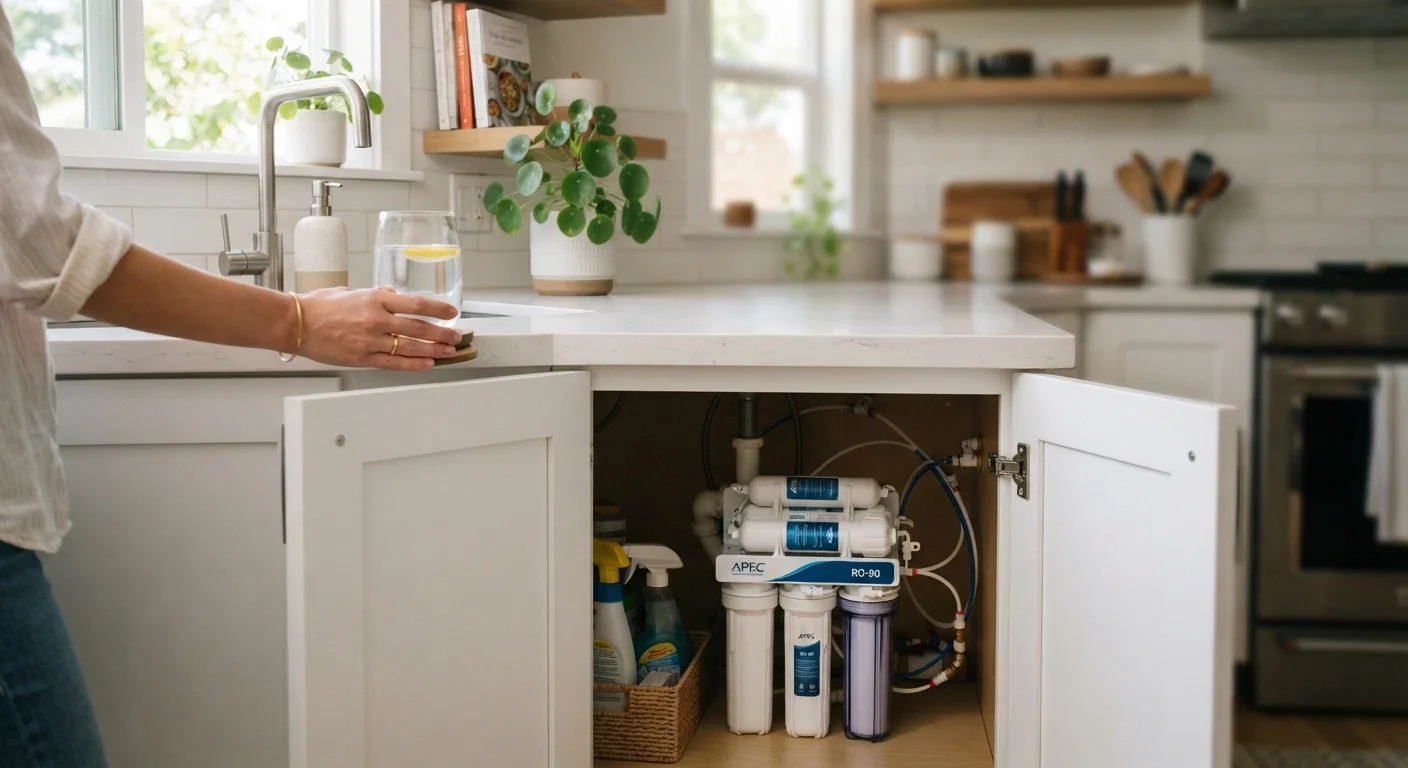
- Under-sink filters: Installed beneath the kitchen sink and connected directly to the cold-water line. They offer higher capacity and often use multi-stage filtration without occupying counter space.
- Reverse osmosis (RO) systems: Among the most comprehensive point-of-use options. RO systems force water through a semi-permeable membrane, removing a broad range of contaminants including dissolved solids, nitrates, and some heavy metals. They produce some wastewater and filter slowly, typically storing output in a small tank.
- Whole-house systems: Installed at the main water supply line, these treat all water entering the home — useful when contaminants affect more than just drinking water, or when well water needs broad treatment.
Always cross-reference a filter's marketing claims with its NSF certification documentation — not just the logo on the box. The certified performance data lists the exact contaminants tested and the reduction percentage achieved.
Marketing language like 'advanced filtration' is not standardized. The NSF certification database is publicly searchable and shows precisely what a filter has been independently verified to remove.
If you're on municipal water, request your utility's Consumer Confidence Report before spending anything on filtration — it may show your water needs less intervention than you assumed.
Many households purchase filtration systems based on general concern rather than actual water quality data, leading to mismatched or unnecessary purchases.
What Contaminants Each System Addresses
No single filter type removes everything. Understanding what each technology targets helps you avoid overpaying for features you don't need — or underspending and missing a real concern.
| Filter Type | Effectively Reduces | Limitations |
|---|---|---|
| Activated carbon (pitchers, faucet, basic under-sink) | Chlorine, VOCs, some pesticides, odor | Does not reliably remove nitrates, heavy metals, or dissolved solids |
| Reverse osmosis | Lead, nitrates, arsenic, fluoride, dissolved solids, some bacteria | Wastes water; removes beneficial minerals; slow output |
| UV purification | Bacteria, viruses, protozoa | Does not remove chemical contaminants or particulates |
| Whole-house sediment/carbon | Sediment, chlorine, taste/odor throughout home | Not designed for heavy metal or microbial removal without additional stages |
| Water softeners (ion exchange) | Calcium and magnesium (hardness minerals) | Not a safety filter; does not remove contaminants |
Certifications matter here. Look for filters independently tested to NSF/ANSI standards — the standard number tells you exactly what the filter has been verified to reduce (e.g., NSF/ANSI 53 covers health-related contaminants; NSF/ANSI 58 covers RO systems).
~13%
U.S. households relying on private wells
According to EPA data, roughly 13% of Americans use private wells, which receive no municipal treatment or federal quality monitoring.
90+
Contaminants regulated under Safe Drinking Water Act
The EPA regulates more than 90 contaminants in public drinking water systems, though many other substances remain unregulated.
NSF/ANSI 53
Key certification for health-related contaminant reduction
NSF International's Standard 53 is the independent benchmark for filters claiming to reduce health-related contaminants like lead and cysts.
How to Choose the Right System for Your Home
The single most useful step before purchasing any filtration system is getting your water tested. Municipal utilities are required to publish annual water quality reports (called Consumer Confidence Reports), which are a reasonable starting point. For well water or older homes with lead pipes, a certified lab test provides a more complete and specific picture.
Once you know what's actually in your water, match the filter technology to those contaminants rather than buying based on marketing claims. Consider these practical factors:
- Point of use vs. whole house: If your concern is drinking and cooking water only, a point-of-use system (under-sink or countertop) is usually sufficient and far less expensive than a whole-house installation.
- Installation complexity: Pitcher filters need no tools; whole-house systems typically require a licensed plumber.
- Flow rate and household size: Larger households may find slow-filtering options like RO inadequate as a sole source of drinking water without a larger storage tank.
- Rental vs. ownership: Renters are often limited to no-installation options unless a landlord approves modifications.
For a broader view of home systems and how filtration fits into a well-equipped household, see our complete home essentials reference.
Start With a Water Test, Not a Purchase
Many hardware stores and online services offer mail-in water testing kits for under $30 to $100 depending on the panel. A basic test covering lead, nitrates, bacteria, pH, and hardness gives you a concrete starting point. Your state health department may also offer low-cost or free testing for well water users.
Maintenance, Costs, and Long-Term Considerations
Every filter has a service life, and ignoring replacement schedules is the most common mistake homeowners make. A saturated or expired filter can stop reducing contaminants effectively — and in some cases, accumulated bacteria can become a concern if filters are left far beyond their rated lifespan.
Filter replacement costs vary considerably by system type. Pitcher filter cartridges typically run a few dollars to around $15 per replacement, needed every one to three months depending on use. Under-sink multi-stage systems may use multiple filter stages with different replacement intervals. RO membrane replacements are less frequent (often every two to five years) but cost more per unit. Whole-house systems generally have the highest upfront cost and the most involved maintenance.
When budgeting, factor in:
- Upfront equipment cost
- Installation costs if professional work is required
- Annualized filter replacement cost
- Water waste (relevant for RO systems)
For a general household perspective on how indoor air quality management compares as a category, our air purifiers explained guide walks through a similar evaluation framework for another common home filtration decision.
This article is for general informational purposes only. Water quality and appropriate treatment options vary significantly by location and individual circumstances. Consult a certified water quality professional or licensed plumber for guidance specific to your home and water supply.