What Makes Water Hard or Soft?
Water hardness refers to the concentration of dissolved minerals — primarily calcium and magnesium — that water picks up as it moves through rock and soil. The U.S. Geological Survey classifies water with more than 120 milligrams per liter (or roughly 7 grains per gallon) of these minerals as hard. Soft water, by contrast, contains very low mineral concentrations, either naturally or after treatment.
Hardness levels vary significantly by region. Much of the American Midwest, Southwest, and South draws from groundwater sources that are naturally high in calcium carbonate. Coastal and northern regions tend to have softer municipal supplies, though local geology always plays a role.
A simple at-home test strip — available at hardware stores — can give you a ballpark reading in under a minute. Your municipal water utility is also required to publish an annual water quality report (sometimes called a Consumer Confidence Report) that includes hardness data. Knowing your number is the practical starting point for any decisions that follow.
| Criterion | Hard Water | Soft Water |
|---|---|---|
| Mineral content | High calcium & magnesium | Low mineral concentration |
| Scale / limescale buildup | Significant over time | Minimal to none |
| Soap & detergent efficiency | Reduced — more product needed | Full efficiency, less waste |
| Appliance lifespan impact | Can shorten without maintenance | Generally more protective |
| Drinking water taste | Often preferred for mineral taste | Flatter taste; sodium added if treated |
| Sodium content (treated soft) | No added sodium | Elevated if ion-exchange treated |
| Cost to address | Descaling products, routine maintenance | Softener system install and upkeep |
How Hard Water Affects Appliances
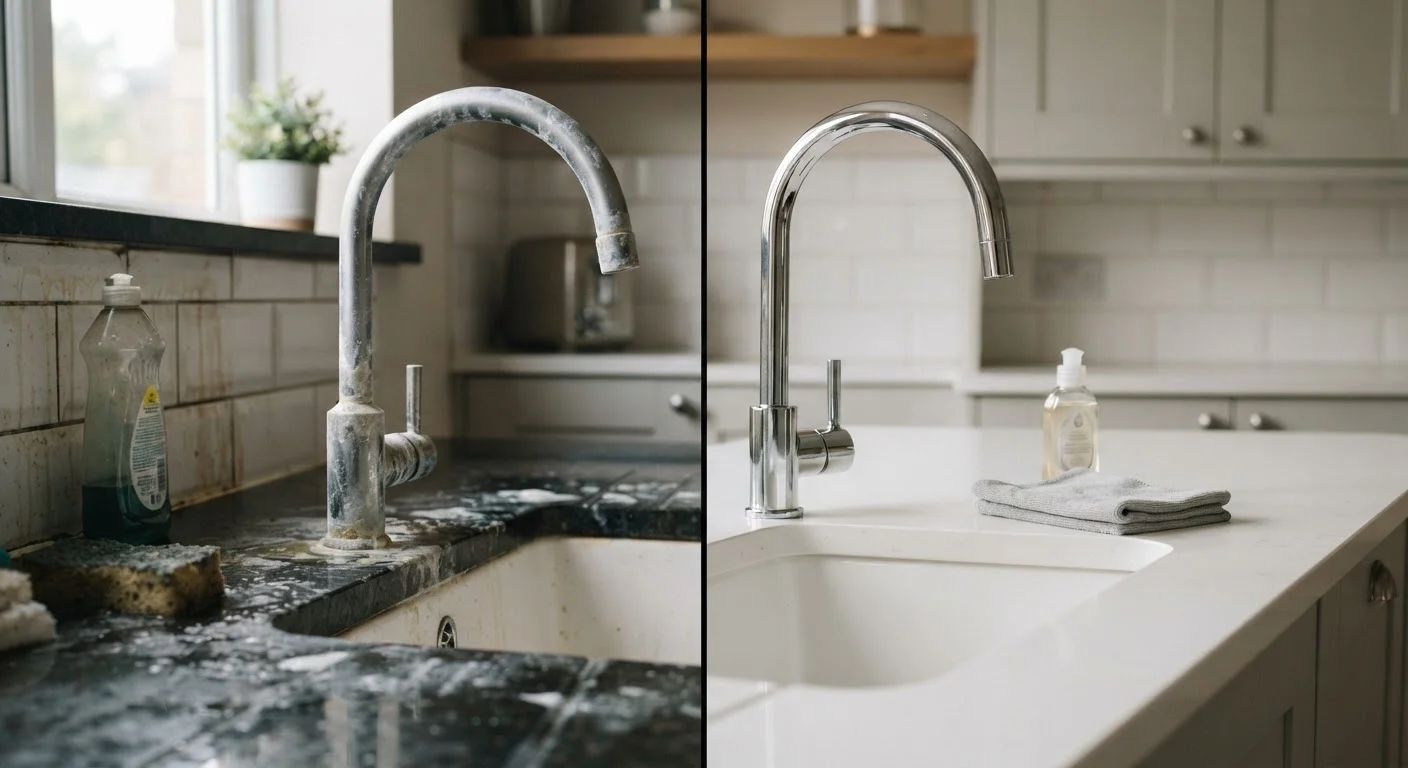
Scale — the chalky white residue left behind when hard water evaporates — builds up inside dishwashers, washing machines, water heaters, and coffee makers over time. Inside a tank water heater, scale acts as an insulating layer between the heating element and the water, forcing the unit to work harder and consume more energy to reach the target temperature. Studies cited by the Water Quality Research Foundation have found that water heaters operating in high-hardness conditions can lose measurable efficiency within a few years without maintenance intervention.
Dishwashers are similarly vulnerable. Hard water causes spotting on glassware, clogs spray arms, and degrades internal components. The same applies to washing machines, where scale can form on drum interiors and heating elements. Routine descaling and maintenance are among the most effective ways to offset these effects without necessarily changing your water supply.
85%
U.S. homes with hard water
The U.S. Geological Survey estimates that approximately 85% of American homes receive hard water from their supply source.
Up to 48%
Potential water heater efficiency loss
Research cited by the Water Quality Research Foundation indicates that severe scale buildup can substantially reduce water heater efficiency, with the degree depending on hardness level and unit type.
Cleaning Products: How Water Type Changes Results
Soap and detergent chemistry is designed around a certain mineral baseline. Hard water ions bind with soap molecules before they can do their cleaning work, forming the familiar gray film called soap scum. This means more product is needed to achieve the same level of clean — a tangible cost over time.
Soft water, on the other hand, allows surfactants to activate fully. Laundry comes out cleaner with less detergent, and surfaces rinse more completely. One practical side effect: soft water can leave a slippery feeling on skin after washing, because the soap rinses off so efficiently that skin proteins interact differently with water molecules. This surprises many people who switch from hard to soft water.
For floor cleaning specifically, water hardness affects how effectively cleaning solutions emulsify grease and grime. Water quality is one of several overlooked factors that determines whether a mopping session actually leaves floors clean.
Managing Hard Water Without a Full Softener System
A whole-house ion-exchange water softener is the most comprehensive solution for hard water, but it's not the only option. Point-of-use descalers, magnetic water conditioners, and citric acid-based appliance cleaners can reduce scale effects for households that prefer not to commit to a full system. For drinking water specifically, a pitcher or under-sink filter can address taste concerns. Understanding what each filtration type actually removes helps you match a solution to your actual water profile rather than guessing.
Regular descaling routines matter regardless of approach. Running a dishwasher with a citric acid cycle monthly, flushing a water heater tank annually to remove sediment, and wiping down faucets with diluted white vinegar are all practical habits that slow scale accumulation. These steps don't require any special equipment and work alongside whatever water management approach your household uses.
Soft Water and Sodium: A Note for Some Households
Ion-exchange water softeners work by replacing calcium and magnesium ions with sodium ions. For most people, the amount of sodium added to treated water is small and not a health concern. However, individuals on medically supervised low-sodium diets should discuss this with a healthcare provider before installing a softening system. A reverse-osmosis drinking water filter installed at the tap can reduce sodium levels in water used for consumption.