Why Non-Stick Cookware Keeps Raising Questions
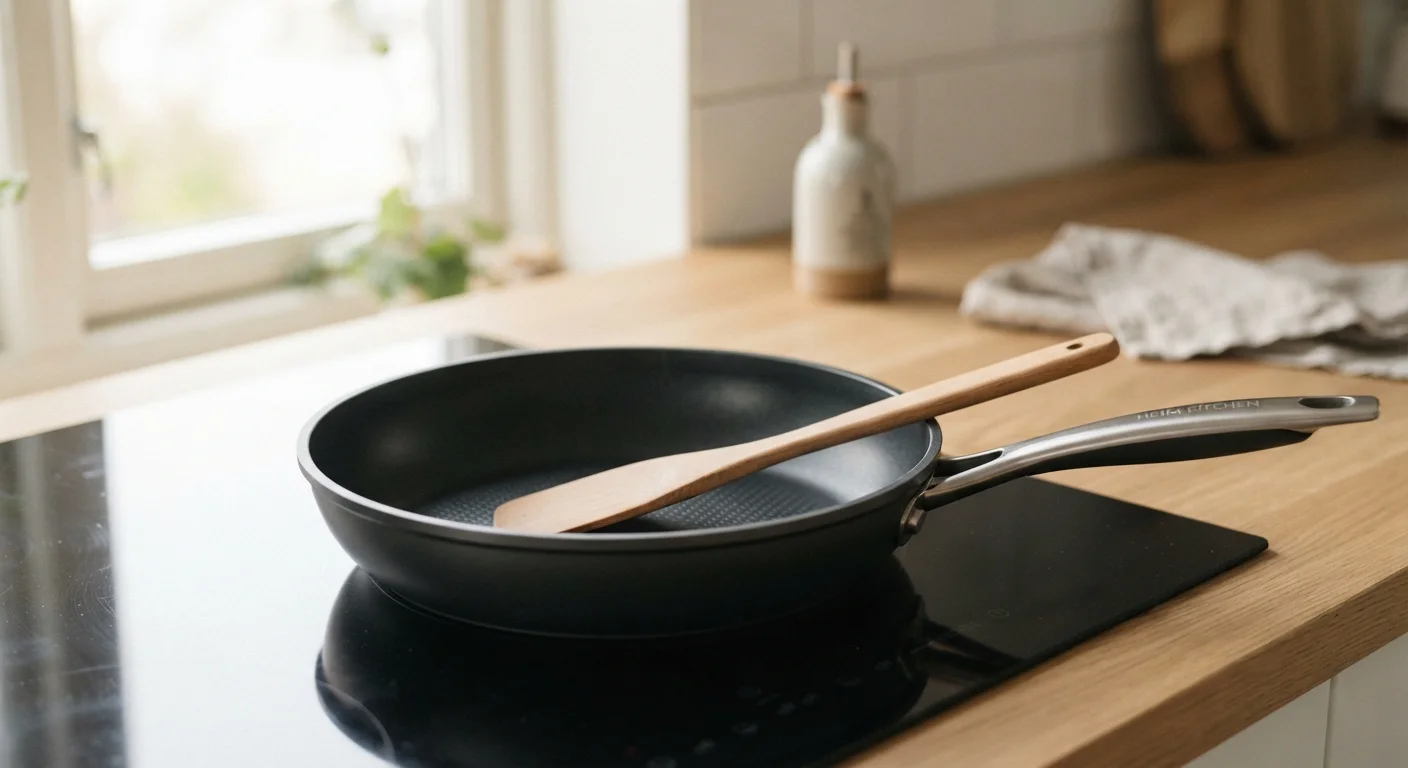
Non-stick pans are in millions of American kitchens, valued for low-fat cooking and easy cleanup. Yet persistent rumors about toxic fumes, cancer risk, and dangerous scratches have made many cooks uneasy about the pans they use every day. Some concerns have a real basis in the science. Many others are outdated or simply misunderstood.
Sorting fact from fiction matters here, because the decisions people make — tossing pans unnecessarily, avoiding the cooking surface entirely, or ignoring genuine precautions — are all influenced by whether the underlying information is accurate. This article examines the most common misconceptions about non-stick cookware using current, evidence-based understanding.
For a broader look at cookware and kitchen tools that often go overlooked, see our guide to kitchen essentials.
Myth
Non-stick pans are coated with a dangerous chemical that makes them unsafe to cook with.
Fact
The coating on most non-stick pans is PTFE (polytetrafluoroethylene), which is chemically stable and considered safe for cooking at normal temperatures.
PTFE, widely known by the brand name Teflon, is a fluoropolymer that is inert under typical cooking conditions. Regulatory agencies including the U.S. Food and Drug Administration have assessed PTFE and found it does not react with food or migrate into it at standard cooking temperatures. The compound only begins to degrade at temperatures above roughly 500°F — well above what most stovetop cooking reaches.
Myth
Non-stick pans still contain PFOA, the harmful chemical linked to health concerns.
Fact
PFOA, a processing aid used in older manufacturing, was phased out of U.S. non-stick cookware production by 2013 under an EPA program.
PFOA (perfluorooctanoic acid) was a processing chemical — not the coating itself — used in earlier PTFE manufacturing. It raised legitimate health concerns and was eliminated from domestic production through the EPA's PFOA Stewardship Program. Pans manufactured in the U.S. after 2013 do not use PFOA. Concerns about this chemical, while historically valid, do not apply to modern cookware purchased from reputable domestic sources.
Myth
If a non-stick pan gets scratched, it becomes toxic and you must throw it out immediately.
Fact
Small scratches in non-stick coating are not a significant health hazard; any PTFE particles that end up in food pass through the body without being absorbed.
PTFE is biologically inert, meaning it does not react with or get absorbed by the digestive system. Studies have not found evidence that ingesting small amounts of PTFE from a scratched pan causes harm. That said, a heavily scratched or peeling pan loses its non-stick performance and is worth replacing — but for practical cooking reasons, not toxicity ones. Deep gouges that expose the bare metal underneath can affect food flavor and cooking evenness.
Myth
Non-stick cookware is safe to use at any heat setting.
Fact
Very high heat — particularly an empty pan on maximum burner output — can cause PTFE coatings to begin degrading and releasing fumes.
This is the one area where caution is genuinely warranted. Preheating an empty non-stick pan on high heat can cause the surface to reach temperatures above 500°F within minutes. At those temperatures, PTFE begins to break down and can release gaseous byproducts. At extreme temperatures, these fumes can cause temporary flu-like symptoms in humans and are acutely dangerous to pet birds, whose respiratory systems are highly sensitive. Normal cooking — with food or liquid in the pan, on medium heat — does not approach these thresholds.
Myth
Ceramic non-stick pans are completely safe and have no trade-offs compared to PTFE pans.
Fact
Ceramic coatings avoid PTFE entirely, but they typically degrade faster and often lose non-stick performance more quickly with regular use.
Ceramic-coated pans use a silica-based coating rather than fluoropolymers, which appeals to consumers who prefer to avoid PTFE entirely. However, ceramic coatings are generally less durable — they tend to lose their non-stick properties faster with high-heat cooking, repeated dishwasher cycles, and metal utensils. There is no cookware material that is entirely without trade-offs. The practical question is which trade-offs fit your cooking habits and replacement tolerance.
What Actually Matters: Heat, Wear, and Replacement
The clearest practical guidance from the science is this: temperature control is the most important factor in safe non-stick use. Cooking on medium heat — which covers the vast majority of everyday tasks — keeps pan surfaces well within their safe operating range. Problems arise when pans are preheated empty on high or left unattended on a blazing burner.
Never Preheat an Empty Non-Stick Pan on High Heat
An empty non-stick pan on a high burner can reach dangerous temperatures in just a few minutes. Always add oil, butter, or food before heating, and keep the setting at medium or below for non-stick surfaces. This is especially important if you have pet birds in the home — they are acutely sensitive to fumes released at very high temperatures.
Pan longevity is the other practical consideration. Non-stick coatings degrade over time through normal use, cleaning, and thermal cycling. A pan that's visibly flaking, deeply scratched, or no longer releasing food efficiently has reached the end of its useful life. Replacing it is a reasonable choice for performance reasons, not just precautionary ones. Our article on when to replace common household items includes practical guidance on non-stick pan lifespan.
It's also worth noting that label claims like "PFOA-free" or "non-toxic coating" carry no standardized legal definition in the U.S. — a point that applies broadly to product marketing in household categories. The same critical reading that helps with evaluating cleaning product labels applies when shopping for cookware.
500°F
Temperature where PTFE begins to degrade
According to material safety assessments, PTFE coatings remain stable below approximately 500°F — a threshold normal stovetop cooking rarely reaches with food in the pan.
2013
Year PFOA was phased out of U.S. manufacturing
The EPA's PFOA Stewardship Program successfully eliminated PFOA from domestic non-stick cookware production by 2013, removing the primary historical safety concern.
This article provides general product and consumer information only. It is not medical advice. Readers with specific health concerns related to cookware should consult a qualified healthcare professional.