How Thread Count Is Actually Calculated
Thread count refers to the number of threads woven into one square inch of fabric—counting both horizontal threads (the weft) and vertical threads (the warp). In straightforward terms, a sheet with 150 threads running each direction would have a thread count of 300.
The problem is that this calculation is frequently manipulated. Some manufacturers use multi-ply yarns—threads twisted together from two or three thinner strands—and count each individual strand rather than each yarn. A sheet woven with two-ply yarn at a genuine count of 300 might be marketed as a 600-count sheet. The fabric isn't any denser or more luxurious; the number is simply inflated. This practice is widespread enough that thread count has become an unreliable standalone indicator of quality.
Industry bodies and textile experts have noted the inconsistency for years, and savvy shoppers are better served by looking beyond the number entirely.
Common Myths—and What the Evidence Actually Shows
Thread count myths persist partly because the number is easy to communicate and easy to compare at a glance. The reality is more nuanced, and understanding it helps you evaluate sheets on factors that genuinely affect everyday comfort.
Myth
A higher thread count always means a softer, more luxurious sheet.
Fact
Thread count is only meaningful within the context of the fiber and construction being used.
A 1,000-count sheet made from short-staple cotton can feel rougher and wear out faster than a 300-count sheet made from long-staple Egyptian cotton. The fiber's inherent quality determines how smooth the yarn spins and how durable the weave becomes—no amount of thread density compensates for a lower-grade raw material.
Myth
Thread counts above 800 represent the pinnacle of sheet quality.
Fact
Very high thread counts are often the result of counting multi-ply yarn strands rather than actual threads.
Once a single-ply weave exceeds roughly 400–500 threads per square inch, the fabric becomes physically dense to the point where quality typically plateaus or even declines—tighter weaves can reduce breathability and increase stiffness. Counts above that threshold frequently reflect a counting methodology, not superior construction.
Myth
Thread count is a standardized, regulated measurement across manufacturers.
Fact
There is no universally enforced standard governing how thread count must be calculated and labeled.
Different manufacturers apply different counting methods, and there is no binding federal regulation in the United States requiring a single approach. This means two sheets labeled "400-count" may be constructed in entirely different ways, making direct numerical comparison unreliable without additional information about fiber and weave.
Myth
Cotton sheets with a low thread count are always inferior to high-count alternatives.
Fact
Thread count in the 200–400 range can represent excellent quality when paired with high-grade long-staple cotton.
Many hospitality-grade sheets used in hotels fall in the 250–400 thread count range specifically because that range allows for better airflow and durability under frequent laundering. What makes them feel premium is the fiber selection and weave consistency—not the number itself.
What Actually Determines Sheet Quality
Once you set thread count aside, three factors do most of the work in determining how a sheet performs.
~400
Thread count where quality typically plateaus in single-ply weaves
Textile industry experts and consumer testing organizations generally note diminishing returns on thread count beyond this threshold in single-ply construction.
2–3x
How much multi-ply counting can inflate a stated thread count
A sheet woven from two-ply yarn may list a thread count two to three times higher than its actual weave density when individual plies are counted separately.
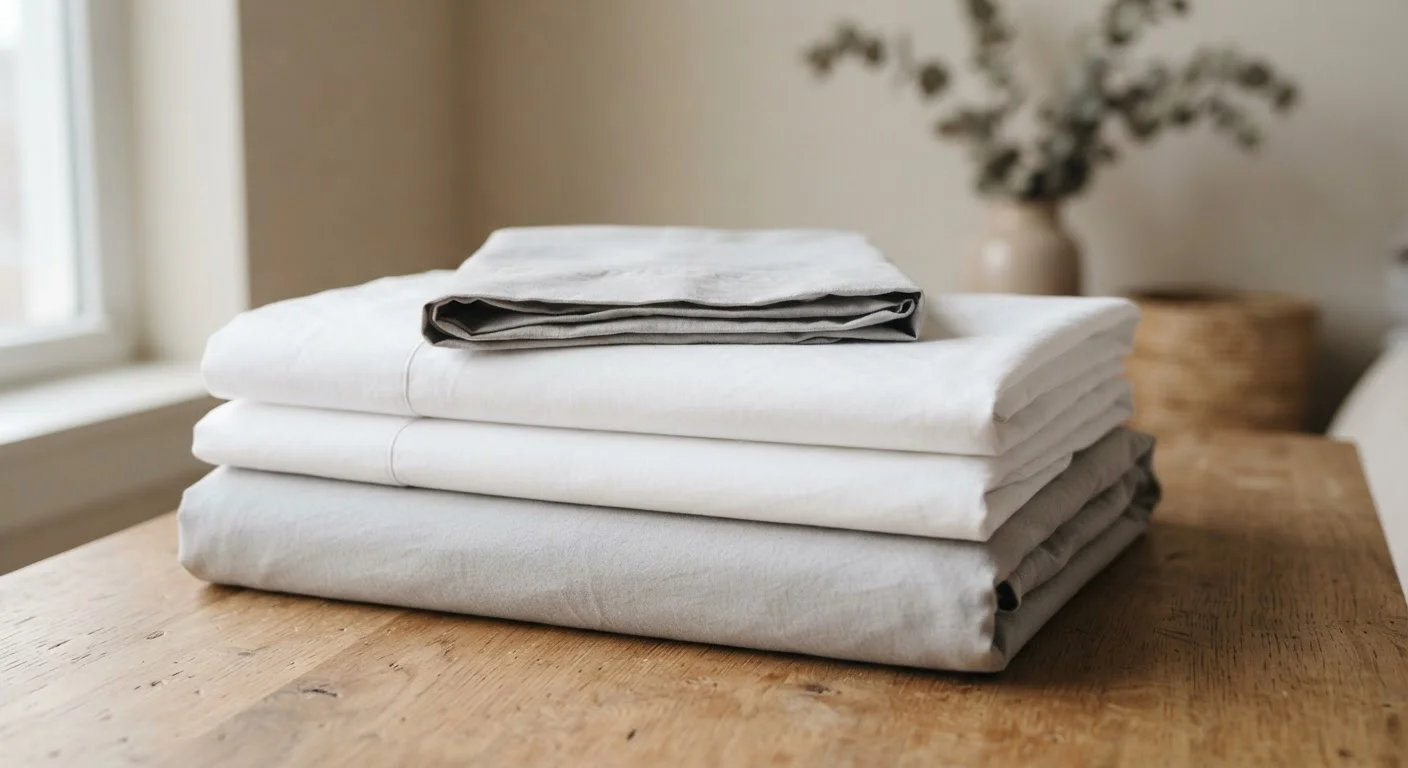
Fiber type is arguably the most important variable. Long-staple cotton varieties—such as Egyptian cotton or Pima cotton—produce stronger, smoother yarns than short-staple alternatives. Longer fibers pill less, hold dye better, and soften with washing rather than degrading. Linen, bamboo-derived fabrics, and certain synthetics each have their own feel and care profiles worth understanding separately.
Weave structure directly affects texture and breathability. A percale weave (a simple one-over, one-under pattern) produces a crisp, cool feel suited to warm sleepers. A sateen weave (more threads on the surface) creates a silkier drape but can trap more heat. Neither is objectively better—preference and climate matter.
Fabric finish and construction quality affect durability. Sheets made with inconsistent tension, weak seams, or chemical softeners that wear off quickly will feel different after ten washes than they did on the shelf. Just as with computer hardware, where spec numbers can obscure real-world performance—as explored in our plain-language guide to PC specs—a single headline number rarely captures the full picture of quality.
A Practical Approach to Evaluating Sheets
When assessing sheets, start by identifying the fiber content listed on the label or product description. Look for specific fiber names rather than vague terms like "premium cotton"—certifications from organizations such as OEKO-TEX or the Better Cotton Initiative can signal more consistent sourcing standards, though they don't guarantee feel or durability on their own.
Consider the weave type relative to your preferences: if you sleep hot, a percale weave in a natural fiber is generally worth prioritizing over a high thread count in sateen. If softness and sheen matter more to you, sateen in a long-staple cotton may be worth exploring.
Watch for Vague Fiber Labeling
Terms like "Egyptian cotton blend" or "premium microfiber" can obscure the actual fiber composition. A blend may contain only a small percentage of the named fiber alongside lower-grade alternatives. Look for labels that specify 100% of a named fiber type, and be skeptical of descriptions that rely heavily on superlatives without naming the specific cotton variety or certification.
Finally, pay attention to return and trial policies, because feel is subjective. What matters most is how a sheet performs after several washes under your specific conditions—not how it reads on a package. The same skepticism that helps decode inflated processor generation claims applies equally here—marketing numbers are a starting point, not a conclusion.