The Problem With Calling Everything 'Essential'
Walk into any home goods store and you'll see the word 'essential' attached to dozens of products — most of which few households actually need. The term has been so thoroughly co-opted by marketing that it's nearly meaningless on the shelf. That dilution creates a real problem: when everything claims to be essential, it becomes harder to identify what actually is.
The practical cost is clutter, wasted money, and the mental load of maintaining items that don't earn their place. Getting clear on what makes a product genuinely essential — versus merely appealing — is one of the more useful frameworks a homeowner can develop. It applies whether you're outfitting a first apartment or reassessing a home you've lived in for years. See our room-by-room essentials inventory for a practical starting point.
Four Criteria That Separate Essentials From Clutter
Stripped of marketing language, a household essential consistently meets most — if not all — of the following criteria:
- Frequency of use: It gets used regularly, not saved for rare occasions. A product you reach for weekly qualifies; one that comes out twice a year probably doesn't.
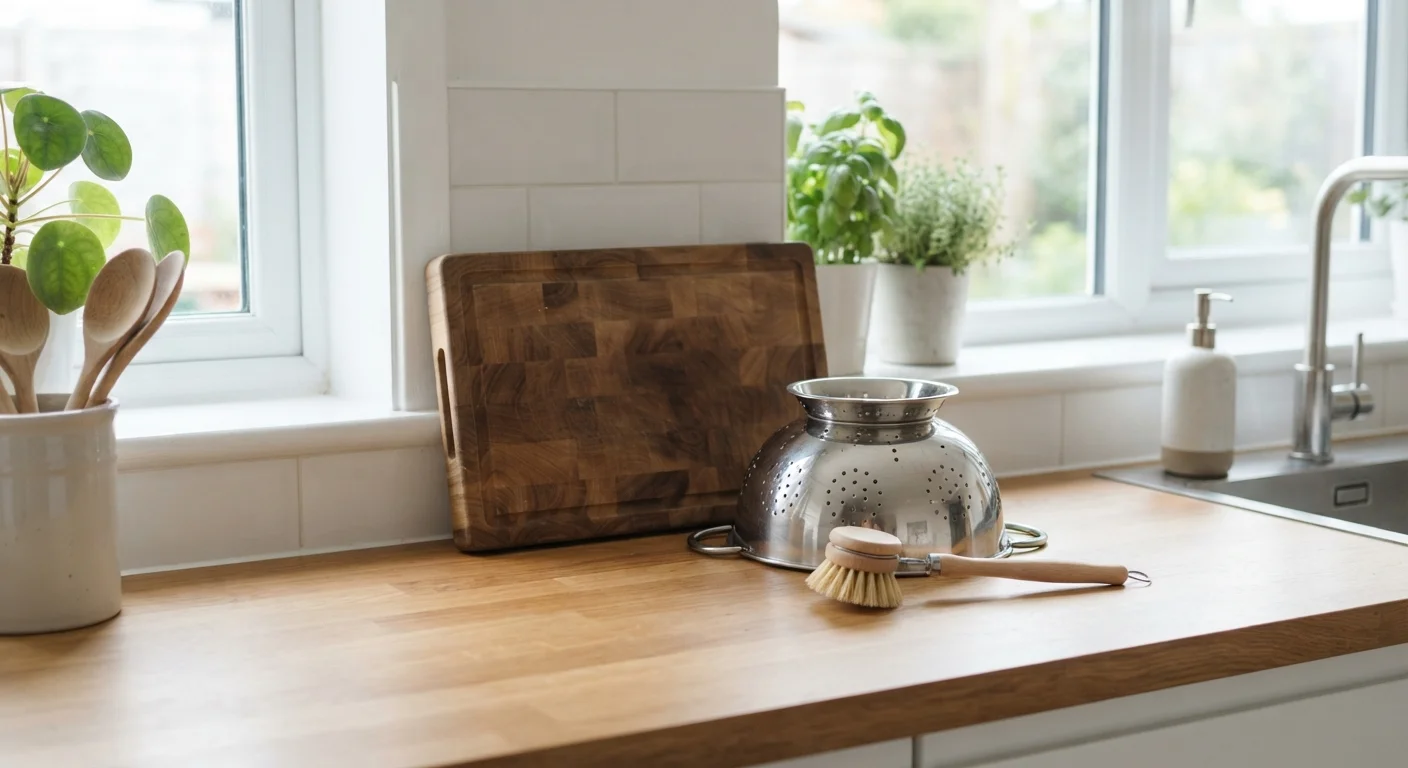
- Problem specificity: It solves a real, recurring problem in your household — not a hypothetical one created by the product's own existence. A good colander solves an actual cooking problem; a single-use avocado slicer largely invents one.
- Difficult to substitute: When it's broken or missing, daily routines are genuinely disrupted. If you barely notice its absence, it wasn't essential.
- Reasonable durability: It holds up under regular use without constant replacement or repair. Products that fail quickly aren't essential — they're a recurring expense.
Use the 'absence test' before buying
Before purchasing any household item, ask: if I didn't own this, would my daily routines be meaningfully disrupted? If the honest answer is no — or 'I'd figure something out easily' — the product is likely a convenience, not an essential. This one question filters out a surprising amount of impulse purchases.
These criteria work together, not in isolation. A product used frequently but that breaks constantly may cost more in the long run than simply going without. Durability and utility are both part of the equation.
For a deeper look at how spending decisions intersect with long-term value, the guide on when to spend more on home essentials covers the tradeoffs clearly.
Why 'Essential' Is Partly Contextual
No single list of household essentials applies to every home. A large family cooking three meals a day has different functional needs than a single adult who eats out regularly. A homeowner with a yard has different maintenance requirements than someone in a high-rise apartment.
This context-dependence is important because it pushes back against one-size-fits-all product lists. Before accepting that something is essential, the honest question is: essential for whom, and under what conditions? The same logic that applies to home products applies across categories — wardrobe staples are defined the same way: versatility and consistent use justify the space they occupy.
Applying the Framework Going Forward
Once you have working criteria for 'essential,' the practical work is straightforward: audit what you own against those criteria, and apply them before buying anything new. A useful habit is a brief pause before any household purchase — does this solve a recurring problem in my home, or am I responding to a well-crafted pitch?
~$1,497
Average U.S. annual household spending on household supplies
According to the U.S. Bureau of Labor Statistics Consumer Expenditure Survey, American households spend roughly this amount annually on housekeeping supplies and household items.
1 in 3
Households report owning unused kitchen gadgets
Consumer behavior research consistently finds that a significant share of specialty kitchen tools are rarely or never used after initial purchase.
The same scrutiny applies to tech products in the home. Devices that promise to simplify routines sometimes add complexity instead. The home tech basics hub offers grounded guidance on which connected devices tend to deliver real value versus novelty.
For those building out a household from scratch or doing a serious reassessment, the complete home essentials reference provides a stage-by-stage framework that applies the essentials logic across every phase of home life. And for specific rooms, overlooked kitchen essentials is a useful read on items that quietly do significant work.