The Factory Secret Most Shoppers Don't Know
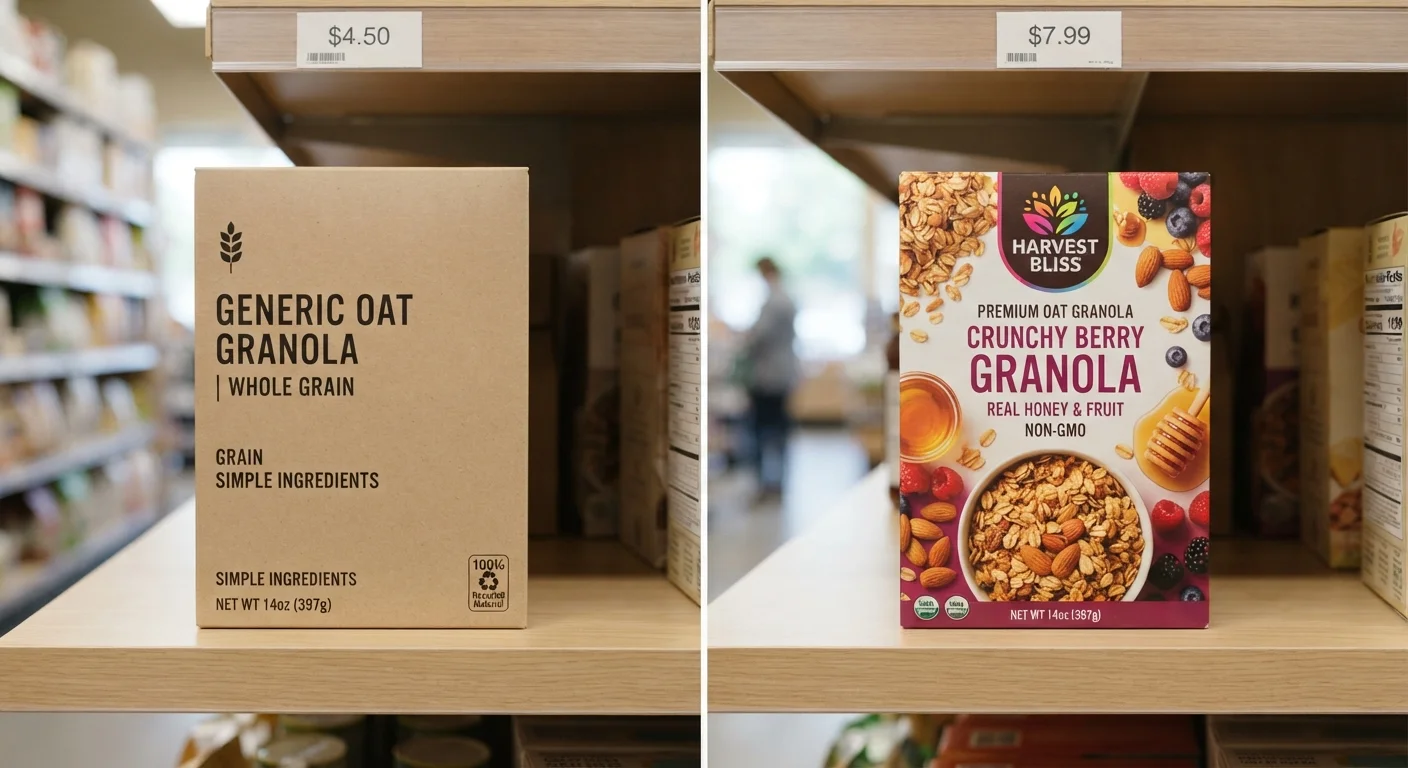
A significant portion of store brand products — across groceries, personal care, and household supplies — are produced by the same manufacturers that make name brand goods. Retailers contract with existing producers to fill their private-label lines, meaning the physical product inside two differently labeled packages can be identical. This is especially common in food categories: cooking oils, pasta, canned goods, and dairy products frequently share production lines.
This doesn't mean generics are always equivalent. It means the question worth asking isn't "name brand or generic?" but rather "in this specific category, does the label predict anything real about the product?" For a deeper look at how to evaluate that distinction, see how price and value actually diverge before your next shopping trip.
| Criterion | Generic / Store Brand | Name Brand |
|---|---|---|
| Average price premium | Lower — often 20–40% less | Higher — includes marketing costs |
| OTC medication equivalence | FDA-mandated identical active ingredients | Same active ingredients, branded packaging |
| Pantry staples quality | Virtually identical composition | No meaningful functional advantage |
| Electronics reliability | Component quality varies widely | More consistent QC and warranty support |
| Infant formula scrutiny | Regulated, but less clinical testing history | More documented testing and QC records |
| Cleaning supplies performance | Comparable in independent testing | Brand recognition, not always better results |
| Specialty skincare formulation | Variable — sourcing less transparent | More R&D investment typical |
Where the Generic Is Genuinely Good Enough
Certain categories offer almost no practical justification for choosing name brand over generic. Over-the-counter medications are the clearest example: U.S. FDA regulations mandate that generic OTC drugs contain identical active ingredients at the same concentration and dosage form as the brand name equivalent. The difference is excipients — fillers, binders, and dyes — which rarely affect therapeutic outcome for most people.
Pantry staples follow the same logic. Bleached all-purpose flour, white granulated sugar, dried pasta, and canned tomatoes are commodity goods with standardized compositions. Paying a premium for the name brand version rarely corresponds to a measurable difference in your cooking results.
Basic cleaning supplies — all-purpose sprays, dish soap, laundry detergent — are another category where generic formulations routinely match name brand performance in independent consumer testing. The active cleaning agents (surfactants, oxidizers) are widely available ingredients, and concentration levels are often comparable across price tiers.
~25%
Average grocery savings switching to store brands
Consumer research from the Private Label Manufacturers Association has estimated shoppers can save roughly 25% on grocery spending by choosing store brands across comparable categories.
98%
Generic OTC drug equivalence rate under FDA standards
The FDA requires generic drugs — including OTC products — to demonstrate bioequivalence to name brand formulations, with very narrow acceptable variation thresholds.
1 in 5
Shoppers who can identify their preferred brand in blind taste tests
Multiple consumer blind taste studies across food categories have found that brand preference often disappears when packaging is removed, suggesting perceived quality differences are frequently marketing-driven.
Where Name Brand Credentials Actually Matter
Not every category is a coin flip. Infant formula is one where most pediatric and nutrition professionals encourage extra scrutiny. While store brand formulas are regulated and nutritionally complete, name brand products in this category often carry more extensive clinical testing histories and tighter quality-control documentation — factors worth weighing when the consumer is a newborn.
Consumer electronics and complex appliances are another area where the brand gap is real. Generic or unverified electronics may use lower-grade components with shorter operational lifespans, and warranty and customer support infrastructure is often minimal. The long-term cost of a failing product can easily exceed any upfront savings.
Specialty skincare and dermatological products also warrant more care. Formulation stability, ingredient sourcing, and preservative systems genuinely vary by manufacturer — and in this category, the name brand may represent more consistent R&D investment. For a category-by-category breakdown of where household quality gaps show up most, the research on store brand vs. name brand quality offers useful context.
How to Evaluate Without Defaulting to Price
The smartest framework is category-specific rather than brand-wide. A few practical questions help: Are the active ingredients or core components listed and identical? Does independent testing exist for this product type? Is this a commodity good or a formulation-dependent product? Does warranty and support infrastructure matter here?
For household spending decisions across multiple categories, understanding where spending more actually pays off can help you build a deliberate approach rather than relying on habit or brand recognition alone. The goal isn't to always choose generic or always choose name brand — it's to recognize which choice is informed and which is reflexive.
A Note on Medications and Health Products
While generic OTC medications meet the same FDA active-ingredient standards as name brands, individuals with specific allergies, sensitivities, or complex health conditions should review inactive ingredient lists carefully. Formulations can differ in dyes, fillers, and preservatives. If you have questions about which product is appropriate for your situation, consult a licensed pharmacist or healthcare professional — this article is general information, not medical advice.