
Why These Two Products Are Designed as a Pair
An HDHP and an HSA aren't just compatible — they're built to complement each other structurally. The HDHP lowers your monthly premium by requiring you to cover more costs before insurance pays. The HSA gives you a dedicated, tax-sheltered place to accumulate the money you'll need to cover those costs.
Think of it this way: the premium savings from the HDHP can be redirected into the HSA, effectively pre-funding your out-of-pocket exposure. If you stay healthy in a given year, that money doesn't vanish — it rolls over and keeps growing. For context on how deductibles function across different insurance types, see how deductibles work in home and auto policies.
$4,300
2025 HSA contribution limit for individual coverage
The IRS adjusts HSA contribution limits annually for inflation; the 2025 limit for self-only HDHP coverage is $4,300.
$8,550
2025 HSA contribution limit for family coverage
Families enrolled in a qualifying HDHP can contribute up to $8,550 to an HSA in 2025, per IRS guidelines.
$1,650
Minimum HDHP deductible for individual coverage in 2025
To qualify as an HDHP under IRS rules for 2025, a plan must carry a minimum individual deductible of at least $1,650.
The Triple Tax Advantage Explained
The HSA's appeal comes from a tax benefit that works at three separate points — a feature sometimes called the "triple tax advantage."
- Contributions are tax-deductible. Money you put into an HSA reduces your taxable income for the year, whether you contribute through payroll or on your own.
- Growth is tax-free. Many HSAs allow you to invest your balance in mutual funds or other instruments once you hit a minimum threshold. Any earnings — interest, dividends, capital gains — are not taxed as they accumulate.
- Withdrawals for qualified expenses are tax-free. As long as you're spending HSA funds on IRS-defined qualified medical expenses, you owe no taxes on the withdrawal.
No other common savings vehicle offers all three of these features simultaneously. That's what makes the HSA more powerful than a standard savings account or even a Flexible Spending Account (FSA).
“The HSA is the only account in the tax code that gives you a deduction going in, tax-free growth, and tax-free withdrawals — all three at once. For the right person, that's a genuinely powerful tool.”
— William Bernstein, Financial theorist and author of works on personal investing
Who Qualifies — and Common Eligibility Pitfalls
To contribute to an HSA, you must meet all of the following IRS criteria:
- You are enrolled in a qualifying HDHP (the IRS publishes minimum deductible and maximum out-of-pocket thresholds annually).
- You are not also covered by a non-HDHP health plan, including a spouse's traditional plan.
- You are not enrolled in Medicare.
- You cannot be claimed as a dependent on someone else's tax return.
One common trap: if your spouse has a general-purpose FSA through their employer, that can disqualify you from HSA contributions even if you're on an HDHP yourself. Rules around dual coverage are nuanced — a licensed benefits adviser or tax professional can help you navigate your specific situation.
Check Your Plan's HSA Eligibility Before Enrolling
Not every plan labeled 'high-deductible' qualifies for HSA pairing under IRS rules. Ask your HR department or insurer to confirm the plan is HSA-eligible before you open an account or make contributions. Contributing to an HSA when ineligible can trigger taxes and penalties.
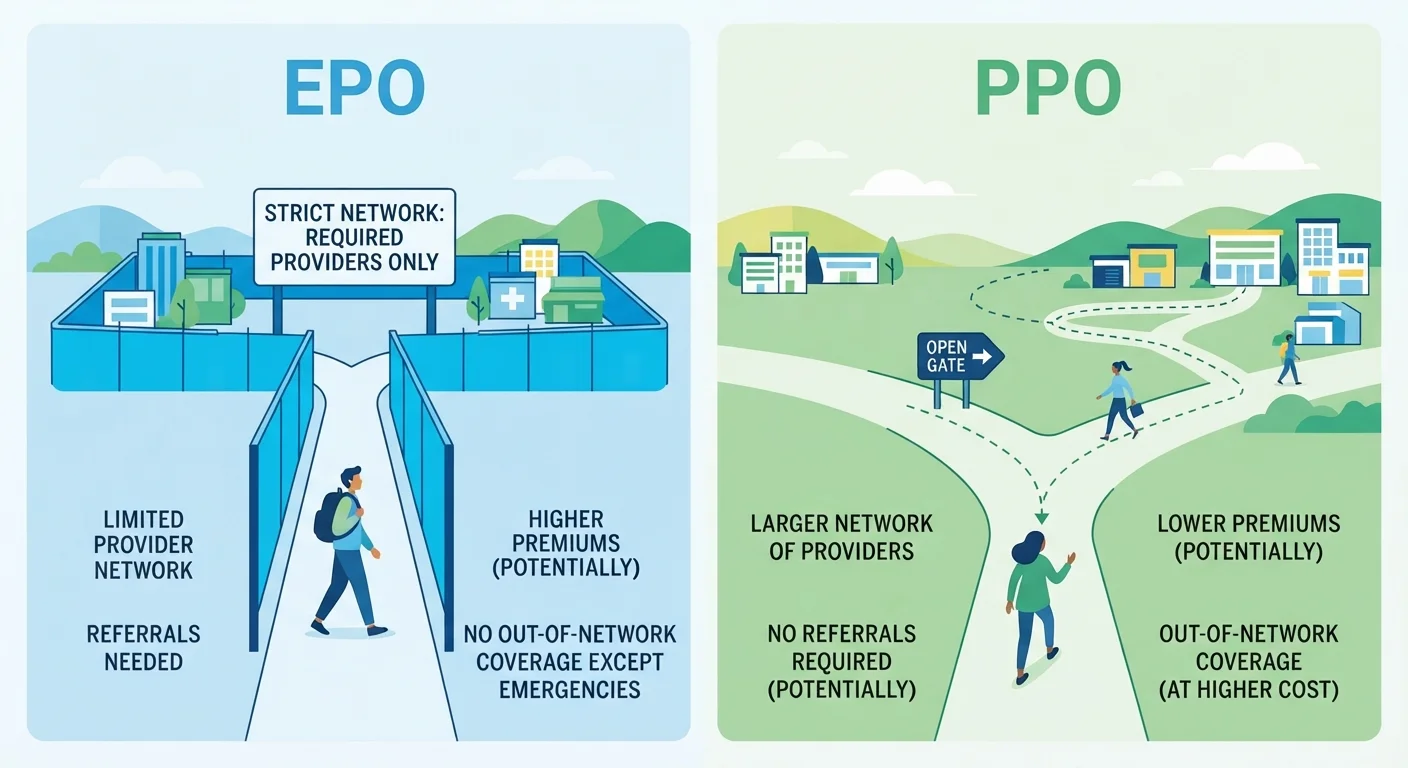
If you're weighing an HDHP against other plan structures, comparing HMO and PPO options can help clarify the broader landscape before you decide.
Practical Considerations Before You Commit
The HSA-HDHP combination is not a universal fit. It tends to work best for people who are relatively healthy, have enough financial cushion to handle the higher deductible in a bad year, and can contribute consistently to the HSA rather than leaving it empty.
If you have chronic conditions requiring regular care, the math may favor a lower-deductible plan even with higher premiums. Run an honest estimate of your anticipated annual medical costs — not just the best-case scenario.
For a deeper look at the trade-offs involved, this balanced overview of HDHPs and HSAs covers both sides in detail. And when you're ready to compare plans side-by-side, this open enrollment walkthrough is a useful next step.
This article is for general informational and educational purposes only and does not constitute personalized financial, tax, insurance, or medical advice. Coverage terms, IRS limits, and eligibility rules vary and change over time. Consult a licensed insurance agent, financial adviser, or qualified tax professional for guidance specific to your situation.