What an EOB Actually Is
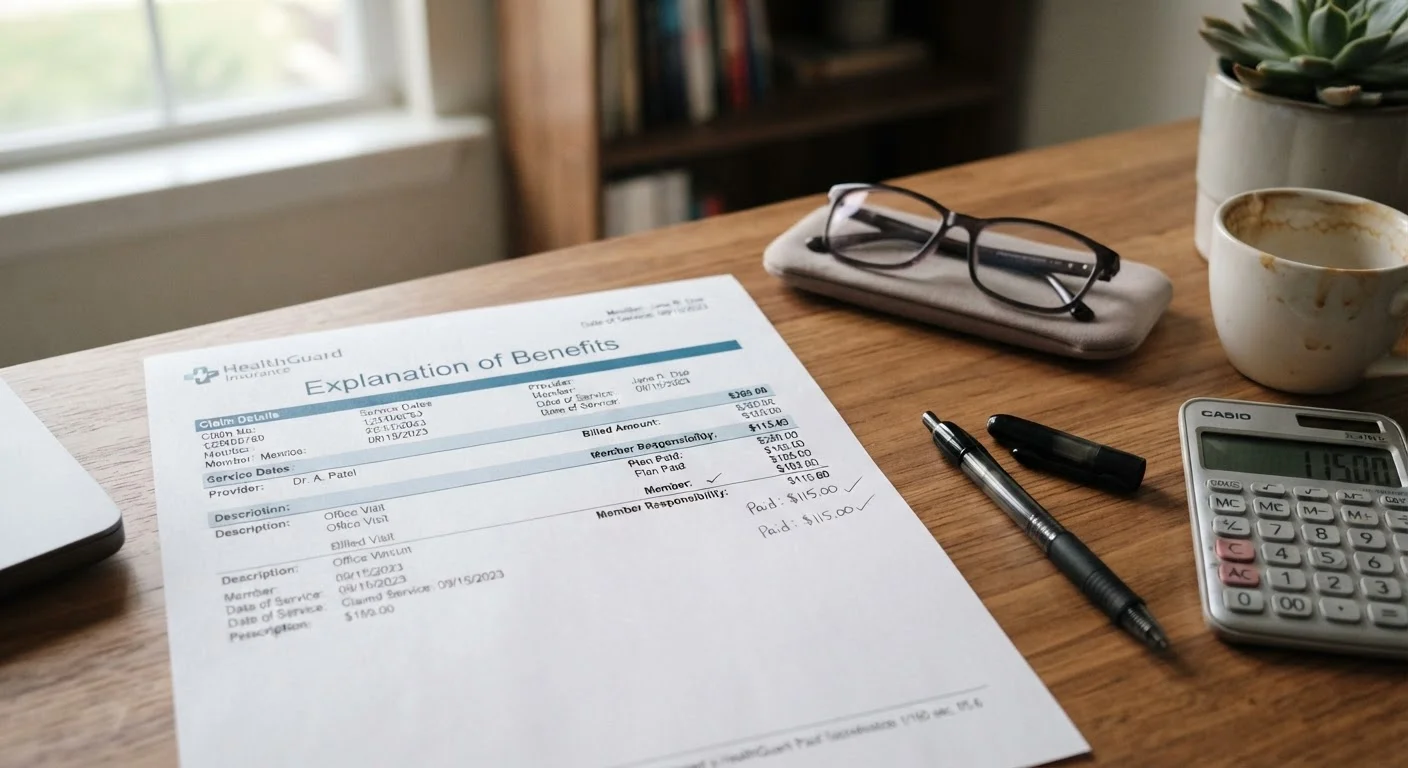
An Explanation of Benefits (EOB) is a statement your health insurer sends after a healthcare provider submits a claim on your behalf. It is not a bill. It is a record of what happened between your provider and your insurer — how much was charged, how much the insurer agreed to pay, and how much (if any) remains your responsibility.
Think of it as a receipt for a transaction you weren't in the room for. Understanding it lets you verify that the transaction went the way it should have. If you're new to health coverage, the plain-English guide to health insurance explains the foundational concepts behind how claims work.
What you will need
The Key Sections and What They Mean
EOBs vary by insurer, but every one is required to include the same core information. Here's what each field is actually communicating:
- Amount Billed: What the provider charged. This is almost never what anyone actually pays.
- Allowed Amount (or Negotiated Rate): The maximum your insurer has agreed to pay for that service under its contract with the provider. The difference between billed and allowed is simply written off if the provider is in-network.
- Plan Paid: What your insurer actually paid the provider after applying your deductible, copay, or coinsurance rules.
- Deductible Applied: Any portion of the allowed amount counted toward your annual deductible before insurance kicks in.
- Copay / Coinsurance: Your fixed or percentage share of the cost after the deductible.
- Patient Responsibility: The total you are expected to pay the provider. This is the number that should match any bill you later receive.
- Denial Code / Remark Code: If a service was not covered, a code explains why. Insurers are required to provide a plain-language explanation — look for it in the footnotes or a separate legend.
For a quick-reference glossary of these and related terms, see The Health Insurance Glossary Every American Should Bookmark.
Save Every EOB You Receive
Store EOBs for at least one year, or longer if a dispute is ongoing. Many insurers let you access them through an online member portal going back several years. Having them organized by date of service makes it far easier to track your deductible progress and respond quickly if a provider sends an unexpected bill.
How to Read and Verify Your EOB — Step by Step
Follow these steps each time an EOB arrives. The process takes only a few minutes but can catch costly errors before you pay them.
Confirm the basics match your records
Check the patient name, date of service, and provider name. Verify this EOB corresponds to a visit or procedure you actually had. If any of these fields look unfamiliar, it could indicate a data entry error or, in rare cases, a billing fraud concern worth reporting.
Compare the allowed amount to what was billed
Find the Amount Billed and the Allowed Amount. The difference is the insurer's negotiated discount — you are not responsible for it if your provider is in-network. If your provider is out-of-network, this gap may work differently, and you could owe more. Check your plan's out-of-network rules in your Summary of Benefits and Coverage (SBC). For a deeper look at how the SBC works, see What a Summary of Benefits and Coverage Document Actually Tells You.
Identify how your deductible and cost-sharing were applied
Look at the Deductible Applied and Coinsurance / Copay fields. These tell you exactly how the plan calculated your share. Cross-check this against your plan's stated deductible amount and coinsurance percentage to confirm the math is correct. A $200 deductible applied when you've already met your deductible for the year is an error worth disputing.
Check the patient responsibility against your provider's bill
The Patient Responsibility figure is what you legitimately owe. When your provider sends a bill, that amount should match this field. If the bill is higher, do not pay the difference without asking your provider's billing office to explain the discrepancy — they may need to resubmit the claim.
Review any denial or remark codes
If any line item shows as not covered or reduced, find the corresponding code in the EOB's legend or footnotes. Common reasons include services requiring prior authorization that wasn't obtained, claims submitted past the filing deadline, or a service coded in a way the plan doesn't recognize. Understanding the specific reason tells you whether it's fixable — and many are.
Don't Pay a Bill Before You Have the EOB
If a provider sends you a bill before your insurer has processed the claim, ask them to hold the bill until the EOB arrives. Paying prematurely can make it harder to dispute incorrect charges later, and you may end up overpaying for cost-sharing that the EOB would have calculated correctly.
What to Do If Something Looks Wrong
Errors on EOBs are not rare. Providers sometimes bill incorrect codes; insurers sometimes apply the wrong benefit tier. If the patient responsibility on your EOB doesn't match what you actually received — or the denial code doesn't make sense — you have clear options.
First, call your insurer's member services line (the number is on the EOB and your insurance card) and ask for a plain-language explanation of any code or adjustment. Keep a record of the date, the representative's name, and what was said. Second, contact your provider's billing department and compare the EOB figures against their records — sometimes the problem is a coding error on their end. Third, if a claim was denied, request a formal appeal in writing. Federal law gives you the right to appeal, and many denials are overturned.
Tracking EOBs over the year also helps you monitor progress toward your deductible and out-of-pocket maximum — which is critical for planning larger procedures. This type of document literacy applies across insurance types; the same careful reading approach described in Reading an Insurance Policy Without Getting Lost is worth applying here too.
This article is for general informational purposes only and does not constitute insurance, financial, or legal advice. Coverage details, benefit structures, and appeal rights vary by plan and state. Always review your actual policy documents and consult a licensed insurance professional or benefits administrator for guidance specific to your situation.