The Number Most People Ignore
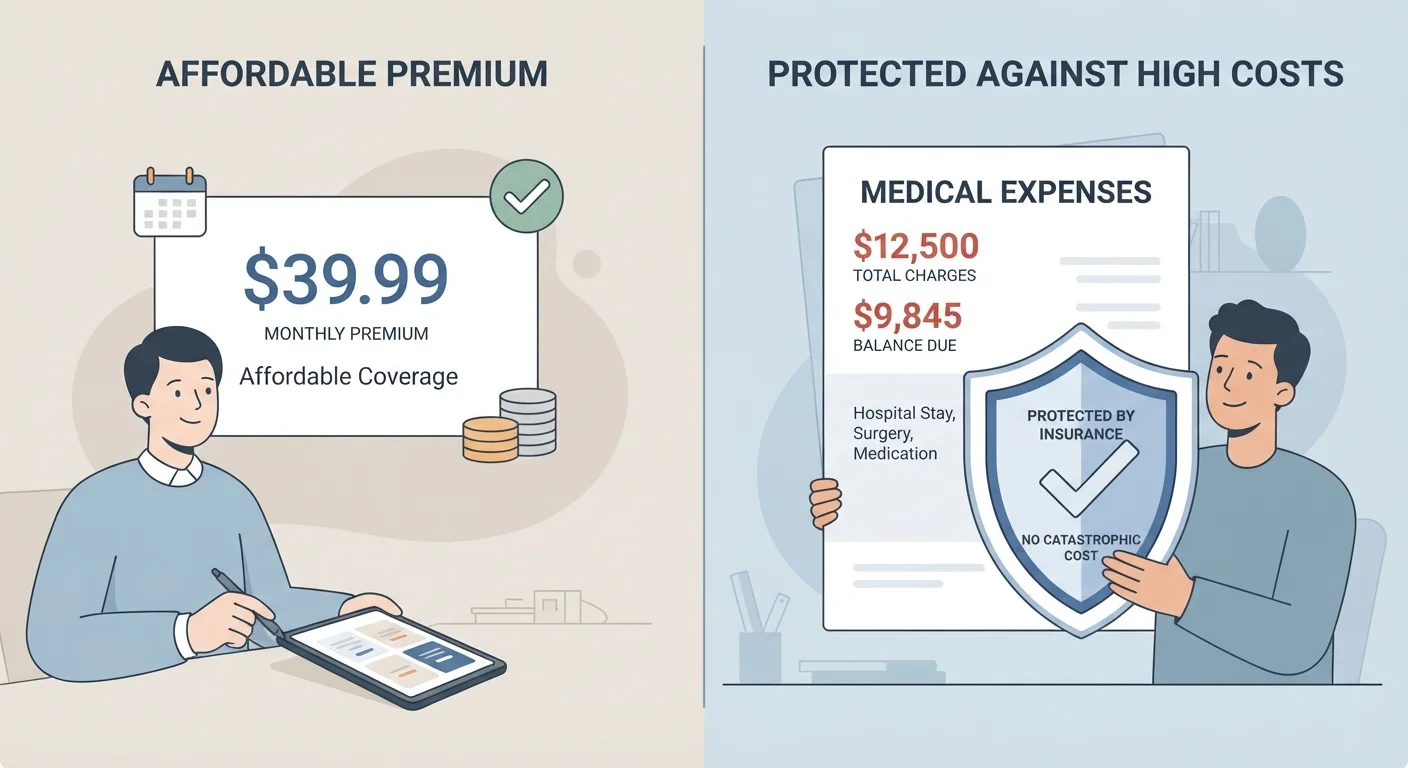
When shopping for health insurance, most people zero in on one number: the monthly premium. It's visible, predictable, and easy to compare. But focusing exclusively on the premium is a bit like judging a loan only by its monthly payment while ignoring the total amount you'll repay.
The out-of-pocket maximum is the number that tells you how bad things can actually get financially if you need serious medical care. It's the hard cap on what you'll spend on covered services in a given plan year — and for many Americans, it's the difference between a manageable medical bill and a financial crisis.
To understand why, it helps to see how the premium and the out-of-pocket maximum play different roles in your total health care cost picture. For a closer look at how deductibles, copays, and coinsurance interact with this limit, see how each cost-sharing element works.
$9,450
ACA individual out-of-pocket maximum (2024)
The federal government sets an annual ceiling on out-of-pocket maximums for ACA-compliant individual plans; the 2024 limit is $9,450 for self-only coverage, per HHS.
43%
Adults underinsured relative to their costs
The Commonwealth Fund has reported that a significant share of insured adults are considered underinsured, often because high cost-sharing leaves them exposed to bills they cannot afford.
$18,900
ACA family out-of-pocket maximum (2024)
For family coverage under ACA-compliant plans, the combined out-of-pocket maximum cap for 2024 is $18,900, per federal guidance.
How the Premium and Out-of-Pocket Maximum Work Together
Your premium is a fixed monthly charge you pay to maintain coverage — whether you use health care that month or not. It does not count toward any deductible or your out-of-pocket maximum.
Your out-of-pocket maximum is the ceiling on what you'll spend on covered care through cost-sharing — meaning your deductible, copays, and coinsurance combined. Once you hit that ceiling, the insurer absorbs all remaining covered costs for the year.
Here's the tension: insurers generally balance these two numbers against each other. Plans with lower monthly premiums tend to have higher deductibles and out-of-pocket maximums. Plans with higher premiums tend to have lower cost-sharing limits. Neither structure is automatically better — it depends entirely on how much care you're likely to use.
Run the Worst-Case Numbers Before You Enroll
Before selecting a plan, add the annual premium total to the plan's out-of-pocket maximum. That sum is your financial ceiling if you have a major health event. Comparing this combined figure across plans often gives a clearer picture of real value than the monthly premium alone.
For a plain-language guide to the broader vocabulary you'll encounter on your plan documents, see key insurance terms explained.
When the Out-of-Pocket Maximum Becomes the More Important Number
Consider a healthy 35-year-old who rarely visits a doctor. For that person, a low-premium, high-deductible plan likely makes sense — they pay less monthly and rarely approach their deductible.
Now consider someone who gets diagnosed with a serious condition mid-year, requires surgery, and needs follow-up treatment. Their out-of-pocket maximum determines the absolute worst-case dollar amount they will owe for covered care that year. If their plan has a $7,000 out-of-pocket maximum, that is their ceiling — not $30,000 in bills, not $50,000. That cap is why the out-of-pocket maximum functions as your primary financial protection against catastrophic medical costs.
This is also why understanding exactly what counts toward your maximum matters. Not every cost does. Premiums, out-of-network charges on many plans, and costs for services not covered by your plan typically do not count — which can leave gaps people don't discover until they receive a bill.
Making a More Informed Plan Comparison
Rather than comparing plans on premium alone, consider calculating your realistic annual exposure under different scenarios. A simple approach:
- Best case (healthy year): Add your 12 monthly premiums together. That's your minimum annual spend.
- Moderate case (some care needed): Add premiums plus an estimate of your expected cost-sharing based on your typical health care usage.
- Worst case (major illness or injury): Add premiums plus the plan's full out-of-pocket maximum. This is your financial ceiling for covered care.
Comparing worst-case totals across plans often reveals that a slightly higher-premium plan with a meaningfully lower out-of-pocket maximum costs less when it matters most.
Also be aware that in-network versus out-of-network status affects what counts toward your maximum. Many people are caught off guard by out-of-network bills — see common in-network and out-of-network misconceptions to avoid the same traps.
“Too many consumers shop for health insurance the way they shop for a cell phone plan — they look at the monthly price and stop there. The out-of-pocket maximum is the number that tells you how the plan actually performs when you need it most.”
— Karen Pollitz, Senior Fellow, KFF Health Policy Research (paraphrased from published research)
This article is for general informational purposes only and does not constitute personalized insurance, financial, or legal advice. Coverage terms, limits, and rules vary by plan and state. Always review your plan's Summary of Benefits and Coverage and consult a licensed insurance professional for guidance on your specific situation.