The Core Difference: It's About Time
Both short-term and long-term disability insurance replace a portion of your income when you can't work due to illness or injury. The fundamental distinction between them isn't the type of disability covered — it's how long the benefits last and when they start.
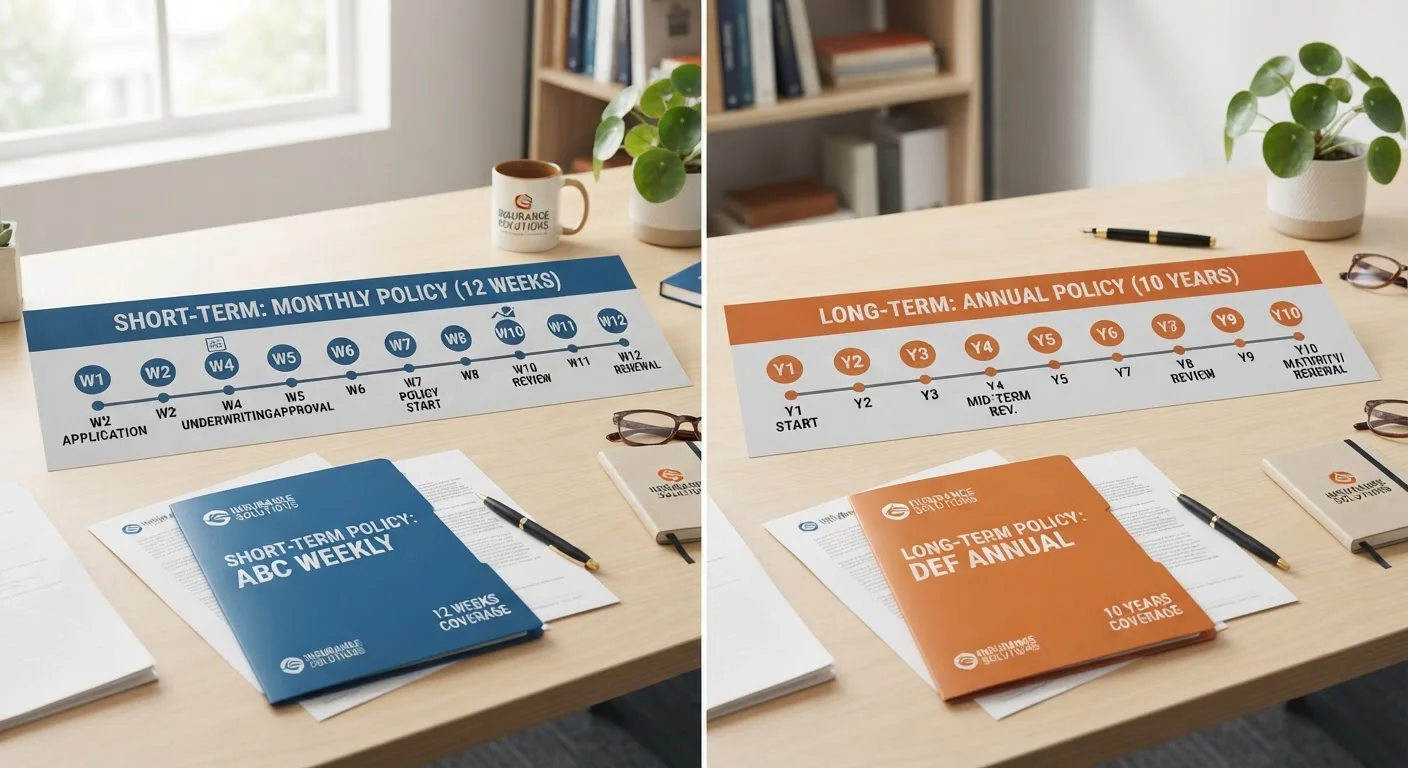
Short-term disability (STD) policies are designed for temporary conditions. Benefit periods typically run from a few weeks up to six months, though some policies extend to a year. Long-term disability (LTD) policies pick up where short-term coverage ends, with benefit periods that commonly range from two years to age 65 — or sometimes for the insured's lifetime.
To learn more about how disability insurance fits into the broader picture of income protection, see our overview of disability insurance.
| Criterion | Short-Term Disability | Long-Term Disability |
|---|---|---|
| Benefit duration | Weeks to 6–12 months | 2 years to age 65 (varies) |
| Elimination (waiting) period | 0–14 days typically | 60–180 days typically |
| Income replacement rate | 50–70% of gross income | 50–70% of gross income |
| Common trigger conditions | Surgery recovery, illness, pregnancy | Chronic illness, serious injury, cancer |
| Typical source | Employer group plan or individual policy | Employer group plan or individual policy |
| Relative premium cost | Generally lower | Generally higher |
Waiting Periods and Benefit Amounts
One of the most practical differences between these two coverage types is the elimination period — the waiting period between when you become disabled and when benefits begin. Short-term disability policies typically have short elimination periods, often zero to 14 days. Long-term disability policies generally require a longer wait, commonly 90 days, though this varies by policy.
This is by design. The two products are meant to complement each other: short-term coverage bridges the immediate gap, while long-term coverage takes over after a sustained inability to work is confirmed.
1 in 4
Workers who become disabled before retirement
The Social Security Administration estimates that roughly one in four of today's 20-year-olds will experience a disability before reaching retirement age.
~34 months
Average long-term disability claim duration
The Council for Disability Awareness has reported that long-term disability claims last nearly three years on average, underscoring the need for sustained coverage.
Benefit amounts for both types are generally expressed as a percentage of your pre-disability income — typically 50–70%. Short-term disability policies sometimes replace a slightly higher percentage, but for a much shorter window. Long-term policies prioritize duration over the replacement rate.
How These Policies Are Typically Obtained
Many Americans access both types through their employer as part of a group benefits package. Employer-sponsored group coverage is often less expensive than individual policies and may not require medical underwriting. However, group coverage typically ends when you leave a job.
Individual disability policies can be purchased directly through an insurer or a licensed agent. These are portable — meaning coverage stays with you regardless of employment — but they generally cost more and may involve medical underwriting based on your health history.
Watch for Coverage Gaps Between Policies
If your short-term disability benefits end before your long-term disability policy's elimination period is satisfied, you could face a gap with no benefits. When reviewing both policies together, compare the short-term benefit end date against the long-term waiting period start. Ideally, the two should overlap or connect seamlessly. A licensed insurance agent can help you identify and address any gap in your specific situation.
Understanding how disability insurance compares to other types of income-protection coverage can help you build a more complete financial safety net. For a different kind of policy comparison, see how term and whole life insurance differ.
This article provides general insurance information for educational purposes only and is not personalized insurance, financial, or legal advice. Coverage terms, benefit amounts, and eligibility vary by insurer, policy, and state. Always read your actual policy documents and consult a licensed insurance professional before making coverage decisions.