What Makes an Expense Fixed or Variable?
Every dollar you spend falls into one of two broad categories: fixed or variable. The distinction is straightforward — fixed expenses stay the same amount from one billing cycle to the next, while variable expenses change based on your consumption, choices, or circumstances.
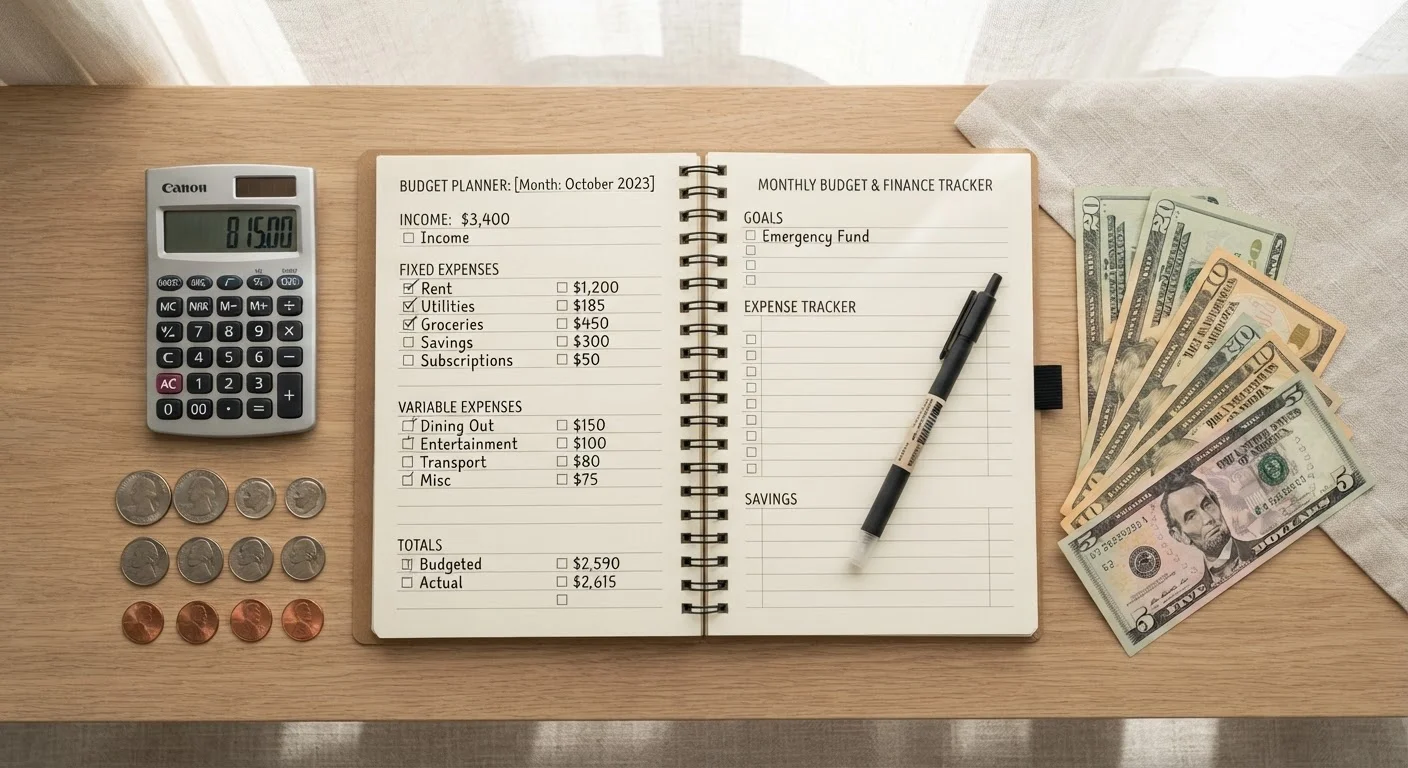
Fixed expenses include costs like rent or mortgage payments, car loan payments, insurance premiums, and subscription services set at a flat rate. You owe the same amount regardless of how much you use the service or how the month unfolds. That predictability is both a strength and a constraint — you can plan around them precisely, but they're also harder to reduce on short notice.
Variable expenses include groceries, utility bills, gas, dining out, clothing, and entertainment. These shift month to month depending on your behavior and external factors like seasonal energy use or an unexpected home repair. Because they fluctuate, they're harder to predict — but they're also where most people have the greatest control over their spending. See where your money actually goes each month for a closer look at how these patterns emerge in real budgets.
| Criterion | Fixed Expenses | Variable Expenses |
|---|---|---|
| Amount each month | Stays the same | Changes month to month |
| Predictability | High — easy to plan around | Low — requires ongoing tracking |
| Examples | Rent, loan payments, insurance | Groceries, gas, dining out |
| Ease of reducing | Difficult — often contractual | Easier — driven by daily choices |
| Budget impact when income drops | Immediate pressure — must still be paid | Flexible — can be cut back quickly |
| Planning approach | List precisely and protect | Estimate and track actively |
A Closer Look at Each Category
Understanding both types in more depth helps you categorize your own expenses accurately — which matters a great deal when you're building your first budget.
Fixed Expenses in Practice
Fixed costs are generally contractual or recurring obligations. Common examples include:
- Monthly rent or mortgage payment
- Auto loan or personal loan installment
- Health, auto, and renters or homeowners insurance premiums
- Flat-rate subscription services (streaming, software, gym membership at a locked-in rate)
- Minimum debt payments (credit card minimums, student loan payments)
A subset worth noting is periodic fixed expenses — costs that don't hit every month but are predictable and consistent when they do, such as annual insurance renewals or quarterly tax payments. Dividing these by 12 and setting aside that amount monthly prevents them from becoming budget emergencies.
Don't Overlook Periodic Fixed Costs
Some fixed expenses don't arrive every month — annual insurance renewals, vehicle registration fees, and quarterly estimated tax payments are common examples. These are still fixed in the sense that the amount is known in advance, but their irregular timing catches many budgeters off guard. Divide the annual total by 12 and set that amount aside each month in a dedicated savings account to avoid a cash crunch when the bill arrives.
Variable Expenses in Practice
Variable costs are driven by day-to-day decisions and external conditions. Common examples include:
- Groceries and household supplies
- Utility bills (electricity, gas, water)
- Fuel and transportation costs
- Dining out and coffee
- Clothing and personal care
- Out-of-pocket medical costs
- Home maintenance and repairs
Because these costs fluctuate, tracking them over at least two to three months gives a more realistic average than relying on a single month's data.
Why the Distinction Matters for Budgeting
Treating fixed and variable expenses the same in a budget leads to poor planning decisions. Each category requires a different strategy.
For fixed expenses, the goal is accuracy and coverage — you need to list every fixed obligation precisely and make sure your income reliably covers them before anything else is allocated. If fixed costs consume too large a share of your income, your financial flexibility shrinks considerably. A commonly cited guideline suggests keeping fixed essential costs (housing, debt payments, insurance) within 50% of take-home pay, though individual circumstances vary widely.
For variable expenses, the goal is awareness and adjustment. Because these costs shift with your choices, they represent the primary lever for managing your budget when income dips or a financial goal demands more resources. Budgeting on an irregular income depends heavily on the ability to dial variable spending up or down in response to what a given month brings.
~33%
Average share of income spent on housing
The U.S. Bureau of Labor Statistics Consumer Expenditure Survey consistently finds housing is the largest single expense category for American households.
2–3 months
Tracking period for realistic variable expense averages
Financial planning practitioners generally recommend tracking variable spending for at least two to three months before using it as a budgeting baseline.
Knowing this distinction also improves how you respond to life changes. A job loss, for example, requires an immediate audit of which fixed costs can be renegotiated or paused and which variable costs can be reduced. Without a clear picture of both categories, those decisions are harder and slower to make. For those managing unpredictable pay, managing debt and savings on a variable income offers additional frameworks for staying solvent.
This article is for general informational and educational purposes only and does not constitute personalized financial advice. Consider consulting a licensed financial professional for guidance tailored to your specific situation.