What a Budget Actually Is
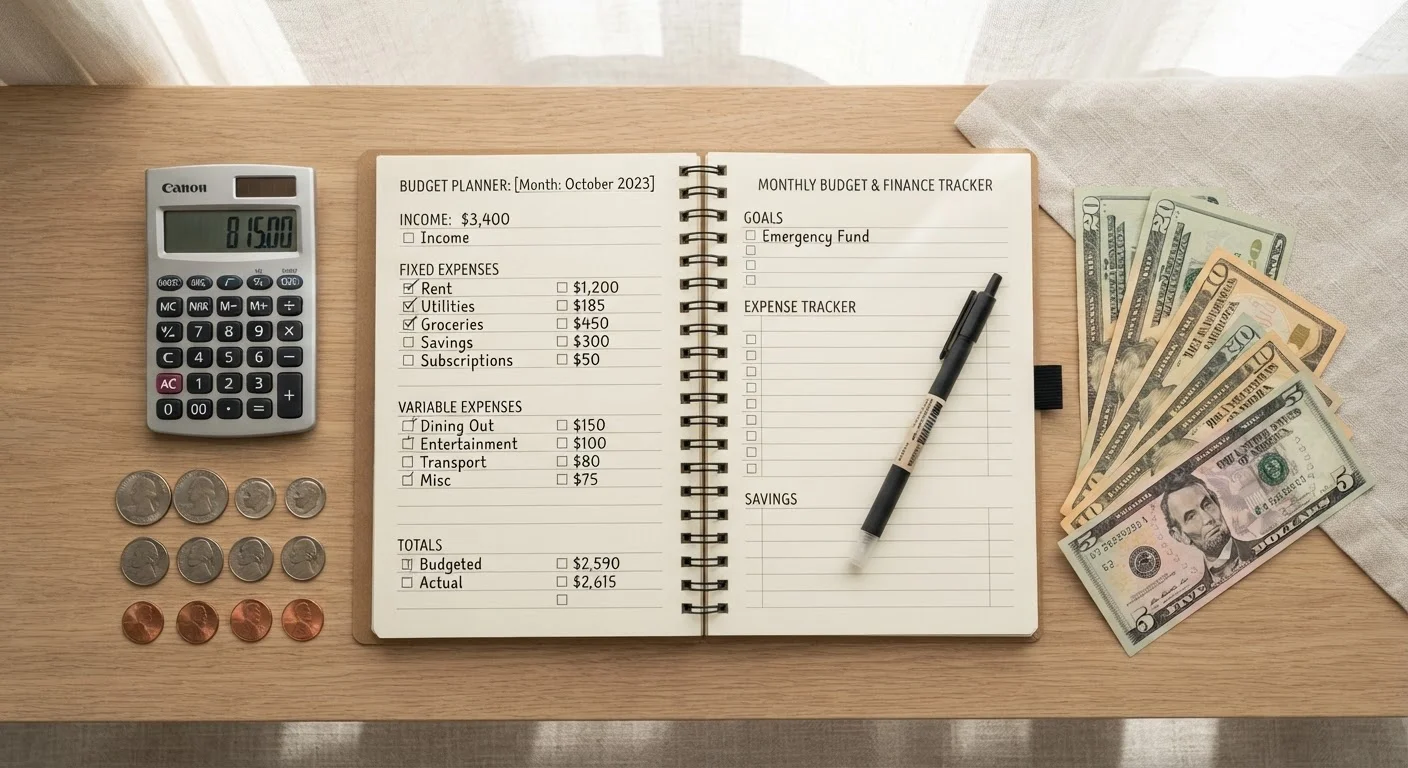
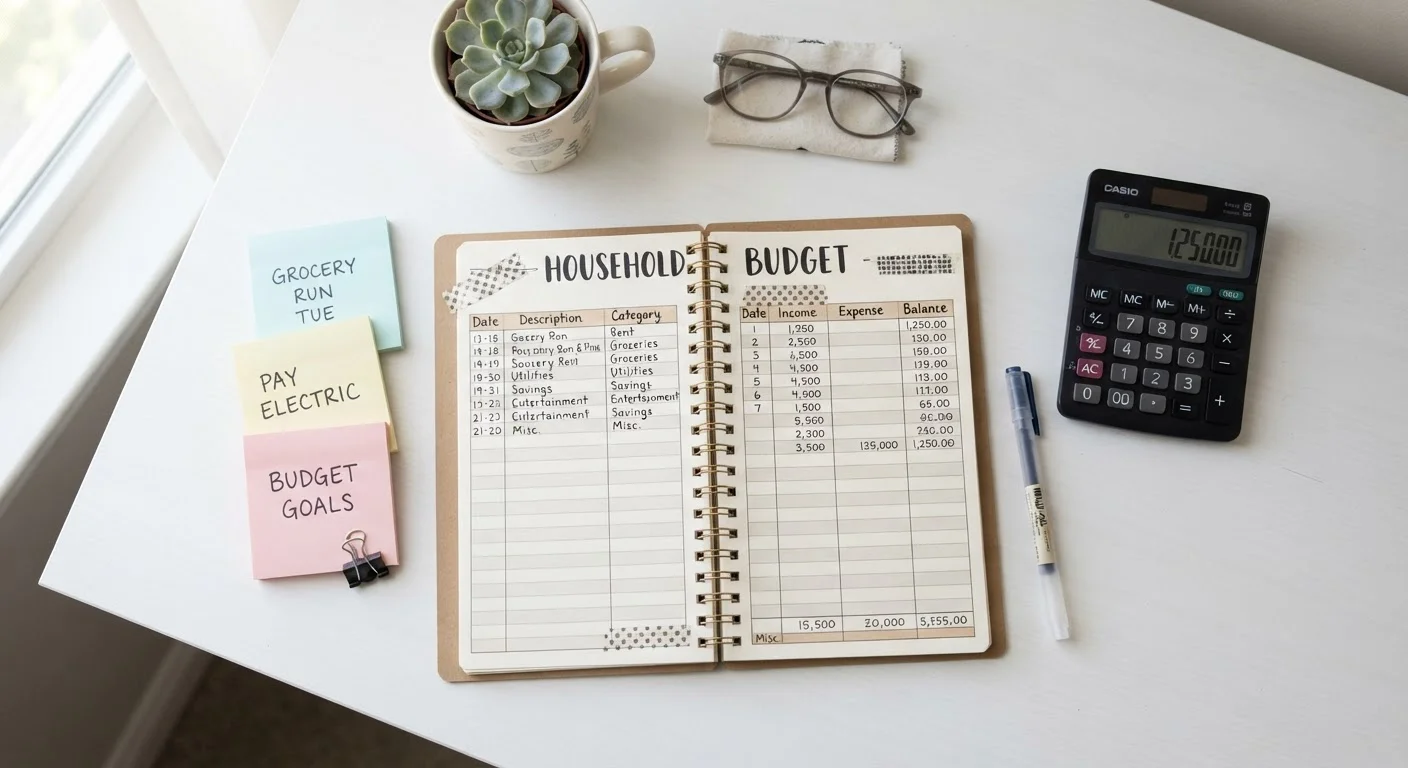
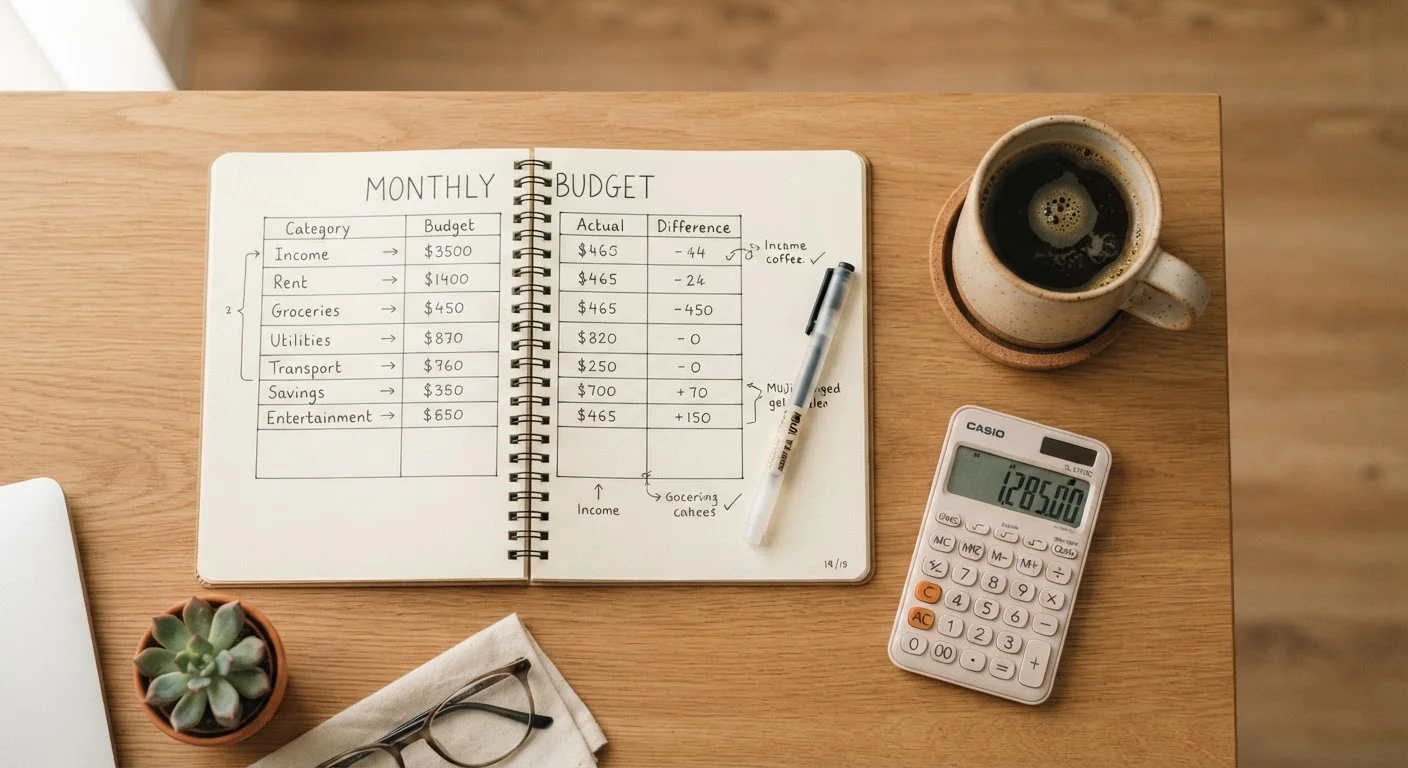
A budget is simply a written plan for how you intend to use your money during a given period — usually one month. It is not a punishment, a sign that you are struggling, or a system that requires perfect math. A budget is a tool, and like any tool, its value comes from actually using it.
Many people avoid budgeting because they picture rigid spreadsheets and giving up everything they enjoy. The reality is different. A well-made budget doesn't tell you that you can't spend — it tells you where you're spending and lets you decide whether that aligns with what matters to you. For a deeper look at what budgeting is not, see our piece on common budgeting myths that trip up beginners.
Net Income
The amount of money you take home after all taxes and payroll deductions. This is the real figure to use when building a budget.
Fixed Expense
A recurring cost that stays the same amount each month, such as rent, a car loan payment, or a set monthly subscription.
Variable Expense
A cost that changes month to month depending on usage or behavior, such as groceries, gas, or dining out.
Zero-Based Budget
A budgeting method where every dollar of income is assigned a specific purpose so that income minus all allocations equals zero.
Discretionary Spending
Money spent on non-essential wants — things you choose to buy, like entertainment or dining — as opposed to necessities like housing or utilities.
Emergency Fund
A dedicated savings reserve set aside to cover unexpected expenses or income disruptions, reducing the need to rely on credit in a crisis.
This article is for general informational and educational purposes only and does not constitute personalized financial advice. For guidance tailored to your situation, consider consulting a licensed financial professional.
The Building Blocks: Income, Expenses, and the Gap Between Them
Every budget rests on two numbers: what comes in and what goes out. Getting both right is the foundation of everything else.
Your Net Income
Start with net income — the amount that actually lands in your bank account after taxes, insurance premiums, and any other payroll deductions. This is your real spending power, and it is the only figure that belongs at the top of a budget. Using gross (pre-tax) income is one of the most common beginner mistakes.
Fixed vs. Variable Expenses
Once you know your income, list your expenses in two groups:
- Fixed expenses: amounts that stay constant each month — rent or mortgage, loan payments, insurance premiums, subscriptions.
- Variable expenses: amounts that change — groceries, utilities, gas, dining, clothing, entertainment.
Variable expenses are where you have the most day-to-day control. For a structured look at how to organize every spending category, the budget categories reference guide is a useful companion.
The Gap
Subtract total expenses from net income. A positive result means you have money available to save or invest. A negative result means spending exceeds income — and knowing that clearly is the first step toward fixing it.
Track One Month Before You Budget
Before setting spending limits, spend one month simply recording where your money goes without making any changes. This gives you accurate baseline data and prevents you from setting targets based on guesswork. Real numbers almost always reveal surprises.
Choosing a Budgeting Framework That Fits Your Life
No single budgeting method works for everyone. Here are three widely used frameworks, each suited to different habits and priorities:
The 50/30/20 Rule
Divide after-tax income into three broad buckets: approximately 50% toward needs (housing, food, utilities, transportation), 30% toward wants (dining, hobbies, entertainment), and 20% toward savings and debt repayment. It is simple enough to implement immediately, though the percentages may need adjustment based on your cost of living or financial goals.
Zero-Based Budgeting
Assign every dollar a specific job until income minus allocations equals zero. Nothing is unaccounted for. This method requires more time upfront but gives you the clearest picture of exactly where your money goes.
Envelope Budgeting
Allocate a fixed cash amount to spending categories and place it in labeled envelopes (physical or digital). When an envelope is empty, spending in that category stops for the month. It works especially well for variable expenses that tend to creep up.
If you are ready to build your first actual monthly plan, the six-step monthly budget guide walks through the process in detail.
No Framework Is One-Size-Fits-All
The percentages and structures in popular budgeting frameworks are starting points, not financial rules. Someone living in a high cost-of-living city may find that housing alone consumes well over 50% of income. Adjust any framework to reflect your actual circumstances rather than forcing your life to fit the template.
Setting Up Your First Budget: A Practical Starting Point
Getting started does not require any special software. Here is a straightforward sequence:
- Gather your income data. Collect two to three months of pay stubs or bank statements to find your average monthly take-home pay.
- List every expense. Pull bank and credit card statements from the past two to three months. Capture everything — subscriptions, annual fees averaged into monthly amounts, irregular bills like car registration.
- Categorize spending. Group expenses into needs, wants, and savings/debt. The goal is clarity, not judgment.
- Set spending targets. Based on your income and expense totals, decide how much each category should receive next month.
- Track as you go. Check actual spending against your plan at least once a week.
For a broader starting point that also covers saving and debt, this beginner's guide to budgeting, saving, and debt covers those interconnected fundamentals together.
Don't Forget Irregular Expenses
Annual or semi-annual bills — car registration, insurance premiums, holiday gifts — are among the most common budget-busters because they don't appear every month. Divide each yearly total by 12 and set aside that amount monthly so the expense never catches you off guard.
Making Your Budget Stick Over Time
The hardest part of budgeting is not starting — it is continuing. A few practices help turn a one-time exercise into a lasting habit:
Schedule a Monthly Reset
Every budget is a hypothesis. At the end of each month, compare what you planned to what actually happened. Adjust category amounts to reflect reality more accurately. A budget that evolves is far more useful than a perfect plan that gets abandoned.
Build in Flexibility
Life will produce unexpected expenses. A small "miscellaneous" or "buffer" category — even just a modest amount — absorbs surprises without derailing the whole plan. Over time, building an emergency fund transforms your ability to handle the unexpected entirely. The Saving & Debt hub has actionable guidance on building that foundation.
Connect Spending to Goals
Budgets that feel meaningful get maintained. Whether you are working toward paying off a credit card, saving for a down payment, or simply stopping the paycheck-to-paycheck cycle, linking each budget category to a tangible goal gives the numbers emotional weight. Once your budget is steady, the Investing Essentials hub can help you put any surplus to work.
There is no perfect budget — there is only the one you keep coming back to.