
Why Moisture Content Is the Central Difference
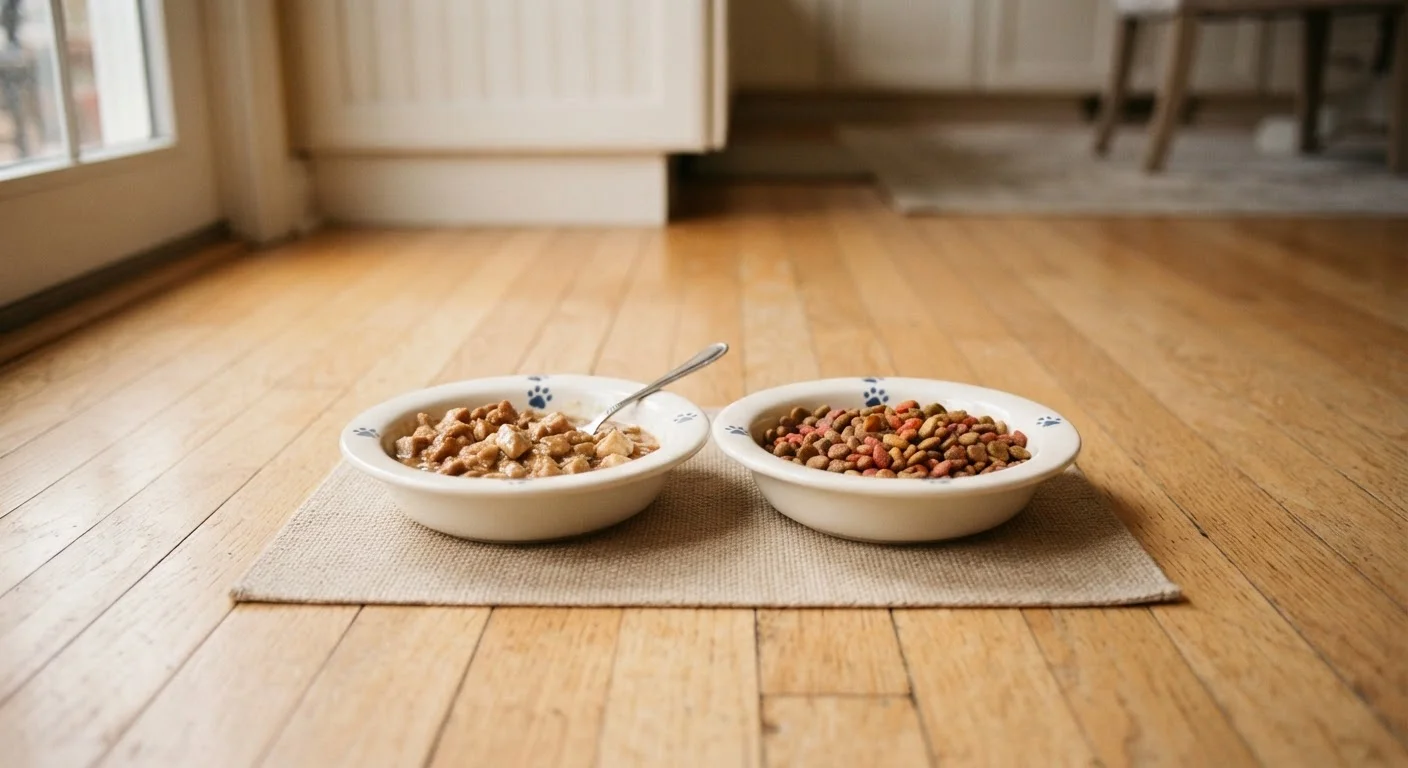
The single most important distinction between wet and dry cat food is water content. Wet food typically contains 70–80% moisture, while dry kibble contains only about 6–10%. That gap has real health implications, because cats evolved as desert animals with a naturally low thirst drive. In the wild, they obtained most of their hydration from prey — not from a water bowl.
Domestic cats often don't compensate for dry food's low moisture by drinking more water. This makes chronic, low-grade dehydration a genuine concern for cats fed exclusively on kibble. Inadequate hydration is linked to urinary tract problems and can accelerate kidney stress — conditions that are unfortunately common in cats. Wet food essentially delivers water with every meal, without requiring your cat to seek out a bowl.
For a deeper look at how macronutrient ratios and moisture interact, see the nutritional differences between wet and dry cat food.
| Criterion | Wet Cat Food | Dry Cat Food (Kibble) |
|---|---|---|
| Moisture content | 70–80% | 6–10% |
| Hydration support | High — delivers water with each meal | Low — minimal contribution to fluid intake |
| Calorie density | Lower per volume | Higher per volume |
| Dental benefit | Minimal | Minimal (evidence is limited) |
| Shelf life after opening | 1–2 days refrigerated | Weeks in sealed container |
| Cost per serving | Generally higher | Generally lower |
| Palatability for picky cats | Often higher — stronger aroma | Variable |
| Suitable for urinary/kidney concerns | Often recommended | Less ideal without additional water intake |
Calories, Weight, and Dental Health
Kibble is calorie-dense by nature. Because most of its water has been removed, a small volume of dry food packs significantly more calories than an equivalent volume of wet food. This can make portion control harder and free-feeding risky for cats that self-regulate poorly. Obesity in cats is a growing veterinary concern, and calorie-dense diets are a contributing factor.
On the dental side, a common belief is that crunching kibble cleans a cat's teeth. The evidence for this is limited. Most cats don't chew kibble thoroughly enough to produce meaningful plaque removal, and dental disease remains prevalent in cats regardless of diet type. Regular tooth brushing or veterinary dental cleanings are considered the more reliable approach to oral health.
~70%
Moisture in typical wet cat food
Compared to roughly 6–10% in dry kibble, wet food delivers substantially more hydration per serving according to general nutritional analysis data.
~50%
Cats over 10 affected by kidney disease
Chronic kidney disease is among the most common conditions in older cats, and adequate hydration through diet is considered a key preventive factor by veterinary professionals.
85%
Adult cats with some form of dental disease
Veterinary dental data consistently shows high prevalence of periodontal disease in cats regardless of food type, underscoring that diet alone isn't sufficient for oral health.
Wet food, while softer, doesn't appear to significantly worsen dental outcomes when oral hygiene is otherwise maintained. If dental health is a priority, discuss options with your veterinarian rather than relying on food type alone.
Curious about what feline nutrition myths persist among cat owners? Our piece on cat nutrition misconceptions covers several widely repeated beliefs that don't hold up to scrutiny.
Cost, Convenience, and Practical Feeding
Dry food generally costs less per serving and is more practical for households managing multiple cats or tight budgets. It can be left in a bowl without spoiling quickly, making it compatible with timed feeders or slightly irregular schedules. Wet food, once opened, must be refrigerated and used within a day or two — which adds some routine and cost.
That said, many veterinarians and feline nutritionists suggest a combination feeding approach: scheduled wet food meals supplemented with a measured daily portion of kibble. This strategy can help address hydration needs while keeping costs manageable and offering variety that may keep picky eaters more engaged.
Feeding needs also shift as cats age. Nutritional requirements for senior cats differ meaningfully from those of younger adults — protein needs, palatability preferences, and hydration all become more pressing concerns over time.
This article provides general educational information about cat nutrition and is not a substitute for personalized veterinary advice. Always consult your veterinarian before making significant changes to your cat's diet, especially if your cat has an existing health condition.