
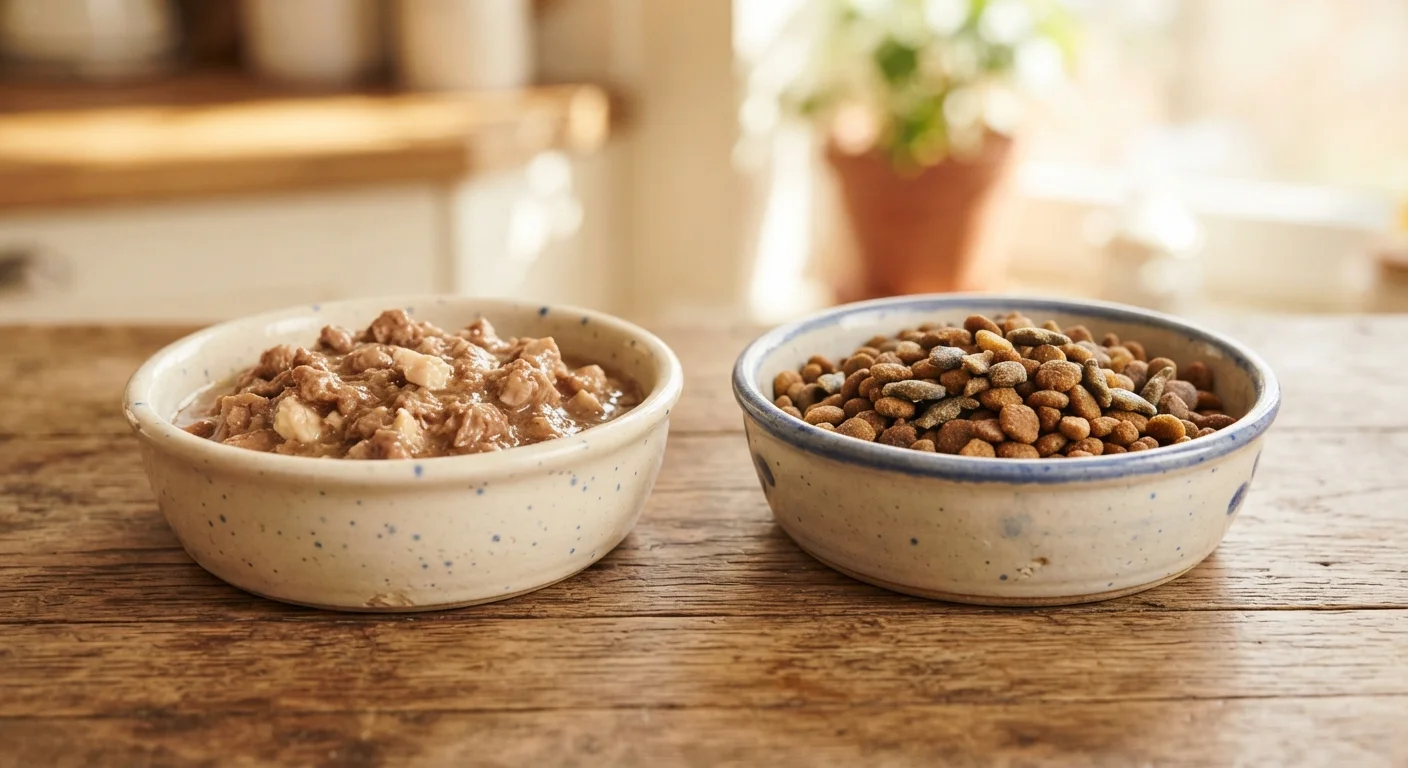
The Moisture Gap: Why It Matters More Than You Might Think
Cats evolved as desert animals and have a naturally low thirst drive, which means they instinctively obtain much of their water from food rather than a bowl. This biological trait makes moisture content one of the most consequential differences between wet and dry food.
Wet (canned) food typically contains 75–80% moisture, while dry kibble sits at just 8–10%. For a cat eating only dry food, the gap in daily water intake can be significant — and chronic low-level dehydration is associated with urinary tract disease, bladder crystals, and kidney stress over time.
This doesn't mean dry food is harmful for all cats — many thrive on it, especially when they drink adequately from water fountains or multiple bowls. However, for cats with a history of urinary issues or early kidney disease, veterinarians often recommend shifting toward wet food as a primary dietary component. For more on how hydration and protein needs change in older cats, the considerations become even more nuanced.
75–80%
Moisture content in wet cat food
Compared to just 8–10% in dry kibble, this gap has meaningful implications for cats with low thirst drives.
~50%
Protein on a dry matter basis (wet food)
High-quality canned foods often deliver substantially more protein than dry equivalents when water weight is removed from the comparison.
2–3x
Higher monthly cost of all-wet feeding
Feeding exclusively wet food generally costs significantly more per month than dry-only feeding, depending on product and cat size.
Protein, Fat, and Calories: Reading the Labels Correctly
A common source of confusion is comparing the nutrient percentages printed on wet and dry food labels directly — this is misleading without adjusting for moisture. Nutritionists use a dry matter basis calculation to make fair comparisons by removing water from the equation.
On a dry matter basis, high-quality wet food often delivers 45–55% protein, while many dry foods range from 30–40%. Cats are obligate carnivores, meaning they require protein-derived nutrients (like taurine and arachidonic acid) that they cannot synthesize themselves. Higher protein content in wet food can be a genuine advantage — though it depends entirely on the specific product's ingredient quality.
Dry food is calorie-dense. A single cup of kibble can contain 300–400 calories, making overfeeding easy, particularly for indoor cats with limited activity. This caloric density is one reason obesity is more commonly linked to unrestricted dry food access.
| Criterion | Wet (Canned) Food | Dry (Kibble) Food |
|---|---|---|
| Moisture Content | 75–80% | 8–10% |
| Protein (dry matter basis) | Often 45–55% | Often 30–40% |
| Caloric Density | Lower per gram | Higher per gram |
| Shelf Life (opened) | 24–48 hours refrigerated | Weeks in a sealed container |
| Average Cost | Higher per serving | Lower per serving |
| Palatability | Generally higher | Varies by formula |
| Dental Benefit | Minimal | Minimal (unless VOHC-certified) |
| Best for Urinary Health | Yes — higher fluid intake | Less ideal without extra water |
Both formats can be nutritionally complete. Look for an AAFCO statement on the packaging — specifically one saying the food is "complete and balanced" for your cat's life stage. That phrase confirms the product meets established minimum nutrient profiles, regardless of whether it's wet or dry.
Dental Health, Palatability, and Practical Trade-Offs
Dry food is often marketed as better for dental health, but the evidence behind this claim is limited. Most cats don't chew kibble long enough to produce meaningful plaque removal. The only foods with demonstrated dental benefit are those specifically formulated and VOHC-approved for that purpose. Regular tooth brushing remains far more effective for feline dental care than either food format.
Palatability is a real practical factor. Wet food's higher fat content and stronger aroma make it more appealing to most cats, which can be an advantage for picky eaters or cats recovering from illness. Conversely, some cats become so accustomed to a single texture or flavor that switching later in life can be challenging — a reason many vets recommend variety early.
When to Discuss Diet With Your Vet
Cats with kidney disease, diabetes, hyperthyroidism, or a history of urinary blockages have specific dietary needs that go beyond general wet-vs-dry comparisons. If your cat has any ongoing health condition, a veterinarian or board-certified veterinary nutritionist should guide food choices. General nutritional guidelines are a starting point — not a substitute for individualized professional advice.
From a cost and convenience perspective, dry food wins on both counts. It stores easily, has a long shelf life, and costs less per calorie. Opened wet food must be refrigerated and used within 24–48 hours, and feeding solely wet food can cost two to three times more per month depending on the cat's size and appetite. For many households, a combination approach — wet food once daily plus a measured dry kibble portion — offers a practical middle ground.
To see how these trade-offs compare in more detail, our overview of what wet and dry food each do for your cat's health covers the topic from a complementary angle. And if you're questioning other feeding assumptions, it's worth reviewing common feline nutrition myths that veterinary science has since clarified.
This article is for general informational purposes only and is not a substitute for professional veterinary advice. Always consult your veterinarian before making significant changes to your cat's diet, especially if your cat has an existing health condition.