
It's Not Random — There's Real Instinct Behind It
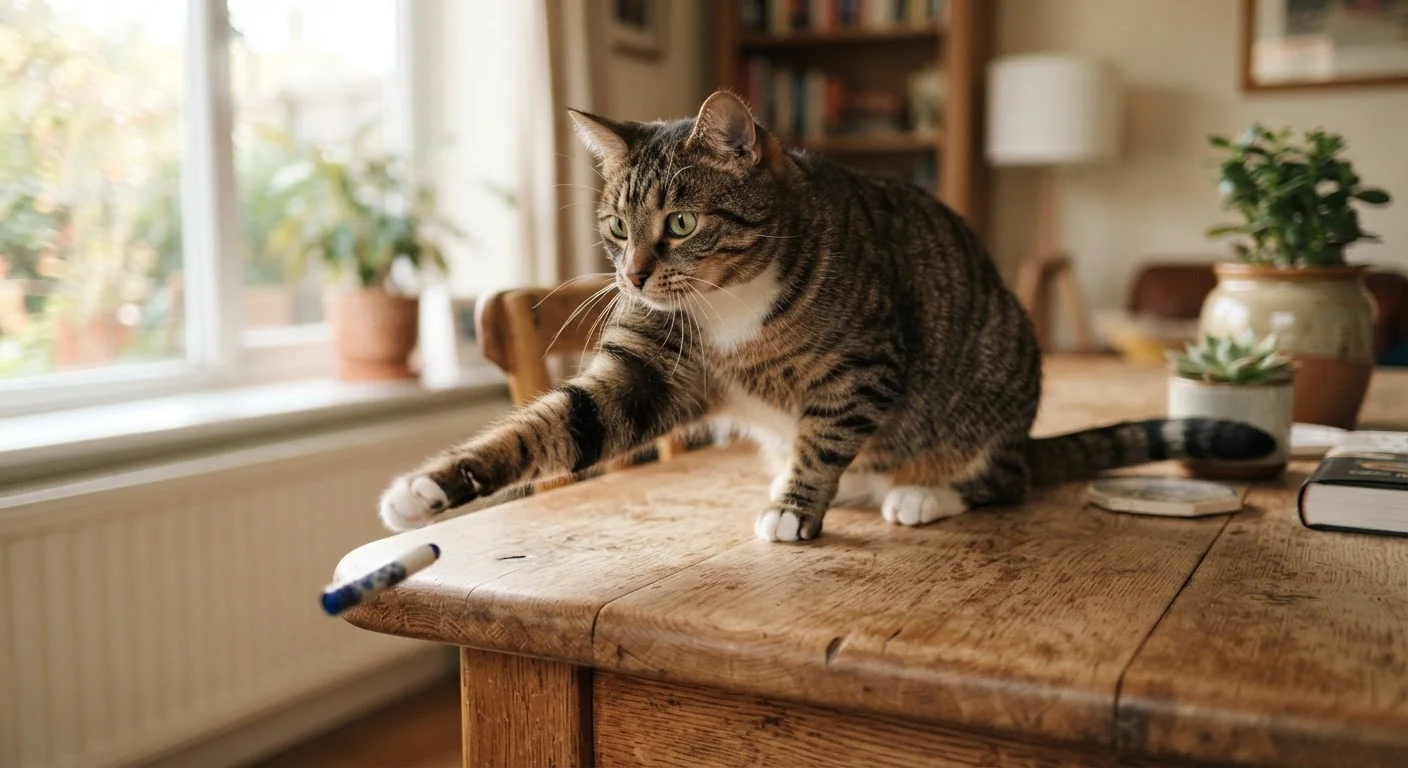
Watch your cat closely the next time it approaches something on the edge of a counter. You'll notice a specific sequence: sniff, stare, then a deliberate paw-tap. That's not random mischief. It mirrors the same motor pattern cats use when investigating potential prey.
Domestic cats retain the sensory wiring of hunters. Their paws are packed with nerve endings that help them assess movement, texture, and resistance. Tapping an object — and watching it fall — gives the cat real information: Is it alive? Does it move? Is it a threat or a target? The shelf-clearing habit your cat has developed is, at its core, a condensed version of a predatory investigation.
This also explains why cats often seem intensely focused before knocking something over, and utterly indifferent once it hits the floor. The process matters more than the outcome. Common myths about cat behavior often frame this as misbehavior or malice — but the reality is far more grounded in biology.
Redirect Before the Swipe Happens
If you notice your cat eyeing an object on a surface with that focused, slow-blinking stare, redirect them with a toy before the nudge occurs. Interrupting the sequence early — rather than reacting after the crash — is far more effective at changing the habit over time.
Attention, Boredom, and the Learned Knock
There's a second layer to this behavior that has nothing to do with prey instinct: learning. Cats are quick to identify cause-and-effect relationships, especially when humans are involved. If a cat pushes a glass off the counter and its owner rushes over — even to scold — the cat has received a reward: your attention.
Over time, some cats develop a reliable personal strategy. When they want interaction and their owner is busy or ignoring them, they head to the nearest elevated surface and start pushing. The behavior that started as curiosity becomes a trained communication tool.
Boredom accelerates this. Indoor cats without adequate mental stimulation seek out ways to create novelty. An object teetering on an edge, then falling, is genuinely entertaining — it introduces movement and unpredictability into an otherwise static environment. Understanding what triggers feline stress can help owners recognize when boredom has crossed into anxiety-driven behavior.
When Attention-Seeking Signals Something More
If a cat that rarely knocked things over suddenly begins doing so frequently, it may be signaling unmet needs — insufficient playtime, a disrupted routine, or early signs of stress. In senior cats, sudden behavioral shifts are worth flagging to a veterinarian, as they can occasionally reflect cognitive or sensory changes.
What to Do About It
If the behavior is infrequent, it generally doesn't need intervention — it's a normal expression of feline curiosity. But if it's becoming disruptive, or if fragile items are at risk, a few practical approaches can help.
Increase interactive play. Daily play sessions with wand toys or puzzle feeders give the predatory impulse a legitimate outlet. Most behaviorists suggest at least two dedicated play sessions per day for indoor cats.
Don't reward the knock. Rushing over immediately after an item falls teaches your cat that the strategy works. Wait a beat before reacting, and redirect attention before the behavior starts rather than after.
Modify the environment. Remove objects from surfaces that attract repeated attention. For shelves or counters you can't clear, placing textured mats or deterrent tape near edges reduces the appeal without punishing the cat.
A consistent daily routine also plays a significant role — cats with predictable schedules tend to exhibit fewer attention-seeking behaviors overall. And if you're curious about other signals your cat sends, see how purring fits into the broader picture of feline communication.
74%
Indoor cats with insufficient daily enrichment
Research on indoor cat welfare suggests a significant majority of pet cats lack adequate daily behavioral enrichment, contributing to attention-seeking and displacement behaviors.
2x daily
Recommended interactive play sessions for cats
Many feline behavior specialists recommend at least two dedicated interactive play sessions per day to satisfy predatory motor needs in indoor cats.