
How Purring Actually Works
Unlike meowing — which cats produce almost exclusively to communicate with humans — purring is generated by a mechanism cats use across many contexts. The sound originates from rapid, rhythmic contractions of the laryngeal muscles, which dilate and constrict the glottis (the part of the larynx surrounding the vocal cords) with each breath cycle. This creates the signature continuous rumble on both inhale and exhale.
The result is a sound that falls roughly between 25 and 150 Hz depending on the individual cat. This is distinct from other vocalizations and requires no open mouth — a cat can purr silently to human ears but still be felt as vibration under a hand.
To understand purring in context alongside tail position, ear angle, and other signals, see our field guide to cat body language.
Purring Is Not Unique to Domestic Cats
Several wild felid species, including cheetahs, bobcats, and cougars, can purr in a manner similar to domestic cats. The distinction researchers often draw is between "purring" species (smaller cats that purr continuously) and "roaring" species (larger cats like lions and leopards). This difference is tied to variations in the hyoid bone structure of the larynx.
What Purring Usually Signals — and What It Doesn't
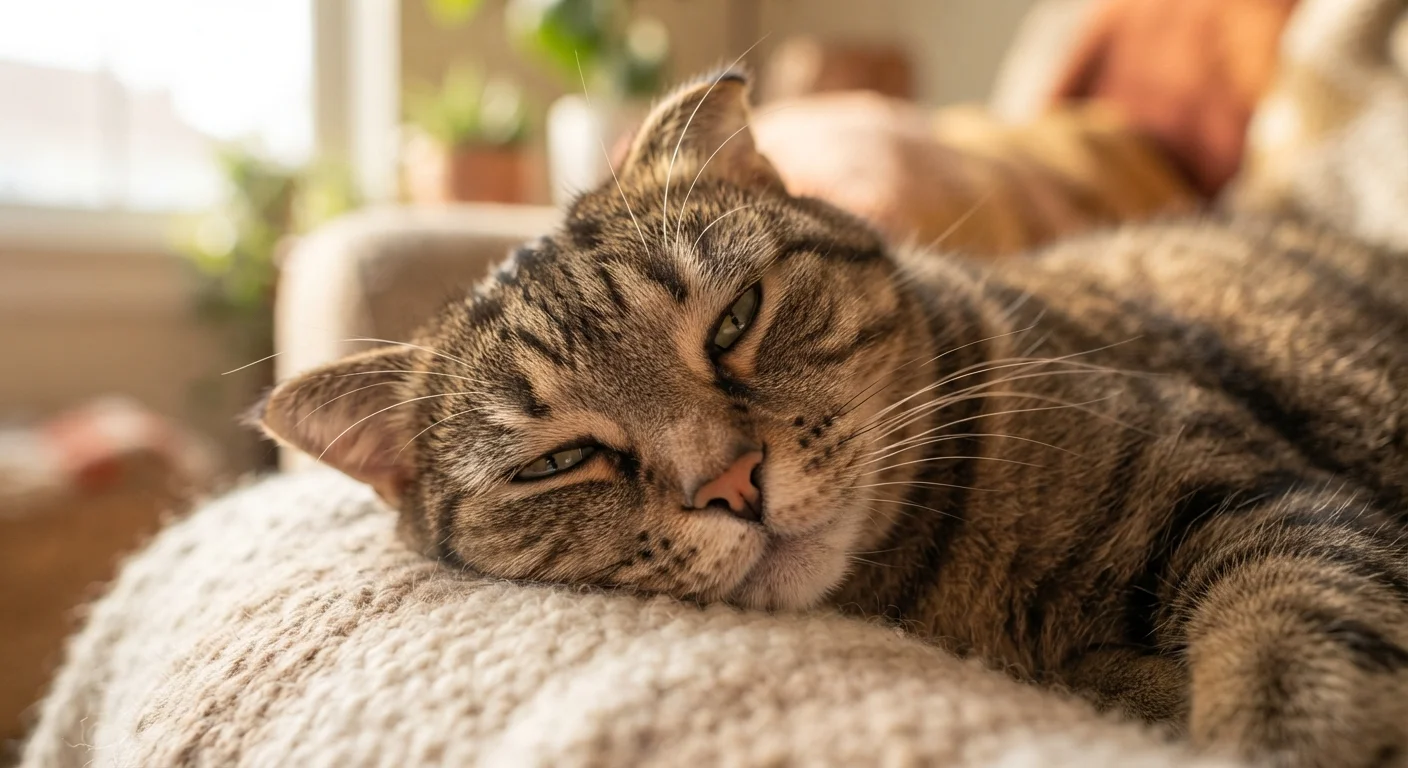
Contentment is the most common association, and it's often accurate. A cat purring while kneading a soft blanket and lying in a warm spot is almost certainly communicating ease and comfort. But the same sound can carry very different meaning depending on circumstances.
Cats also purr when:
- Stressed or anxious — at the veterinarian, during travel, or in a new environment
- Injured or unwell — as a self-soothing mechanism or possible physiological response to pain
- Soliciting food or attention — some cats develop a "solicitation purr" embedded with a higher-frequency cry that owners find harder to ignore
- Giving birth or nursing — queens often purr during labor and while nursing kittens
Because purring appears across such a wide range of emotional and physical states, it cannot be read in isolation. If your cat is purring but also hiding, refusing food, or holding an unusual posture, those signals matter more than the sound alone. Our article on subtle signs a cat may be in pain covers what else to look for.
25–150 Hz
Typical frequency range of domestic cat purrs
Purr frequencies vary by individual cat; the lower end of this range overlaps with frequencies studied in musculoskeletal vibration therapy research.
~70%
Portion of cat owners who misread purring as only contentment
Surveys of cat owners consistently show most people associate purring exclusively with happiness, underestimating its role in stress and pain responses.
Purring as a Healing Mechanism — What the Research Suggests
One intriguing area of study involves the frequency at which cats purr. Vibrations in the 25–50 Hz range have been associated in some research with promoting bone density and accelerating healing in muscle and connective tissue. The hypothesis is that cats may have evolved purring partly as a low-energy way to maintain bone and tissue health during long periods of rest — which cats engage in frequently.
This research is preliminary and should not be taken as established medical fact. It has not translated into proven clinical therapies, and it does not mean owners should interpret a purring cat as self-healing rather than seeking veterinary care when symptoms are present.
When to Call the Vet About Purring
If your cat's purring pattern changes noticeably — especially alongside reduced appetite, hiding, labored breathing, or unusual stillness — treat it as a potential health signal rather than reassurance. Cats mask illness effectively, and a change in any baseline behavior is worth a professional evaluation. Don't wait for obvious distress before calling your veterinarian.
How to Read a Purr in Context
The most reliable way to interpret purring is to treat it as one data point among several. Ask yourself:
- What is the cat doing physically? A relaxed body, slow blink, and loose tail suggest comfort. A hunched posture, tucked limbs, or flattened ears suggest distress even if purring is present.
- What triggered the purring? Settling onto your lap differs meaningfully from purring during a vet exam or after a fall.
- Has the purring pattern changed? A cat who rarely purred now purring constantly — especially if paired with behavioral changes — is worth monitoring closely.
Purring is just one thread in a richer communicative fabric. For the full picture, decoding the full range of sounds your cat makes can help you connect purring to chirps, trills, and other vocalizations. You might also explore how cats show affection for broader context on feline bonding signals.
This article is for general informational purposes only and is not a substitute for professional veterinary advice. If your cat shows signs of illness or distress, consult a licensed veterinarian.