Why Cats Got a (Mostly Unfair) Reputation for Being Cold
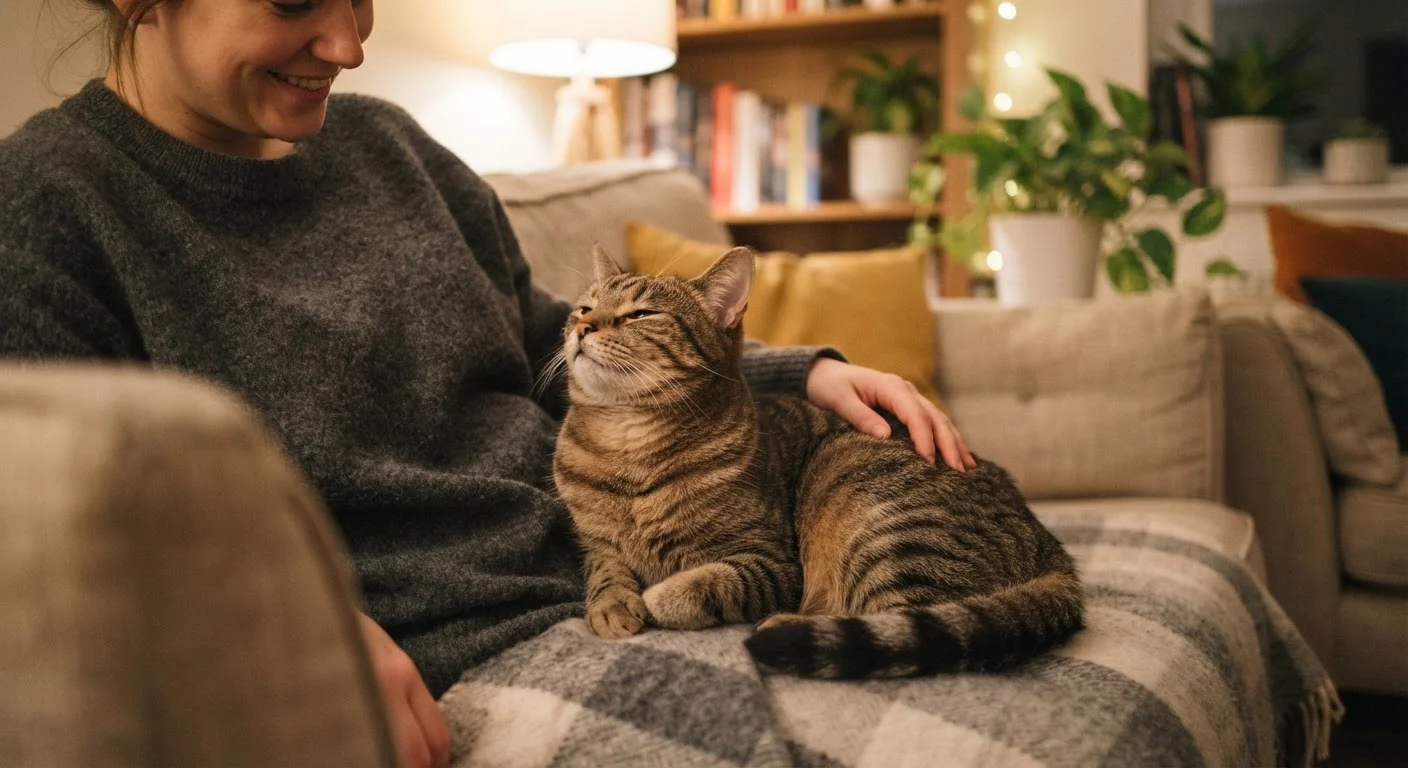
Cats are often labeled aloof, indifferent, or even antisocial — but that reputation has more to do with human expectations than feline reality. Cats evolved as both solitary hunters and social animals, which means their expressions of trust and affection are quieter and more context-dependent than those of dogs. They don't broadcast emotion loudly. Instead, they communicate in a language built on proximity, body posture, and small, deliberate gestures.
Learning to read that language makes a real difference. When you recognize what your cat is actually signaling, you stop interpreting stillness as rejection and start seeing it for what it often is: contentment and trust. For a deeper look at how posture and movement fit into the bigger picture, the field guide to cat body language breaks down feline communication in useful detail.
The Slow Blink
If your cat looks at you and slowly closes and reopens their eyes, that's often described by animal behaviorists as a "cat kiss." In feline social communication, a direct unblinking stare can signal a challenge or threat. Deliberately softening that gaze — closing the eyes slowly — signals the opposite: relaxation and trust. You can try returning the slow blink; many cats respond by blinking back, which researchers have noted as a genuine form of positive social exchange between cats and their owners.
A slow blink is a cat's way of saying they feel completely safe around you.
Head-Butting and Bunting
When a cat presses their forehead or cheek against you — sometimes called "bunting" — they're doing more than seeking attention. Cats have scent glands along their face, and this contact deposits their scent on you. In feline social groups, this behavior marks trusted companions. When your cat head-butts you, they're essentially folding you into their social circle. It's an active, deliberate act of bonding, not just a request for a scratch.
Head-butting deposits scent as a mark of trust — you're being claimed in the best possible way.
Sitting Near You (Not Necessarily On You)
Many cats show affection not by climbing into your lap but by choosing to be in the same room — sitting a few feet away, facing you, or tucking themselves nearby while you work. For cats, proximity itself carries meaning. Choosing to share your space, without any external motivation like food, signals comfort and attachment. Some cats, particularly those that weren't extensively handled as kittens, may never become lap cats but still show genuine affection through this quieter closeness.
Choosing to occupy your space — even from across the room — is a real sign of feline attachment.
Kneading
That rhythmic pushing motion cats make with their front paws — sometimes called "making biscuits" — originates in kittenhood, when kittens knead their mother's belly to stimulate milk flow. Adult cats that continue kneading on soft surfaces, blankets, or people are typically expressing a deep sense of comfort and security. It's a behavior associated with positive emotional states. If your cat kneads on you specifically, that's a fairly direct signal that they associate you with safety and contentment.
Kneading on you specifically links you to the cat's earliest experience of safety and comfort.
Tail Wrapping and the Upright Tail
An upright tail — held straight up, sometimes with a slight curl at the tip — is a greeting behavior cats use with individuals they're fond of. Feral cats observed in colonies display it toward familiar companions. When your cat approaches you with their tail up, it's a greeting that signals positive intent and social recognition. If they wrap that tail around your leg or drape it over another pet, that physical contact carries additional weight as a bonding gesture.
An upright tail on approach is one of the clearest greetings a cat can offer.
Showing You Their Belly
A cat that rolls onto their back and exposes their belly is displaying significant vulnerability. The belly is unprotected, and showing it requires trust. This doesn't always mean they want a belly rub — many cats will swipe at a hand that goes there — but the display itself is a signal of ease and comfort in your presence. Think of it as a trust demonstration rather than an invitation to touch. Respecting that distinction, and responding without reaching in, often reinforces the trust behind the gesture.
A belly-up posture signals deep comfort — it's trust on display, not always a petting invitation.
Bringing You "Gifts"
Cats that bring prey — or toy facsimiles of it — to their owners are engaging in a behavior with social roots. In group-living situations, cats have been observed sharing food with companions they're bonded to. When an indoor cat drops a toy mouse at your feet (or, for outdoor cats, something less pleasant), they may be extending that same social behavior toward you. It's not a performance or showing off — it's closer to inclusion. You're being treated as part of their group.
Delivering a toy or catch to you places you inside the cat's trusted social group.
When Affection Needs a Closer Look
Context matters. A cat that suddenly withdraws after being consistently affectionate may not have stopped caring — but it may be telling you something is off. Behavioral changes, including a drop in social interaction, can sometimes be an early sign of discomfort or illness. Cats are skilled at masking pain, and what looks like aloofness can occasionally be something worth investigating. The subtle signs a cat may be in pain article outlines what veterinarians say owners should watch for.
Reciprocating on Feline Terms
The most effective way to reinforce affection with a cat is to respond in ways they understand. Return a slow blink, allow them to initiate physical contact rather than reaching for them first, and avoid direct eye contact in tense moments. Cats respond strongly to consistency and predictability — regular, calm interaction builds trust more reliably than occasional intense attention.
Similarly, not every behavior that looks odd is affection in disguise — some feline quirks are rooted in instinct rather than social bonding. If you've ever wondered why your cat stares at you and then shoves something off a shelf, that's a different kind of communication entirely. The explanation behind why cats knock things off tables gets into what those instincts actually reveal.
This article is for general informational purposes only and is not a substitute for professional veterinary advice. If you have concerns about your cat's health or behavior, consult a licensed veterinarian.