Houseplants, electrical cords, and open windows can all pose risks to small animals. Use this checklist to pet-proof your space before their arrival.
Key Takeaways
Small pets are vulnerable to hazards that most people never notice — including houseplants, gaps behind appliances, and open toilet lids.
A room-by-room walkthrough before your pet arrives is far more effective than reacting to dangers after the fact.
Electrical cords, toxic plants, and poor ventilation are among the most common and preventable risks.
Hazard-proofing looks different depending on whether your pet is caged, free-roaming, or given supervised out-of-habitat time.
This checklist applies broadly to guinea pigs, rabbits, hamsters, gerbils, ferrets, chinchillas, and similar small animals.
Why Small Pets Need Their Own Safety Audit
Small animals experience your home very differently than you do. A rabbit exploring your living room, a ferret squeezing behind the refrigerator, or a chinchilla chewing on a lamp cord — each of these scenarios reflects how quickly household hazards can become serious for pets whose bodies are tiny, whose curiosity is high, and whose tolerance for toxins is often much lower than a dog or cat's.
This checklist is designed for owners bringing home guinea pigs, rabbits, hamsters, gerbils, ferrets, chinchillas, rats, and similar small or non-traditional pets. Whether your animal will live entirely in a habitat or get daily out-of-cage time, the safety work starts before they arrive. If you're also preparing for a feline companion, our guide to bringing a cat home for the first time covers parallel ground worth reading alongside this one.
Walk through each room your pet will access — or could potentially access — and use the grouped checklist below as your audit tool.
Required
Cord management kit
Bundle and protect exposed electrical cords from chewing, which is one of the most common small-pet hazards.
Required
Pet-safe cleaning products
Replace standard household cleaners with formulas that do not leave toxic residues in areas your pet will access.
Required
Pet gate or exercise pen
Block off unsafe rooms like kitchens during supervised out-of-habitat time.
Required
Door draft stopper or door sweep
Seal gaps under exterior doors and room doors to prevent escape, especially for small rodents.
Required
Non-toxic houseplant reference list
Cross-check all plants in your home against a reliable, species-appropriate toxicity list before your pet arrives.
Optional
Toilet lock or reminder sign
Keep toilet lids closed consistently, particularly in homes with multiple occupants.
Room-by-Room Safety Checklist
Work through each group below, ideally a day or two before your pet's arrival. Mark items as complete only after physically confirming them — not just thinking about them. For a broader readiness picture that includes habitat setup and daily time commitment, see the small pet readiness checklist as a companion resource.
Whole-Home Baseline
Identify and remove or relocate all toxic houseplants to rooms the pet cannot access — common offenders include pothos, philodendron, and dieffenbachia.Must
Bundle, conceal, or cover all exposed electrical cords using cord organizers, split loom tubing, or furniture placement.Must
Seal gaps under exterior doors with door sweeps to prevent escapes, especially for small animals like hamsters and gerbils.Must
Store all cleaning products, pesticides, and air fresheners in closed cabinets or rooms the pet cannot enter.Must
Check that smoke and carbon monoxide detectors are functional — small animals are far more sensitive to airborne toxins than humans.Should
Living Room & Common Areas
Block access behind and beneath sofas, entertainment centers, and recliners — these are common entrapment zones for curious pets.Must
Remove or secure small decorative items, rubber bands, twist ties, and anything small enough to be chewed or swallowed.Must
Ensure recliner and sofa-bed mechanisms are fully closed and checked before sitting when a pet is loose.Must
Move any lit candles, wax warmers, or incense to pet-free zones — open flames and fragrance diffusers pose inhalation risks.Should
Place non-slip mats under habitat stands or play areas to prevent sliding on hard floors.Nice to have
Kitchen
Block access to the kitchen entirely during food prep, or use a pet gate — stoves, hot surfaces, and dropped food are serious hazards.Must
Store all human food, especially avocado, onion, garlic, grapes, and chocolate, in sealed containers or closed cabinets.Must
Check behind and beneath the refrigerator and stove for gaps where a small animal could become trapped near the compressor or heating elements.Should
Keep trash cans in a closed cabinet or use a latch-topped bin to prevent foraging.Should
Bathroom
Keep toilet lids closed at all times — small animals can fall in and are unable to climb out.Must
Store all medications, vitamins, and personal care products in a latched cabinet — many are toxic even in trace amounts to small animals.Must
Remove or stow loose cotton balls, dental floss, and hair ties, which pose ingestion and entanglement risks.Should
Bedroom & Office
Secure laptop and phone charger cords off the floor using cable clips or cord boxes.Must
Remove small objects from low surfaces — paper clips, coins, earrings, and rubber erasers are swallowing hazards.Must
Check under the bed for existing gaps that a pet could reach and become stuck in — use bed risers or foam blockers if needed.Should
Ensure windows have secure screens with no tears or gaps — even a small opening can allow a small pet to fall or escape.Must
Habitat Setup & Placement
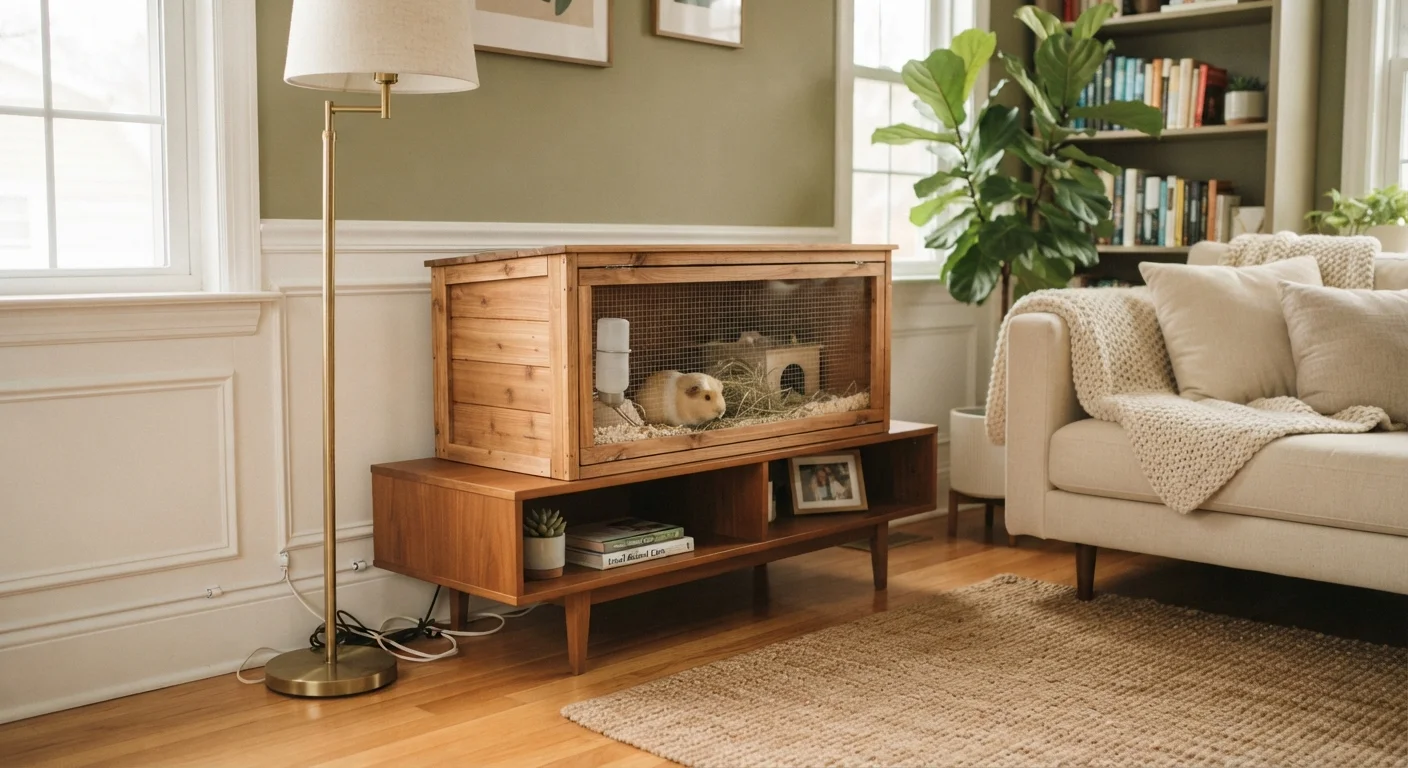
Position the habitat away from direct sunlight, drafts, air vents, and exterior walls to maintain stable temperature.Must
Ensure the habitat is placed on a stable, level surface with no risk of tipping if bumped.Must
Verify that all cage latches, doors, and connections are secure before placing the animal inside.Must
Keep the habitat in a low-traffic area where the animal can rest without constant disturbance, especially during the first week.Should
Place the habitat away from TVs, speakers, and other sources of loud or sudden noise.Should
Keep the habitat out of reach of other household pets — even through mesh, close contact with cats or dogs can cause chronic stress.Must
Scented Products Can Be Harmful to Small Animals
Many small animals, including birds, rabbits, and rodents, have highly sensitive respiratory systems. Essential oil diffusers, scented candles, aerosol sprays, and strongly scented plug-ins can cause respiratory distress even when used in adjacent rooms. Ventilate thoroughly before allowing your pet access to any recently cleaned or scented area, and avoid using these products in the same room as your pet's habitat.
Once your space is safe, the next step is learning to interact with your new pet calmly and confidently. Handling small pets without causing stress covers species-appropriate techniques that reduce anxiety during those first crucial days.
This article is for general informational purposes only and does not constitute veterinary advice. Always consult a licensed veterinarian for guidance specific to your pet's species, age, and health needs.
Pets & Animals Editorial Team is the collective byline for our editorial team and contributor network. Articles published under this byline or an editorial pen name are researched, written, and reviewed according to our editorial standards for clarity, consistency, and independence before publication.
The content on this site is for informational purposes only and is not a substitute for professional advice. Always consult a qualified professional for guidance specific to your situation.