Why Mental Stimulation Matters for Small Pets
Small pets like rabbits, hamsters, guinea pigs, and birds are frequently underestimated in terms of their cognitive needs. In the wild, these animals spend most of their waking hours foraging, exploring, problem-solving, and socializing. Captivity removes most of those challenges — and without enrichment, the result is often boredom-driven stress.
Signs that a small animal isn't getting enough mental stimulation can include repetitive behaviors (like running the same loop repeatedly), bar-chewing, over-grooming, reduced appetite, or unusual aggression. If you've noticed any of these, enrichment is worth examining. For a closer look at how boredom affects welfare across species, see our article on why boredom is a real welfare issue for small pets.
The good news: effective enrichment doesn't have to be elaborate or expensive. The strategies below are practical, species-appropriate, and easy to rotate into your pet's daily routine.
Foraging setups that mimic natural feeding behavior
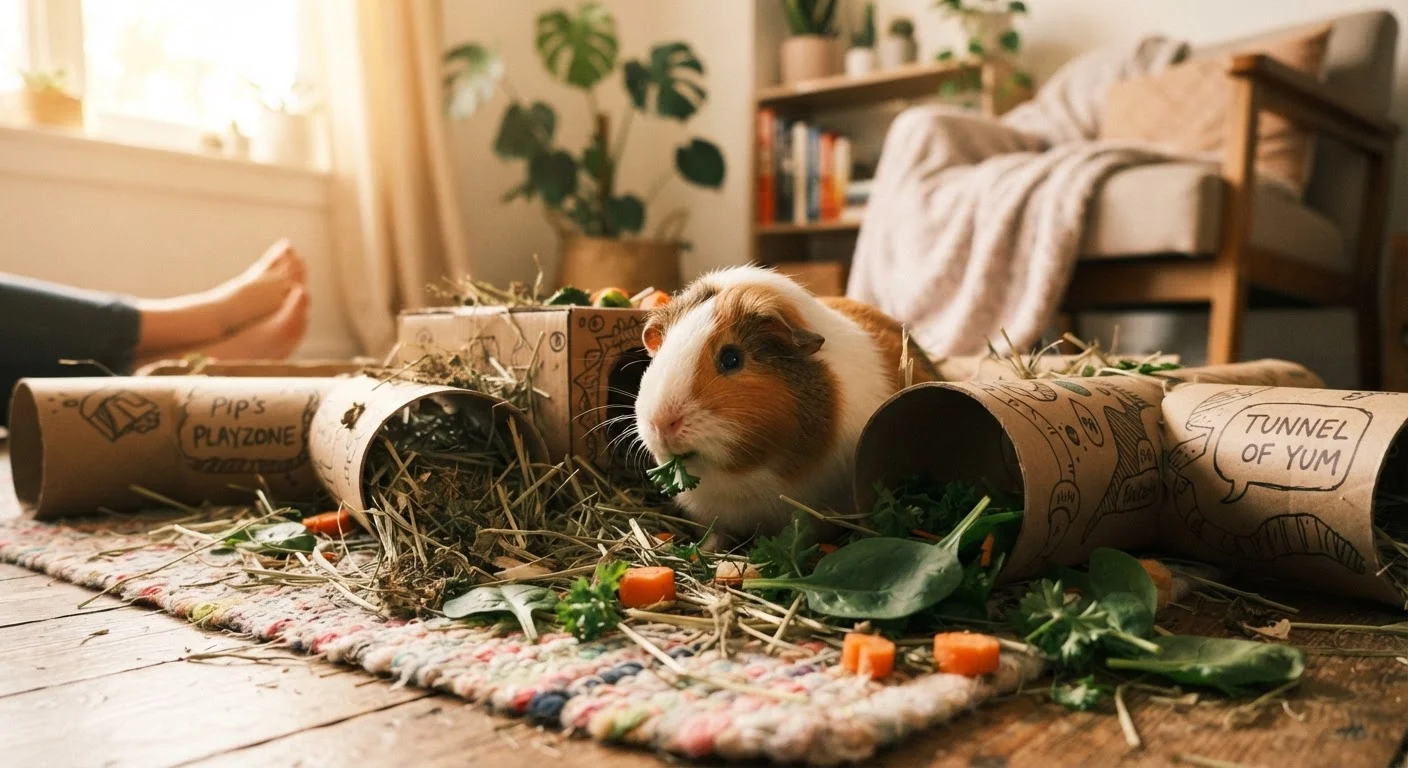
Rather than placing food directly in a bowl, hide portions of your pet's daily diet across their enclosure. Bury pellets under hay for rabbits, tuck seeds into shredded paper for hamsters, or wedge leafy greens into cage bars for guinea pigs. This approach encourages animals to sniff, search, and problem-solve — behaviors that are central to how they'd feed in the wild.
For birds, foraging toys made from untreated wood, paper cups, or small cardboard boxes stuffed with food pieces are highly effective. Rotate the hiding spots daily so the challenge stays fresh.
Hiding food rather than bowl-feeding activates the foraging instinct small pets are hardwired for.
Tunnels, hides, and exploratory structures
Prey animals feel safest when they have places to retreat to and passages to move through. Cardboard tubes, paper bag tunnels, untreated wooden hides, and stacked cardboard boxes give small pets a sense of environmental complexity without requiring much investment. Rabbits especially benefit from larger tunnel systems or dig boxes filled with shredded paper.
Rearrange the layout of these structures every week or two. Even minor changes prompt animals to re-explore their space, which counts as meaningful mental engagement.
Rearranging tunnels and hides weekly gives small pets a reason to re-explore their environment.
Chew items and gnawing opportunities
Rodents and rabbits have continuously growing teeth and a biological drive to chew. Providing safe, species-appropriate chew materials isn't just enrichment — it's basic dental maintenance. Untreated apple or willow branches, hay cubes, and compressed grass mats are widely used options. Avoid anything painted, chemically treated, or made from softwoods like cedar or pine, which can be harmful.
For birds, soft wood toys, shreddable palm fiber, and natural cork all satisfy the urge to manipulate and destroy — which is a normal, healthy behavior, not a problem to suppress.
Chewing is both a dental necessity and a cognitive outlet — always provide safe, species-appropriate options.
Puzzle feeders and simple problem-solving toys
Low-complexity puzzle feeders ask animals to move a lid, roll a ball, or flip a cover to access food. For hamsters and gerbils, even a small cardboard egg carton filled with seeds provides a meaningful challenge. Guinea pigs can work through layered hay piles to find vegetables tucked inside. Birds respond well to hanging treat holders or simple locks they learn to open.
Start with easy configurations and only increase difficulty once your pet is confidently engaging. Frustration without success leads to disengagement, not learning.
Start puzzle feeders at an easy difficulty level — success builds confidence and sustains interest.
Social and sensory enrichment
Many small pets are social by nature. Guinea pigs, for example, are highly motivated by companionship — solitary housing is a recognized welfare concern for the species. If you have a single guinea pig, consider a gradual, supervised introduction to a compatible companion. Our article on why guinea pigs need companions covers this in detail.
For animals housed alone, regular gentle interaction with their owner — calm handling, talking, or short supervised free-roam sessions — provides meaningful social stimulation. Birds especially benefit from varied auditory input like soft background sound or conversation. Sensory enrichment such as safe herbs (fresh parsley, basil) introduced as novel scents also stimulates curiosity without physical risk.
For social species like guinea pigs, a companion animal may be the single most impactful enrichment addition.
Free-roam time in a safe, supervised space
Even a small, pet-proofed area outside the enclosure offers a significant change of scenery, new smells, and the opportunity to move more freely. For rabbits, supervised room time in a bunny-proofed space is an especially high-value enrichment activity. Hamsters can benefit from a secure playpen on the floor. Guinea pigs enjoy low-sided exercise pens on a soft surface.
Always supervise free-roam sessions and remove hazards: electrical cords, toxic houseplants, small gaps behind furniture, and anything chewable that shouldn't be. Keep sessions calm — avoid loud noises or other pets that might startle a small animal during what should be a positive experience.
A brief, supervised free-roam session outside the enclosure is among the richest enrichment experiences you can offer.
Building Enrichment Into Everyday Care
The most sustainable enrichment strategy is one that fits naturally into your existing routine. Scatter-feeding, foraging setups, and habitat rotations take only a few extra minutes and deliver significant behavioral benefits over time.
Rotate enrichment items every 7–10 days
Animals habituate quickly to familiar objects, which means a toy that's exciting on day one may be ignored by day five. Cycling through a small collection of items — rather than leaving everything out at once — keeps each item novel when it reappears. Even rearranging the same items in a different configuration can renew interest.
Keep in mind that enrichment and handling go hand in hand. A stressed animal won't engage with toys or puzzles the way a comfortable one will. If your pet is reluctant or skittish, it may be worth reviewing your handling techniques for small pets before introducing new enrichment elements.
Similarly, how you set up your pet's living space shapes how much enrichment is even possible. A well-designed enclosure gives animals room to explore and express natural behaviors — a foundation that enrichment activities build on.
This article is for general informational purposes only. If your small pet shows sudden behavioral changes or signs of illness, consult a qualified veterinarian. See our reference guide on signs your small pet may be sick for guidance on when to seek veterinary care.