Why Rabbit Nutrition Is So Often Misunderstood
Walk through any pet store and you'll find brightly colored pellet blends, seed mixes, and treat sticks marketed squarely at rabbit owners. The packaging suggests these products are complete, balanced, and everything your rabbit needs. In reality, a great deal of rabbit illness — dental disease, GI stasis, obesity — traces back to feeding habits built around those products.
Rabbits are strict herbivores with a digestive system designed for a high-fiber, low-calorie diet. Their gut motility depends on a near-constant intake of long-strand fiber. When that fiber is replaced by pellets or sugary treats, the system slows — sometimes dangerously. Understanding what rabbits actually need starts with unlearning what most packaging implies. For a broader introduction to rabbit care, see our day-one rabbit care guide.
Myth
Pellets are the main food rabbits need, and a full bowl daily is just good care.
Fact
Pellets are a supplement, not a dietary foundation. Overfeeding them displaces hay and contributes to obesity and GI disease.
Pellets were originally developed to grow rabbits quickly for meat production — not to sustain a pet rabbit for a decade. They are calorie-dense and low in the long-strand fiber that keeps a rabbit's gut moving. A rabbit that fills up on pellets has little appetite for hay, which is where the real nutritional value lies. Most rabbit welfare organizations recommend limiting pellets significantly for adult rabbits and treating hay as the unlimited staple.
Myth
Carrots are a natural, healthy everyday food for rabbits.
Fact
Carrots are high in sugar and should be treated as an occasional treat, not a daily vegetable.
The carrot-and-rabbit association is deeply embedded in popular culture, but it doesn't reflect how wild or domestic rabbits actually eat. Rabbits in nature rarely encounter root vegetables; their diet is almost entirely grass and leafy plant material. Carrots, like other root vegetables and fruits, are high in natural sugars that can disrupt gut bacteria balance and encourage weight gain when fed regularly. A small piece once or twice a week is fine for most healthy rabbits — daily feeding is not.
Myth
Seed and nut mix products sold for rabbits are a nutritious treat option.
Fact
Seed and nut mixes are inappropriate for rabbits — too high in fat and calories, and rabbits will selectively eat the tastiest pieces while leaving the rest.
These mixes are often modeled on bird or hamster products and are not suitable for a rabbit's digestive system. Seeds and nuts are high in fat, which rabbits cannot process efficiently, and the selective eating behavior they encourage means the rabbit is getting an even more unbalanced intake than the label suggests. Plain leafy greens or a small piece of herb are far better treat choices. Our small pet nutrition myths article addresses similar misconceptions across other species.
Myth
Rabbits can thrive on iceberg lettuce as their main vegetable.
Fact
Iceberg lettuce is mostly water with negligible nutritional value and can cause loose stools in rabbits.
Not all lettuces are equal. Iceberg is largely water and fiber-poor, offering little beyond hydration. In larger amounts, it can cause diarrhea, which is particularly risky in rabbits because loose cecotropes and liquid stools can indicate — or lead to — more serious gut imbalances. Dark leafy greens like romaine, green leaf lettuce, and arugula are meaningfully more nutritious and better tolerated. Variety across a rotating selection of rabbit-safe greens is the goal, rather than relying on a single leaf type.
Myth
If a rabbit is eating and active, there's no need to monitor their diet closely.
Fact
Diet-related problems in rabbits often develop silently over months before visible symptoms appear.
Dental overgrowth, obesity, and the early stages of GI slowdown can all progress without obvious signs until a crisis point. Rabbits are also prey animals by instinct and tend to mask discomfort. Regular weight checks, observation of droppings, and ensuring hay consumption looks robust are simple habits that catch problems early. A yearly veterinary exam with a rabbit-experienced vet is also worthwhile — routine rabbit care basics covers what those checkups typically include.
Building a Diet That Actually Works
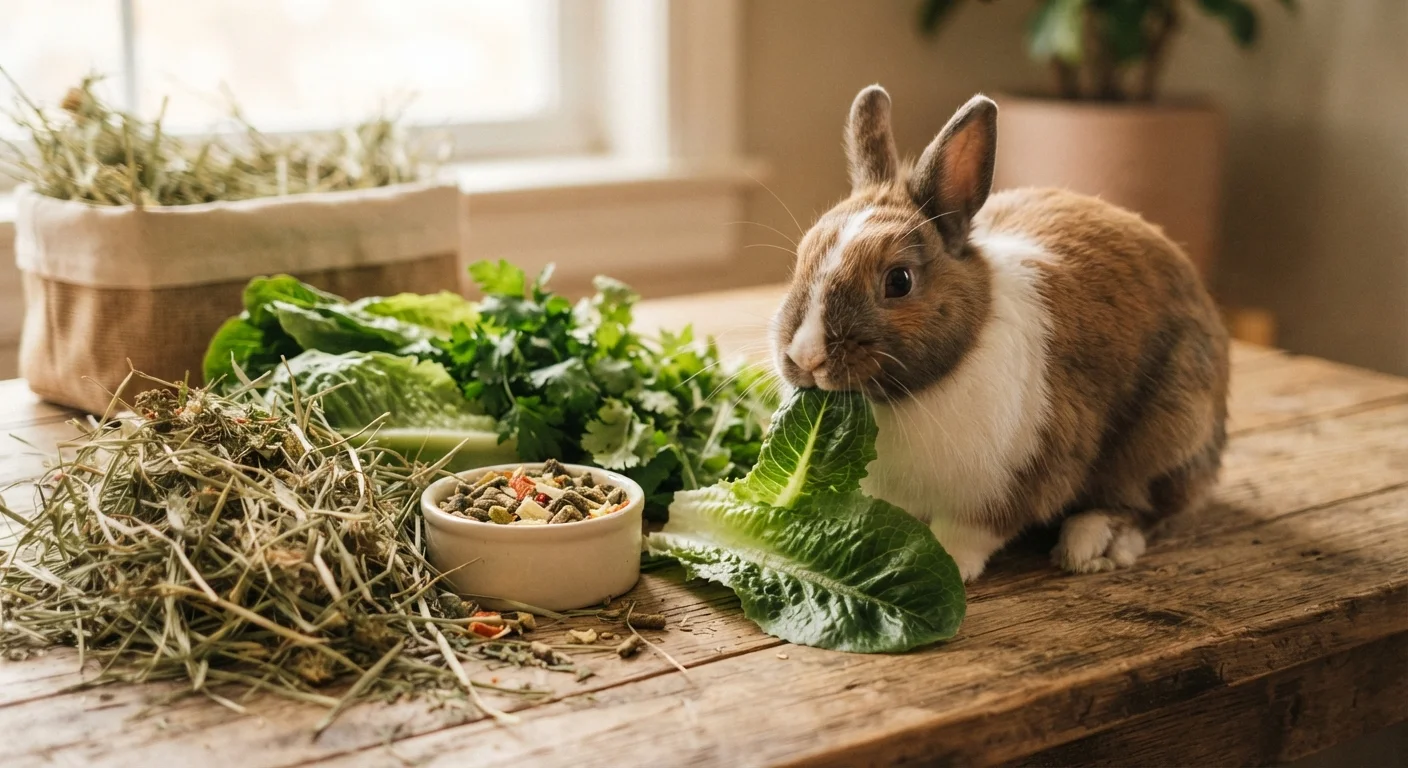
Once the myths are cleared away, the framework for feeding a rabbit is straightforward. Roughly 80–90% of the daily diet should be unlimited grass hay — timothy, orchard grass, and meadow hay are all suitable for adult rabbits. Alfalfa hay is higher in calcium and protein and is generally reserved for young rabbits under six months or underweight animals, not healthy adults.
Fresh leafy greens make up the next layer. Romaine lettuce, arugula, cilantro, parsley, and leafy herb varieties are well tolerated by most rabbits. Introduce new greens gradually to avoid digestive upset, and aim for a varied rotation rather than the same leaf every day. For a detailed breakdown of safe and unsafe foods, our guide to what rabbits can and cannot eat covers the topic thoroughly.
Pellets, when offered at all, should be plain, uniform, timothy-based pellets — not mixed blends with dried fruit, seeds, or colored puffs. A general guideline from rabbit welfare organizations is roughly one-quarter cup of pellets per five pounds of body weight per day, but this can vary; your veterinarian can help tailor the amount to your individual rabbit's age, weight, and health status.
Avoid Mixed Pellet Blends With Colorful Add-Ins
Pellet mixes containing dried corn, colored puffs, seeds, or fruit pieces are not nutritionally appropriate for rabbits. Rabbits selectively eat the high-sugar, high-fat components and leave the rest, resulting in an imbalanced intake. Choose plain, uniform timothy-based pellets only, and check that no unnecessary additives appear in the ingredient list.
Fresh water, changed daily, should always be available. Many rabbits drink more readily from a bowl than a bottle, which can support better overall hydration — particularly important when hay makes up most of their intake.
Signs Your Rabbit's Diet May Need Adjusting
Healthy rabbits on a hay-rich diet produce two types of droppings: firm round fecal pellets and softer cecotropes, which they eat directly from their hindquarters. If you notice misshapen, very small, or strung-together droppings, or if your rabbit is leaving cecotropes uneaten, the diet is often the first thing to examine.
Dental problems are another downstream consequence of low hay intake. Chewing hay grinds the teeth down naturally; without it, teeth can overgrow and cause pain, drooling, and eventually appetite loss. If your rabbit is eating less, dropping food, or seems uncomfortable while chewing, a veterinary dental exam is warranted — don't wait to see if it resolves on its own.
GI Stasis Is a Veterinary Emergency
Gastrointestinal stasis — when gut movement slows or stops — is a life-threatening condition in rabbits that is closely linked to low hay intake. If your rabbit has not eaten or produced droppings for 12 hours or more, contact a veterinarian immediately. Do not wait to see if the situation improves on its own. Early intervention dramatically improves outcomes.
Weight gain in rabbits is easy to miss under a thick coat. Run your fingers along the spine and ribcage regularly; you should be able to feel the bones without pressing hard. A rabbit where ribs are difficult to feel is likely carrying excess weight, which increases the risk of heart disease, arthritis, and difficulty grooming. Adjusting pellet quantity and ensuring hay is truly unlimited are the starting points — but work with a veterinarian before making significant diet changes for an overweight rabbit.
Feeding rabbits well isn't complicated, but it does require resisting the marketing around them. Hay first, greens second, pellets as a modest supplement — that structure, applied consistently, supports a much healthier and longer life.