
Why Rabbit Nutrition Is So Often Misunderstood
Rabbits are often assumed to be low-maintenance pets with simple dietary needs — a bowl of pellets, some lettuce, and the occasional carrot. In reality, rabbits have highly specialized digestive systems that make dietary missteps genuinely dangerous. Their gut relies on continuous movement fueled by high-fiber roughage, and disruptions can lead to gastrointestinal stasis, a potentially life-threatening condition.
Understanding what rabbits can and cannot eat isn't just helpful — it's essential to keeping them healthy. This guide addresses the most common feeding myths and replaces them with clear, practical guidance. For a broader foundation on caring for a new rabbit, see our complete beginner's care guide.
Myth
Carrots are a rabbit's favorite food and a healthy daily staple.
Fact
Carrots are high in sugar and should only be offered as an occasional treat, not a regular part of the diet.
The carrot-and-rabbit image is deeply embedded in popular culture, but it doesn't reflect rabbit biology. Carrots contain significant natural sugars that, when fed daily, can contribute to obesity, dental disease, and disrupted gut flora. A small piece once or twice a week is plenty — think of it the way you'd think of candy for a child.
Myth
Rabbits can eat any leafy green vegetable, including iceberg lettuce.
Fact
Not all leafy greens are safe or nutritious for rabbits. Iceberg lettuce in particular offers little nutrition and may cause digestive upset.
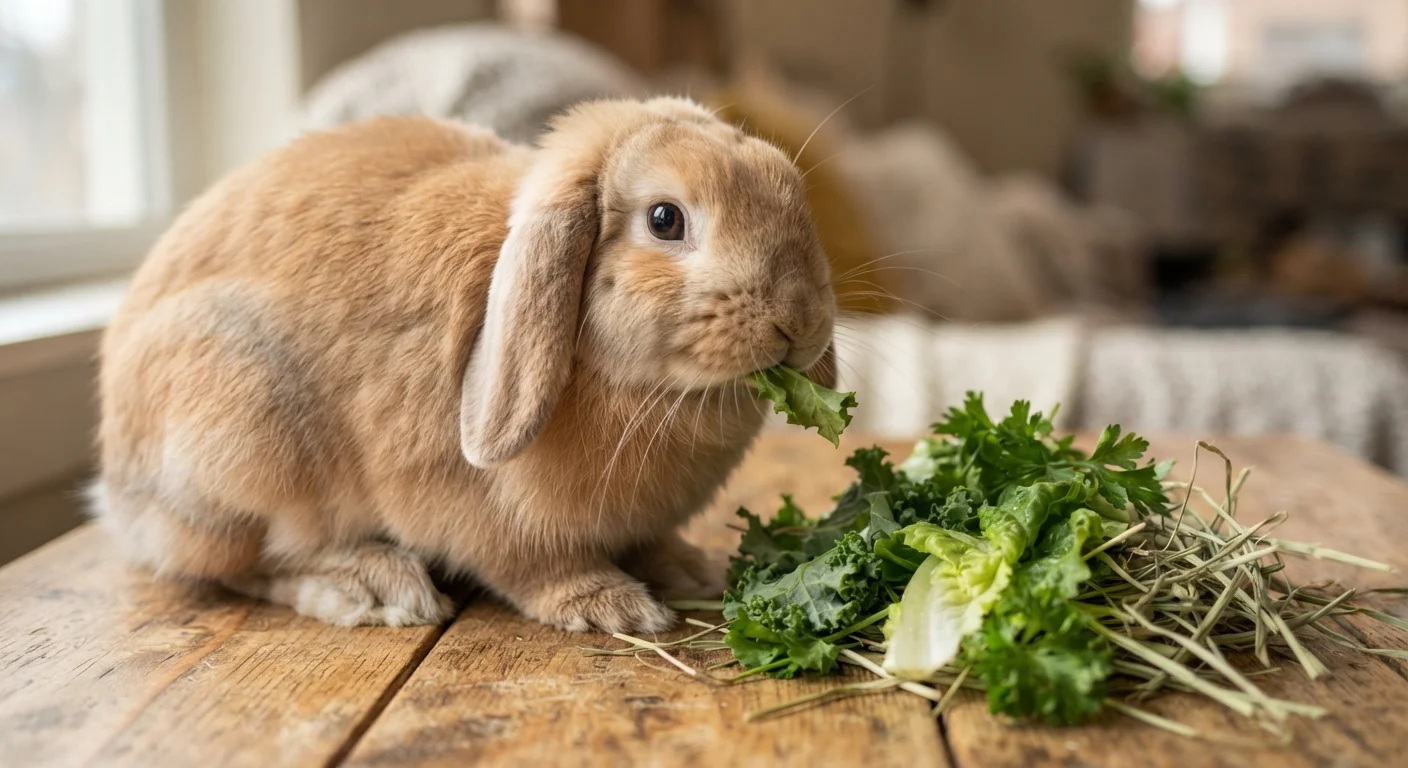
Iceberg lettuce contains a substance called lactucarium, which in larger quantities can cause loose stools and lethargy in rabbits. It's also mostly water with almost no fiber or nutrients. Dark leafy greens — like romaine, green leaf lettuce, cilantro, and parsley — are far better choices. Always introduce new greens one at a time so you can monitor for any digestive reaction.
Myth
Pellets should be the foundation of a rabbit's diet.
Fact
Pellets are a supplement, not a staple. Hay — not pellets — should make up the bulk of what a rabbit eats each day.
Many rabbit owners fill a bowl with pellets and assume the job is done. But pellets lack the long-strand fiber that keeps a rabbit's gut moving and their teeth worn properly. Over-reliance on pellets is a common cause of obesity and dental problems in pet rabbits. Hay should be available at all times, and pellets offered in controlled, modest portions as a dietary top-up.
Myth
Rabbits can safely eat the same fruits and vegetables humans eat.
Fact
Several common human foods — including onions, avocado, and rhubarb — are toxic to rabbits and must be kept out of reach entirely.
Rabbits cannot vomit, which means they have no mechanism to expel something harmful after ingestion. This makes toxicity far more dangerous for them than for many other animals. Foods from the allium family (onions, garlic, chives) can damage red blood cells; avocado contains persin, which is toxic to rabbits; and rhubarb can harm the kidneys. When in doubt, check with a veterinarian before offering anything new.
Myth
Rabbits don't need much hay once they're fully grown.
Fact
Adult rabbits need unlimited access to hay every day — it is the single most important component of their diet at every life stage.
This myth likely stems from the assumption that pellets replace hay as rabbits mature. They don't. A rabbit's digestive system is designed around the constant processing of long-stem fiber. Without it, gut motility slows, and gastrointestinal stasis — a condition where the digestive system essentially shuts down — can develop quickly and become life-threatening. Timothy hay is the most commonly recommended variety for adult rabbits; alfalfa hay is higher in protein and calcium and is generally reserved for young or underweight rabbits.
Foods That Are Genuinely Dangerous for Rabbits
Beyond the myths, there are foods that pose clear, documented risks to rabbits and should never be offered under any circumstances.
Toxic Foods Require Immediate Veterinary Attention
If your rabbit has ingested any potentially toxic food — including onions, garlic, avocado, or rhubarb — contact a veterinarian or emergency animal clinic right away. Do not wait for symptoms to develop. Because rabbits cannot vomit, even a small amount of a toxic substance can cause serious internal harm quickly.
- Alliums (onions, garlic, leeks, chives): These vegetables can damage red blood cells in rabbits and may cause a condition called hemolytic anemia, even in small amounts.
- Avocado: All parts of the avocado plant contain persin, a compound toxic to many animals including rabbits.
- Rhubarb: Contains oxalic acid at levels that are harmful to rabbit kidneys.
- Iceberg lettuce: While not acutely toxic, it contains lactucarium, which can cause diarrhea, and offers virtually no nutritional value. Darker leafy greens are far better choices.
- Nuts, seeds, and grains: These are too high in fat and starch for a rabbit's digestive system and can disrupt gut bacteria balance.
- Processed human foods: Bread, crackers, cereals, and any sugary or salty snacks should be strictly avoided.
For a deeper look at how feeding myths affect small pets more broadly, our article on small pet nutrition myths covers related misconceptions across species.
Watch for These Signs of Digestive Distress
A rabbit that stops eating, produces fewer droppings than usual, appears hunched or lethargic, or has a visibly bloated abdomen may be experiencing gastrointestinal stasis or another digestive emergency. These signs should never be treated as minor — contact your veterinarian promptly. Rabbits can decline rapidly when their gut health is compromised.
Building a Balanced Rabbit Diet the Right Way
Once you understand what to avoid, it becomes easier to build a diet that supports long-term health. The framework is straightforward:
- Unlimited timothy hay: This is non-negotiable for adult rabbits. It keeps their digestive tract moving, wears down constantly growing teeth, and provides the fiber their gut bacteria depend on.
- Fresh leafy greens daily: Aim for a variety of safe options — romaine lettuce, cilantro, parsley, arugula, and leafy herbs are generally well-tolerated. Introduce new greens gradually to avoid loose stools.
- Measured pellets: Plain, high-fiber pellets (not mixed seed blends) can be offered in modest amounts. For most adult rabbits, about a quarter cup per five pounds of body weight per day is a commonly cited guideline, but your veterinarian can advise on the right amount for your specific rabbit.
- Fruit as an occasional treat: Small pieces of apple (no seeds), strawberry, or blueberry can be offered sparingly — no more than a tablespoon or two a few times a week.
For a more detailed breakdown of how to proportion each food group, our complementary guide on feeding pellets, hay, and vegetables goes into greater depth. As always, consult your rabbit-savvy veterinarian before making significant changes to your pet's diet.
80%+
Of adult rabbit diet should be hay
Rabbit welfare organizations and veterinary nutritionists consistently recommend hay as the overwhelming majority of an adult rabbit's daily food intake.
~1 tbsp
Max fruit serving per day for an average rabbit
Most rabbit care guides and veterinary sources recommend limiting fruit to very small portions a few times per week due to high sugar content.