
Why Litter Training Rabbits Is Achievable — But Easy to Undermine
Rabbits are naturally inclined to pick one or two spots for elimination, which gives them a real head start compared to many other small pets. That instinct is the foundation litter training builds on. But several common early mistakes can work directly against that natural tendency, leaving owners convinced their rabbit simply "can't be trained" — when the real issue is a fixable setup or habit problem.
If you're just starting out, the complete guide to rabbit care from day one covers the broader housing and bonding essentials worth reading alongside this. Here, we're focusing specifically on where the litter training process breaks down — and what to do about it.
Choosing the wrong litter material, such as clumping cat litter or scented wood shavings.
Why it happens: New owners often grab whatever is convenient at a pet store without knowing that rabbits groom themselves and frequently nibble their litter box hay — making material choice a health issue, not just a comfort one.
Using a litter box that is too small for the rabbit to comfortably turn around in.
Why it happens: Owners often start with a small cat litter pan without accounting for the rabbit's actual body size, leading the rabbit to eliminate just outside the box.
Giving the rabbit unsupervised access to the entire home too soon.
Why it happens: Owners want their rabbit to explore and bond with the household quickly, not realizing that a large, unfamiliar space makes it harder for the rabbit to return reliably to a single box.
Scolding or punishing the rabbit after finding an accident.
Why it happens: Frustrated owners try to communicate disapproval, not realizing rabbits do not connect a correction to a past action the way dogs might.
Skipping or delaying spaying or neutering, then wondering why training stalls.
Why it happens: Some owners assume litter training is purely behavioral and don't connect hormonal marking to the problem, or they delay the procedure due to cost or uncertainty.
Placing the litter box in a high-traffic, noisy, or exposed location.
Why it happens: Owners position the box where it's convenient for them rather than where the rabbit feels secure enough to settle and use it.
Setting Up for Success: What the Right Environment Looks Like
Litter training is only as reliable as the environment supporting it. Once you've corrected the mistakes above, reinforce progress with a few consistent habits:
- One box per living area, minimum. As you expand your rabbit's roaming space, add boxes. Don't expect a rabbit to travel across a large room to reach a single box.
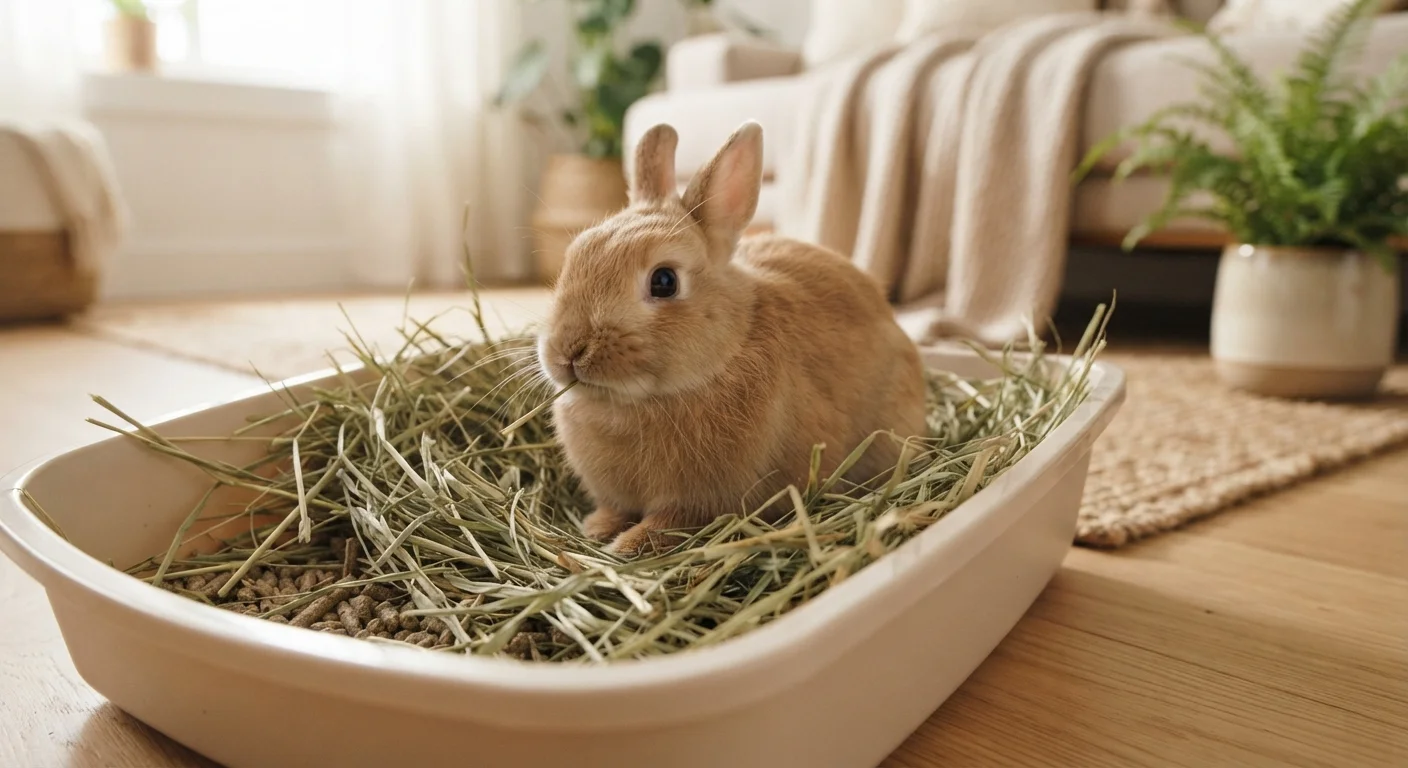
- Keep hay stocked inside the box. Rabbits eat and eliminate simultaneously — it's normal behavior. A litter box filled with hay on top of paper litter encourages longer, more deliberate use.
- Clean boxes frequently. Rabbits are sensitive to smell and may avoid a box that feels too soiled. Spot-cleaning daily and a full change every few days keeps the box inviting.
Avoid Cedar and Pine Shavings
Cedar and pine wood shavings release aromatic oils that can irritate a rabbit's sensitive respiratory tract and have been associated with liver damage with prolonged exposure. Stick to paper-based litters, compressed paper pellets, or plain hay as your litter box fill. When in doubt, ask your veterinarian which bedding materials are safe.
Understanding your rabbit's body language can also help — a rabbit who seems restless, is circling, or sniffing the ground intently may be signaling an urgent need. The rabbit behavior decoder is a useful companion resource for reading those cues accurately.
Spay or Neuter Before You Train
Intact rabbits — especially males — frequently spray urine and scatter droppings to mark territory, making reliable litter training very difficult. Most rabbit-savvy veterinarians recommend spaying or neutering before or during the training process. Consult your vet about the right timing for your rabbit's age and health.
This article is for general informational purposes only and does not constitute veterinary advice. Always consult a qualified, rabbit-experienced veterinarian for guidance specific to your pet's health and care needs.