Why Fabric Content Labels Matter
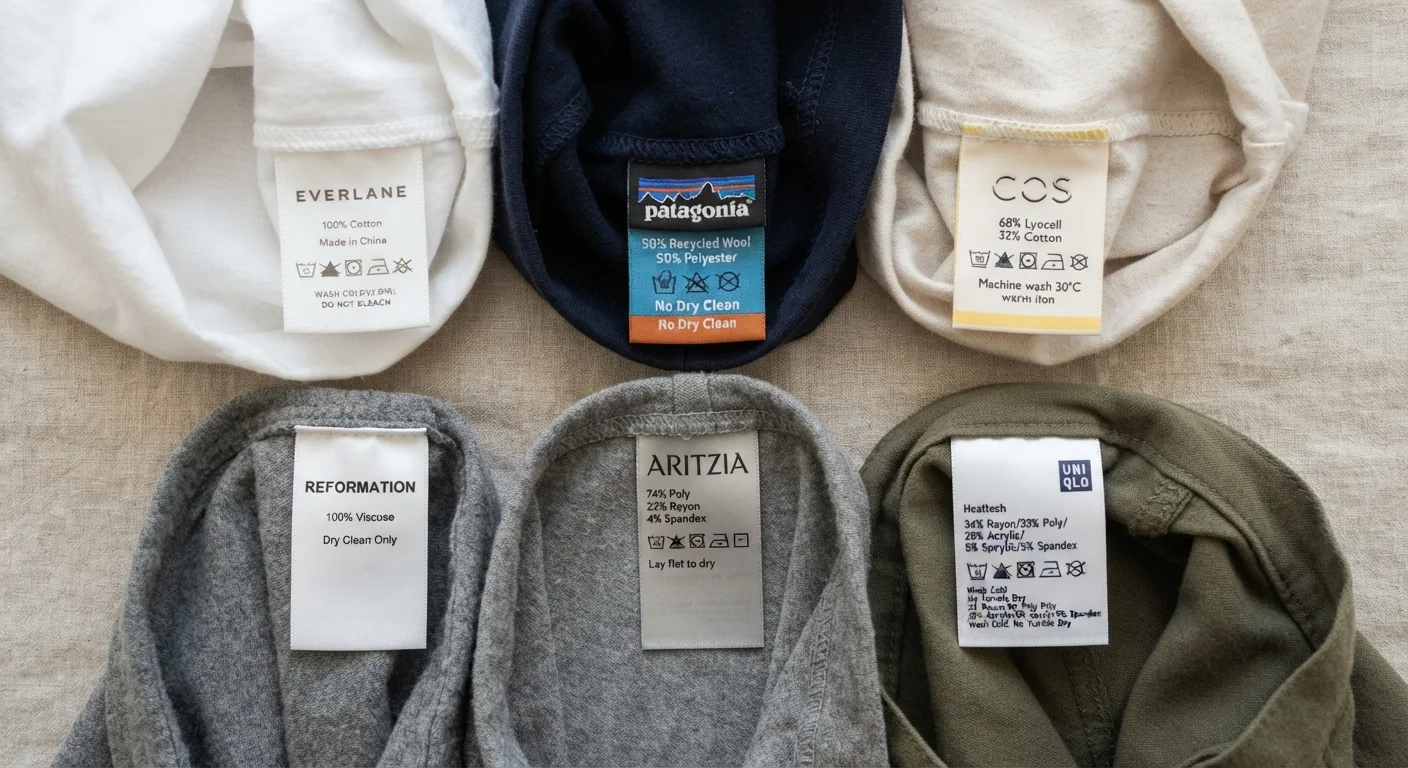
That tiny tag stitched into your collar or side seam isn't just a legal formality — it's a practical guide to how your garment will feel, hold up, and need to be cleaned. U.S. federal regulations require most clothing sold domestically to carry a label disclosing fiber content by percentage, country of origin, and care instructions. Yet most shoppers glance past them entirely.
Understanding what's in your clothes helps you make smarter decisions — whether you're choosing between a breathable summer top or figuring out why your favorite shirt keeps pilling. For a broader look at how fabric interacts with fit and color choices, see our breakdown of the elements that matter most in an outfit.
| U.S. Label Requirement | Fiber content must be listed by percentage, highest to lowest (Federal Trade Commission (FTC) Textile Labeling Rules) |
| Minimum Fiber Disclosure | Fibers making up less than 5% may be listed as 'other fiber' (FTC Textile and Wool Acts) |
| Care Symbols Standard | ASTM D5489 governs U.S. care labeling symbols (ASTM International) |
| Most Common Fiber in U.S. Clothing | Polyester (by volume in the global market) (Textile Exchange Preferred Fiber & Materials Report) |
| Country of Origin | Must appear on every garment label sold in the U.S. (U.S. Customs and Border Protection / FTC) |
| Label Placement | Must be permanently attached and legible for the garment's expected life (FTC Care Labeling Rule) |
Common Fabric Terms Decoded
Labels list fibers from highest to lowest percentage. Here's what each major fiber actually means for your everyday wear:
Cotton
A natural plant fiber that is breathable, soft, and absorbent, making it a staple for everyday wear. It tends to wrinkle easily and may shrink when washed in hot water.
Polyester
A synthetic petroleum-based fiber known for durability, wrinkle resistance, and moisture-wicking properties. It holds color well but traps heat and is less breathable than natural fibers.
Rayon (Viscose)
A semi-synthetic fiber made from processed plant cellulose. It drapes beautifully and feels lightweight, but it can be delicate when wet and often requires gentle or dry cleaning.
Modal
A type of rayon made specifically from beech tree pulp, valued for its exceptional softness and resistance to shrinkage. Commonly found in underwear, loungewear, and knit tops.
Nylon
A strong, lightweight synthetic fiber with excellent stretch recovery. Often blended into leggings, hosiery, and activewear to add durability and shape retention.
Spandex (Elastane/Lycra)
A highly elastic synthetic fiber rarely used on its own; small percentages (2–5%) are blended into fabrics to add stretch and help garments retain their shape.
Linen
A natural fiber derived from the flax plant. It is highly breathable and ideal for warm weather but wrinkles readily and softens with repeated washing.
Wool
A natural animal fiber with excellent insulating properties and natural moisture management. Merino wool varieties are notably soft; most wool requires careful washing to prevent felting or shrinkage.
Acrylic
A synthetic fiber designed to mimic the look and feel of wool at a lower cost. Lightweight and colorfast, but prone to pilling over time with regular wear.
Lyocell (Tencel)
A semi-synthetic fiber made from sustainably sourced wood pulp using a closed-loop production process. Known for its softness, breathability, and reduced environmental footprint compared to conventional rayon.
Blended fabrics — those listing two or more fibers — are extremely common. A "60% cotton / 40% polyester" label, for example, signals a fabric designed to balance softness with wrinkle resistance and durability. Neither fiber is inherently superior; the right blend depends on how and where you'll wear the garment. For a deeper comparison of natural and synthetic options, our natural vs. synthetic fabrics guide walks through the trade-offs in detail.
Reading Percentages and Blends
Federal Trade Commission (FTC) rules require that fiber percentages be accurate within a small tolerance. If a garment is labeled "100% cotton," it must be just that — no synthetic fill hiding in a lining counts separately if it's part of a distinct component (like a separate shell vs. lining).
~64%
Share of global fiber production that is synthetic
According to the Textile Exchange Preferred Fiber & Materials Report, synthetic fibers — led by polyester — dominate global textile production.
5%
Threshold below which a fiber can be listed as 'other'
Under FTC textile labeling rules, any fiber comprising less than 5% of a fabric's weight may be grouped under 'other fiber' on the label.
3+
Separate fabric components sometimes disclosed on one label
Garments with distinct shell, lining, and trim components may each carry separate fiber disclosures on a single care label.
When a label reads "shell: 95% polyester, 5% spandex; lining: 100% polyester," those are two distinct fabric components disclosed separately — not a single blended fabric. This matters most when you're buying for comfort against your skin versus outerwear.
Once you understand what's in a garment, caring for it correctly becomes the next step. See our guide to making clothes last longer for washing, drying, and storage habits that extend the life of each fabric type.
Labels Don't Tell You Everything
Fabric content labels are required by law, but they don't disclose finishing chemicals, dyes, or treatments applied to the fabric — all of which can affect feel, performance, and skin sensitivity. If you have known skin sensitivities or allergies, washing new garments before wearing them is a widely recommended general practice. For questions about specific reactions, consult a dermatologist or allergist.