What Makes a Fabric 'Natural' or 'Synthetic'?
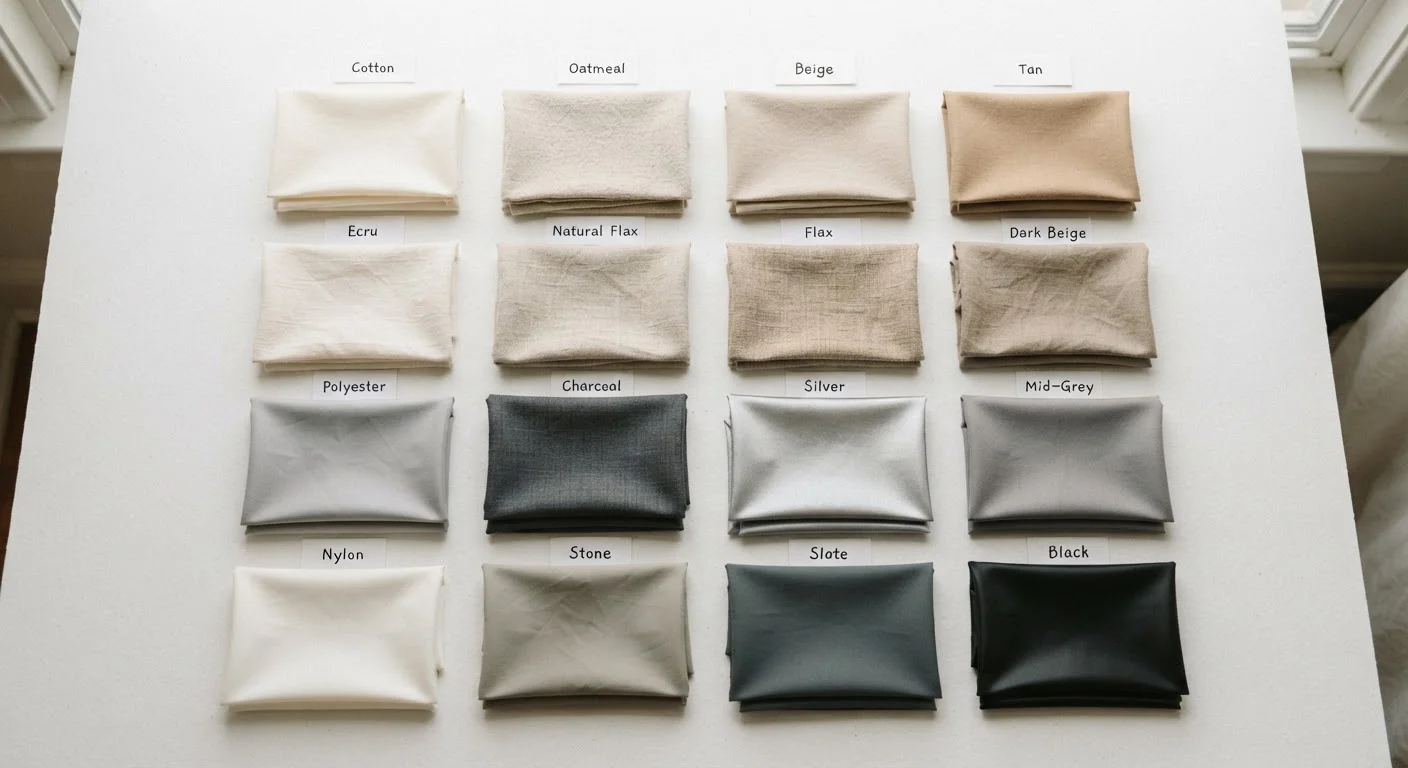
The difference comes down to origin. Natural fabrics are derived from plants or animals — cotton comes from the cotton plant, linen from flax, silk from silkworm cocoons, and wool from sheep. Synthetic fabrics are manufactured from chemical compounds, typically petroleum-derived polymers. Polyester, nylon, acrylic, and spandex all fall into this category.
A third group worth knowing: semi-synthetic or regenerated fibers like rayon and modal, which start as plant cellulose but are heavily processed with chemicals. They behave somewhat like natural fabrics in terms of drape and breathability, but their production is more similar to synthetics. Understanding these distinctions helps you read a garment label with real confidence — for a deeper look at what those labels actually say, see this fabric label guide.
A Note on Semi-Synthetic Fabrics
Rayon, modal, lyocell, and bamboo fabric are often marketed alongside natural fibers, but they undergo significant chemical processing during manufacturing. They can offer excellent softness and drape, but their environmental and performance profile sits between the two main categories. Reading the full fiber content label gives you the clearest picture of what you're actually wearing.
Comfort and Wearability: The Daily Feel
Comfort is where the natural-versus-synthetic debate gets personal. Natural fabrics — especially cotton and linen — are prized for breathability. Their fiber structure allows air to pass through and absorbs moisture, helping to regulate body temperature. This makes them a strong choice for warm weather or people who tend to run hot.
Synthetic fabrics, by contrast, are hydrophobic — they repel water rather than absorbing it. This means sweat can sit on the surface of the fabric and against your skin, which some people find clammy. However, performance synthetics engineered for activewear are designed to wick moisture away quickly, which is a different mechanism entirely.
| Criterion | Natural Fabrics | Synthetic Fabrics |
|---|---|---|
| Breathability | High — promotes airflow | Low to moderate |
| Moisture absorption | Absorbs moisture well | Repels moisture (except wicking synthetics) |
| Wrinkle resistance | Low — wrinkles easily | High — holds shape well |
| Shrinkage risk | Higher — heat sensitive | Lower — stable under heat |
| Durability | Moderate | High |
| Environmental origin | Plant or animal-derived | Petroleum-based polymers |
| Skin sensitivity | Generally gentler | May cause irritation for some |
| Care complexity | More careful handling needed | Machine-wash friendly |
Wool, while natural, is an outlier — it regulates temperature exceptionally well and can feel warm even when damp, but it can also feel scratchy against bare skin for some wearers. Fit, weight, and weave also play a major role in how comfortable a fabric feels. For a broader framework on how fabric fits into the bigger outfit picture, this comparison of fit, fabric, and color is worth a read.
Care, Durability, and Longevity
How you care for a garment is inseparable from what it's made of. Natural fabrics tend to be more sensitive to heat and agitation. Cotton can shrink if washed hot and tumble dried; linen wrinkles easily; wool can felt if not handled gently. That said, well-cared-for natural fiber garments can last for many years.
Synthetic fabrics are generally more forgiving in the wash — they resist shrinkage, hold their shape, and dry quickly. Polyester, in particular, is remarkably durable and retains color well over time. The trade-off is that synthetics can pill with friction and may develop a static cling or odor-retention problem after extended use.
~52%
Share of global fiber production that is synthetic
According to Textile Exchange's Preferred Fiber & Materials Market Report, synthetic fibers — led by polyester — account for roughly half of all fiber produced globally.
3–5 years
Average lifespan of a fast-fashion garment
The Ellen MacArthur Foundation has noted that clothing utilization rates have dropped significantly, with many garments worn far fewer times than their durability would allow.
Blended fabrics — say, a cotton-polyester mix — are specifically formulated to address the weaknesses of both: the natural fiber adds softness and breathability while the synthetic adds durability and wrinkle resistance. Learning the right care habits for whatever fabric you're wearing can dramatically extend its life. Proper clothing care habits are one of the most effective ways to get more value from your wardrobe without spending more.