
Why a Full Closet Still Feels Empty
Standing in front of a closet stuffed with clothes and declaring "I have nothing to wear" is one of the most universal — and genuinely frustrating — experiences in everyday life. It's not about ingratitude or having too little. It's about decision fatigue: the mental exhaustion that sets in when you're faced with too many choices, especially under time pressure.
Research in behavioral psychology suggests that an overload of options doesn't free us — it often paralyzes us. When every item competes for attention equally, your brain defaults to stress rather than confidence. The result? You grab the same three outfits on rotation, ignore everything else, and still feel like you have nothing to wear.
The good news is that this is a systems problem, not a shopping problem. Buying more rarely fixes it. Building a wardrobe with intention is a different skill entirely — and it starts with working smarter with what you already have.
It's Not About Having Less — It's About Seeing More
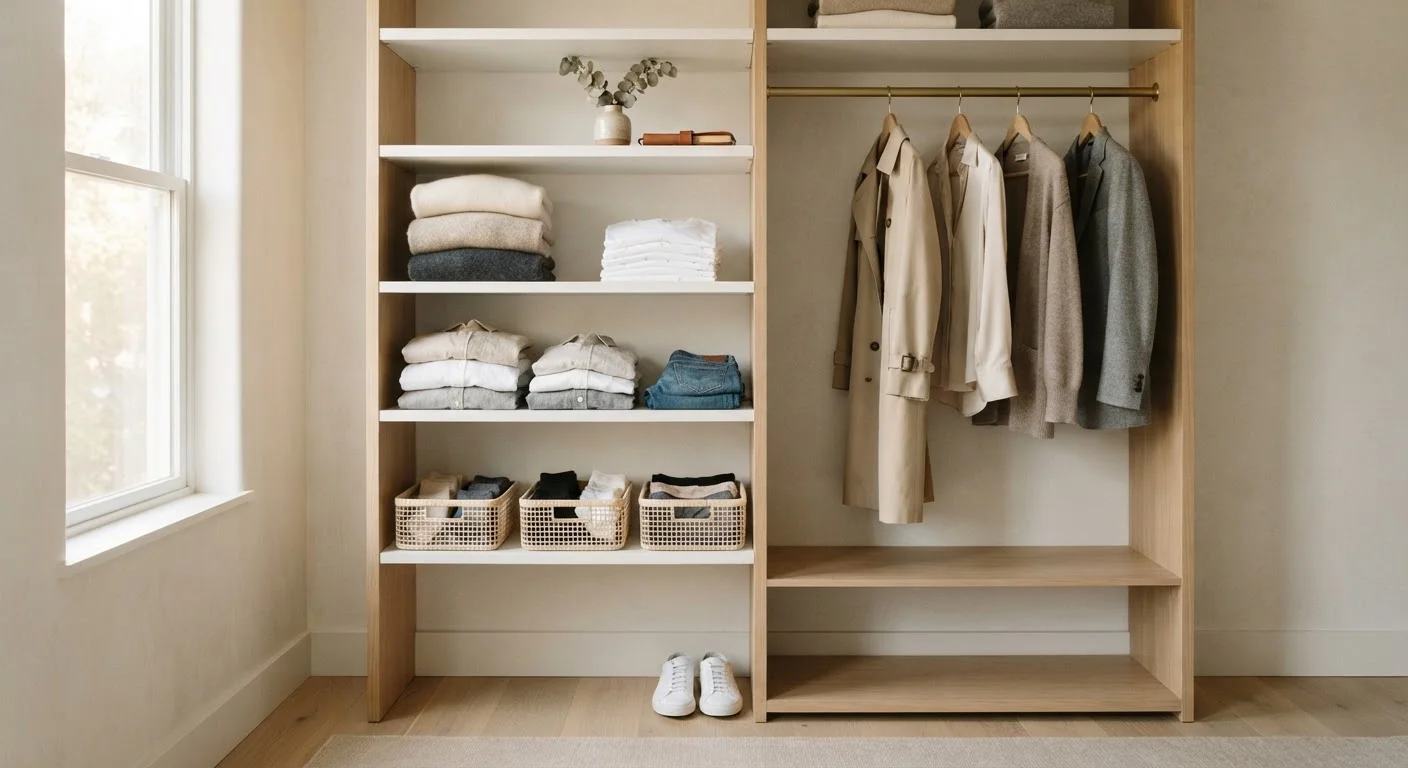
Minimalism is one solution, but it's not the only one. Plenty of people have large wardrobes and dress effortlessly every day. The difference is usually organization and routine, not closet size. Focus on visibility and habit before deciding you need to own fewer things.
What You'll Need Before You Start
You don't need to overhaul your entire wardrobe in one afternoon. This process works in stages, and all you need is a focused block of time and a willingness to be honest with yourself about what you actually reach for.
What you will need
Uniform hangers
Matching hangers reduce visual clutter and help you see clothing more clearly at a glance.
Sticky notes or tags
Useful for temporarily labeling sections (casual, work, occasion) during your initial sort.
A full-length mirror
Allows you to do a quick fit check when planning outfits the night before.
A donation bag or box
Have one ready so items you decide to release don't drift back into the mix.
Step-by-Step: From Overwhelmed to Out the Door
Follow these steps once to set up your system, then rely on it every morning going forward. The upfront effort pays off quickly.
Do a 20-Minute Visibility Pass
Pull every item forward on its hanger so nothing is buried. If your closet has multiple rods or drawers, open them all. The goal is a complete visual inventory — you can't wear what you can't see. Items pushed to the back tend to be forgotten entirely.
Sort by Occasion, Not by Color or Season
Group your clothes into three practical buckets: everyday/casual, work or structured settings, and special occasions. Most people spend 80% of their time in one category — organize that section first and make it the most accessible part of your closet.
Identify Your 10–15 Most-Worn Pieces
Without overthinking it, pull out the items you've worn in the last few weeks. These are your current wardrobe workhorses. Hang or fold them together as a dedicated "active" section. This isn't a capsule wardrobe overhaul — it's just making your favorites faster to find on a rushed morning.
Create a 5-Minute "Tonight" Habit
Each evening, spend five minutes choosing tomorrow's outfit. Lay it out on a chair or hook it somewhere visible. This removes the decision entirely from your morning when time pressure and grogginess are highest. It's a small habit with a disproportionately large payoff in daily stress reduction.
Build Two or Three "Formula" Outfits
A formula outfit is a reliable combination structure you can repeat with different pieces — for example: dark trousers + tucked knit top + flat shoes, or jeans + layered shirt + sneakers. Having two or three formulas removes the need to make creative decisions from scratch every morning. You're just filling in the variables, not rebuilding the equation.
Flag Items That Consistently Get Skipped
After two or three weeks using your new system, note the pieces you still consistently pass over. For each one, ask honestly: Does it fit well right now? Does it go with anything else I own? Do I actually like wearing it? Items that fail all three questions are candidates for donation or reassessment — not more storage.
Don't Reorganize and Then Shop
A freshly organized closet can feel like a blank slate — and that feeling sometimes triggers a shopping impulse. Before purchasing anything new, use your newly visible wardrobe for at least two to four weeks. You may discover pieces you forgot you owned that already fill the perceived gaps.
When the Problem Goes Deeper Than Organization
Sometimes a chaotic closet signals a deeper pattern — habitual impulse shopping, clothes bought for a life you don't currently live, or items kept out of guilt rather than use. If you recognize yourself here, a proper wardrobe audit checklist can help you assess every item methodically and identify real gaps before spending anything new.
It's also worth noting that frequent "nothing to wear" spirals can quietly encourage unnecessary spending. If your closet frustrations tend to end with a shopping cart, pairing this system with budget-conscious dressing principles can help you break the cycle without sacrificing your personal style.
Shopping Won't Fix a Systems Problem
If your closet is already full, adding more items without addressing the underlying organization will reproduce the same problem in a larger closet. The frustration of "nothing to wear" is almost never solved by more clothes — it's solved by better access to the clothes you already have. If you do identify genuine gaps after completing this process, smart shopping principles can help you fill them deliberately rather than impulsively.