
Why Budget Dressing Is Really About Strategy
There's a persistent myth that looking good costs a lot. In practice, style confidence comes far more from intentional choices than from spending power. Plenty of well-dressed people build their entire wardrobe on a modest budget — and plenty of overspenders still feel like they have nothing to wear. The difference is almost always strategy.
If you've ever stood in front of a packed closet feeling stuck, you're not alone — that pattern is explored in depth in our guide on getting dressed when you have nothing to wear. The fix starts before you ever open your wallet.
Build around neutrals and add color through accessories
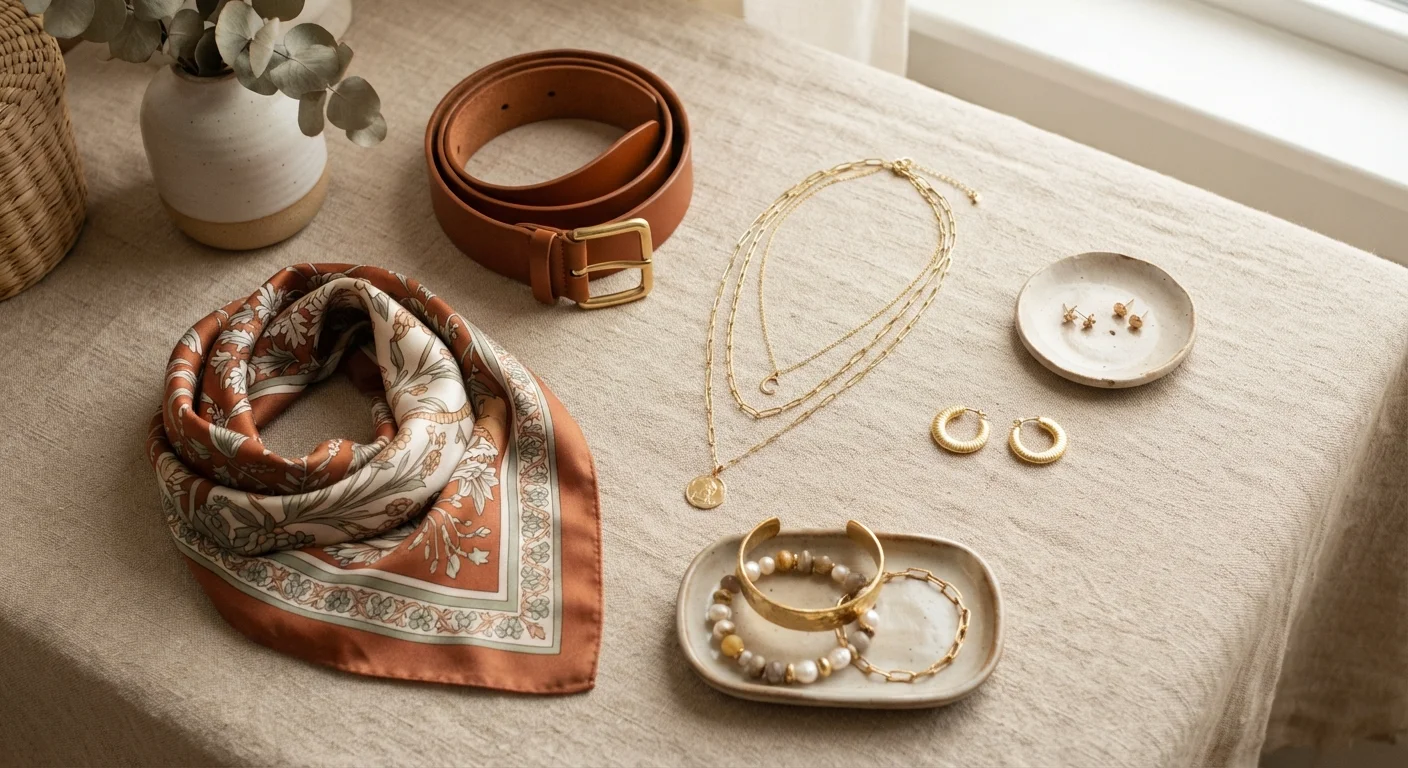
Neutral-toned core pieces — navy, white, grey, black, camel — mix and match with almost everything, multiplying your outfit options without multiplying your closet. Color and personality can come in through scarves, bags, or jewelry, which are easier and cheaper to swap out. This approach stretches every item you own.
Prioritize fit above price tag
Poorly fitting clothes read as low-quality regardless of what you spent. A well-fitting inexpensive garment almost always looks better than an expensive one that gaps, pulls, or bunches. Basic tailoring — hemming trousers, taking in a waist — is often affordable and transforms a garment entirely.
Shop secondhand before shopping retail
Thrift stores, consignment shops, and online resale platforms regularly carry well-made garments at a fraction of their original cost. Going secondhand first gives you access to higher-quality construction at budget prices, and it reduces waste. It does require more patience, but a consistent habit pays off substantially.
Define your style before you shop
Impulse purchases made without a clear sense of your own aesthetic tend to sit unworn. Taking ten minutes before a shopping trip to identify what you actually need — and what colors and silhouettes you consistently reach for — prevents the accumulation of mismatched items that never form complete outfits.
Follow proper garment care instructions consistently
Incorrect washing, drying, or storage is one of the fastest ways to destroy clothes you've invested in, even modestly priced ones. Following care labels extends garment life and delays the need to replace items. Cold water washes and air-drying are two of the most impactful habits.
Choose versatility over novelty when making new purchases
Trendy, statement pieces have their place, but building a wardrobe on novelty items leads to rapid obsolescence and frequent spending. Pieces that work across multiple contexts — casual, work, evening — deliver far more value per dollar. Versatility is the clearest metric for evaluating any potential purchase.
The Core Principles That Stretch Every Dollar
Whether you're rebuilding a wardrobe from scratch or just trying to stop wasting money on clothes you never wear, these principles give you a reliable framework. Apply them consistently and you'll spend less while wearing more.
For broader spending discipline that applies beyond fashion, the strategies covered in smart household spending principles translate surprisingly well to wardrobe decisions too.
Fit, Care, and the Long Game
Two factors determine whether a budget garment looks cheap or pulled-together: how it fits and how well you maintain it. Fit is so foundational that we dedicated a full guide to it — why fit matters more than any other style rule — but the short version is this: a $20 blouse that fits correctly will consistently look better than a $100 one that doesn't.
Maintenance is equally underrated. Washing clothes in cold water, air-drying when possible, and storing garments properly can dramatically extend their lifespan. Our guide to caring for your clothes walks through the specifics. Delaying replacement by even one to two years per garment adds up to meaningful savings over time.
Small Repairs Go a Long Way
A loose button, a small hem, or a minor seam separation doesn't have to end a garment's life. Basic hand-sewing repairs take under ten minutes and require only a needle and thread. Getting comfortable with simple mending is one of the highest-return habits a budget-conscious dresser can build.
Finally, don't shop in a vacuum. Knowing what occasion you're dressing for shapes every purchase decision. If your workplace dress code is unclear, navigating a vague office dress code is a practical next read before you buy anything work-related.