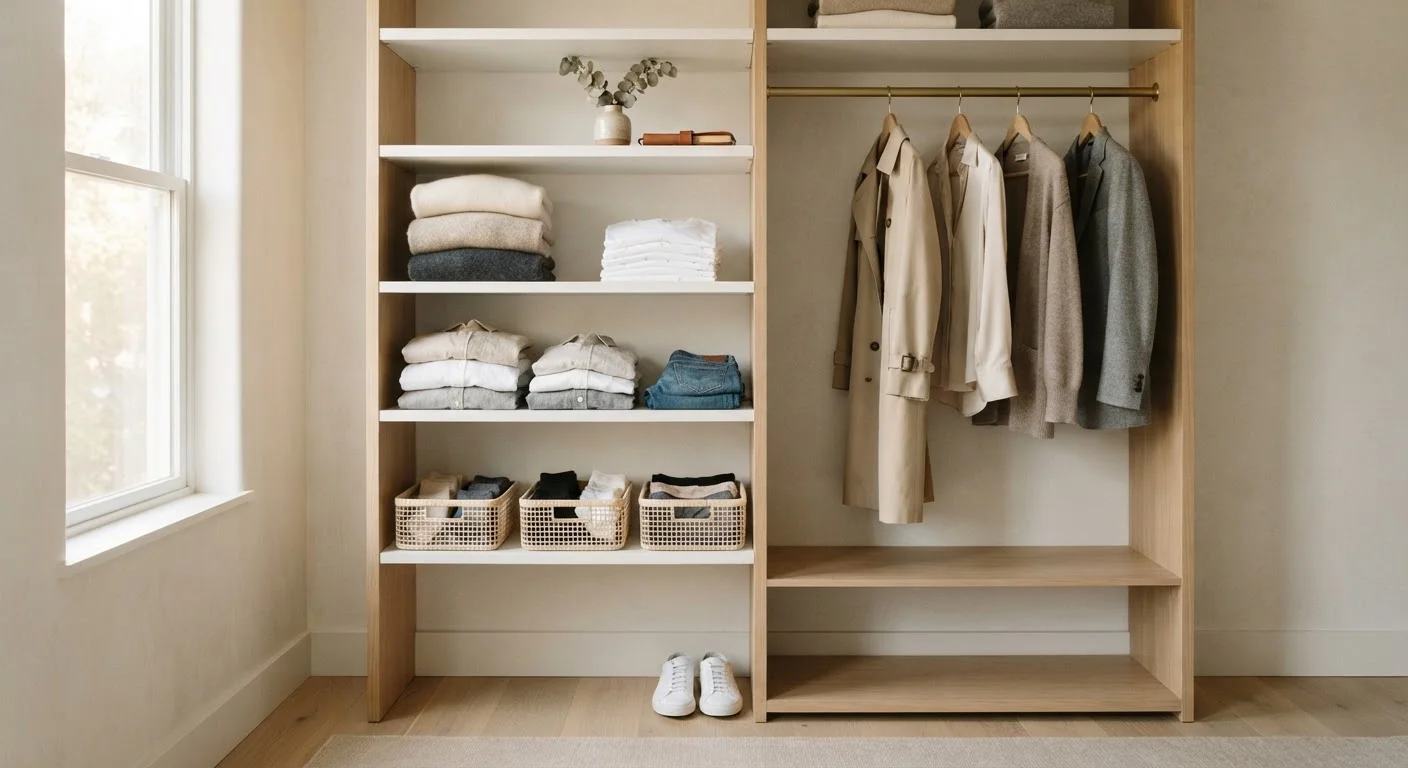

Why Seasonal Transitions Trip People Up
Every year, the temperature shifts and a familiar panic sets in: nothing in the closet feels right for the weather. The impulse is to shop, but that impulse often leads to accumulating pieces that duplicate what you already own — or items that only work for one narrow window of weather. The real challenge isn't a wardrobe gap. It's a wardrobe visibility problem.
Seasonal dressing in the US is rarely binary. Regions vary wildly — a transition month in the Pacific Northwest looks completely different from one in Texas or Minnesota. That's exactly why building a rigid seasonal wardrobe rarely works as well as a flexible, layered approach tied to what you already have.
Before reaching for your wallet, it helps to understand the mechanics: most wardrobe transitions are really about fabric weight, layering order, and color temperature — not entirely new outfits. Our guide on wardrobe staples that earn their keep goes deeper on which pieces genuinely pull double duty across occasions and seasons.
What you will need
Tools and Materials You'll Need
This process is mostly mental and physical organization work. Here's what makes it easier:
Storage bins or vacuum bags
Store off-season clothing out of the way so your active closet only shows relevant options.
Garment labels or tags
Label bins by season so future rotations take minutes instead of an hour.
A full-length mirror
Try on layering combinations to see what actually works before committing to an outfit formula.
Notepad or notes app
Track genuine gaps — items worn out or missing — so any shopping is purposeful rather than reactive.
Step-by-Step: Transitioning Your Wardrobe
Follow these steps in order for the smoothest, most cost-effective seasonal shift. The goal is to maximize what you already own before identifying any real gaps.
Pull Everything Out and Do a Full Visibility Check
Start by bringing all your clothes into one space — including what's in storage bins. You cannot make good decisions about what you need when half your wardrobe is out of sight. Lay items by category: tops, bottoms, layers, outerwear, and accessories.
Sort by Fabric Weight, Not Just Season Label
Instead of thinking in strict seasonal buckets, sort clothes by fabric weight: lightweight (linen, cotton, jersey), midweight (denim, ponte, chambray), and heavyweight (wool, fleece, thick knit). Transitional dressing pulls from all three groups — a lightweight top under a midweight blazer, for example, works across a wide temperature range.
Build Three to Five Core Layering Combinations
Using what you've sorted, physically try on and build a handful of complete layered outfits that work for your actual life — commute, errands, work, weekends. Photograph each combination on your phone so you're not re-solving the same puzzle every morning. Aim for outfits that can shed or add a layer as the day's temperature shifts.
Rotate and Store Off-Season Items Intentionally
Move deep off-season items — think heavy winter coats in early spring, or swimwear in late fall — into labeled storage. Don't banish the entire previous season at once. Keep transitional pieces accessible in your main closet for at least four to six weeks as weather stabilizes.
Log Real Gaps — Then Wait Two Weeks Before Buying
After building your combinations, note any genuine gaps: the one midweight layer you wore out, the missing warm-weather bottom in a neutral that would unlock three outfits. Write these down specifically. Then wait two weeks before purchasing anything. Many perceived gaps close on their own once you've lived with a reorganized wardrobe for a short time.
Accessories Are a Transition Shortcut
Swapping accessories — scarves, hats, lighter or heavier bags — can shift an outfit's seasonal feel without changing a single clothing item. A summer dress with opaque tights, ankle boots, and a chunky knit cardigan is a legitimate fall outfit. Don't underestimate what's already in your drawer.
If after completing this process you do identify genuine gaps — pieces you truly need rather than want — consider timing those purchases strategically. Resources like our seasonal pricing patterns guide can help you understand when clothing categories tend to go on sale.
Making the System Stick Long-Term
A wardrobe transition isn't a one-time event — it's a habit. The readers who find this process easiest are those who've built a closet around versatile pieces that travel across dress codes rather than trend-specific items that expire quickly.
Each time you rotate, you're essentially auditing your style and your spending. If the same items sit untouched season after season, that's useful data — those pieces may not be earning their space. A thoughtful closet, refreshed twice a year without major spending, tends to feel more functional and less overwhelming than one constantly receiving new arrivals. For help building a broader financial habit around mindful spending, the Budgeting Basics hub offers straightforward strategies worth exploring.
Avoid the 'Capsule Overhaul' Trap
The idea of scrapping your wardrobe for a curated capsule is appealing in theory but expensive and disruptive in practice. Real wardrobe confidence comes from working with what you own, not from starting over. If a complete refresh feels necessary, consider it a gradual process spread over multiple seasons — not a single shopping event.