Why Versatile Workwear Matters
Most American workplaces don't operate on a single dress code anymore. A Monday might call for a client presentation while Friday opens into a relaxed team lunch — and plenty of days fall somewhere in between. If your wardrobe can't flex with those shifts, you end up either over-dressed, under-dressed, or buying far more than you need.
The good news: versatility isn't about owning everything — it's about choosing pieces with the right traits. If you're still untangling what terms like "business casual" actually mean in practice, our guide to decoding dress codes is a useful starting point before building your flexible wardrobe.
Below are the core characteristics and wardrobe moves that make workwear genuinely travel across dress codes — without requiring a closet overhaul.
Reach for Neutral, Mid-Range Colors
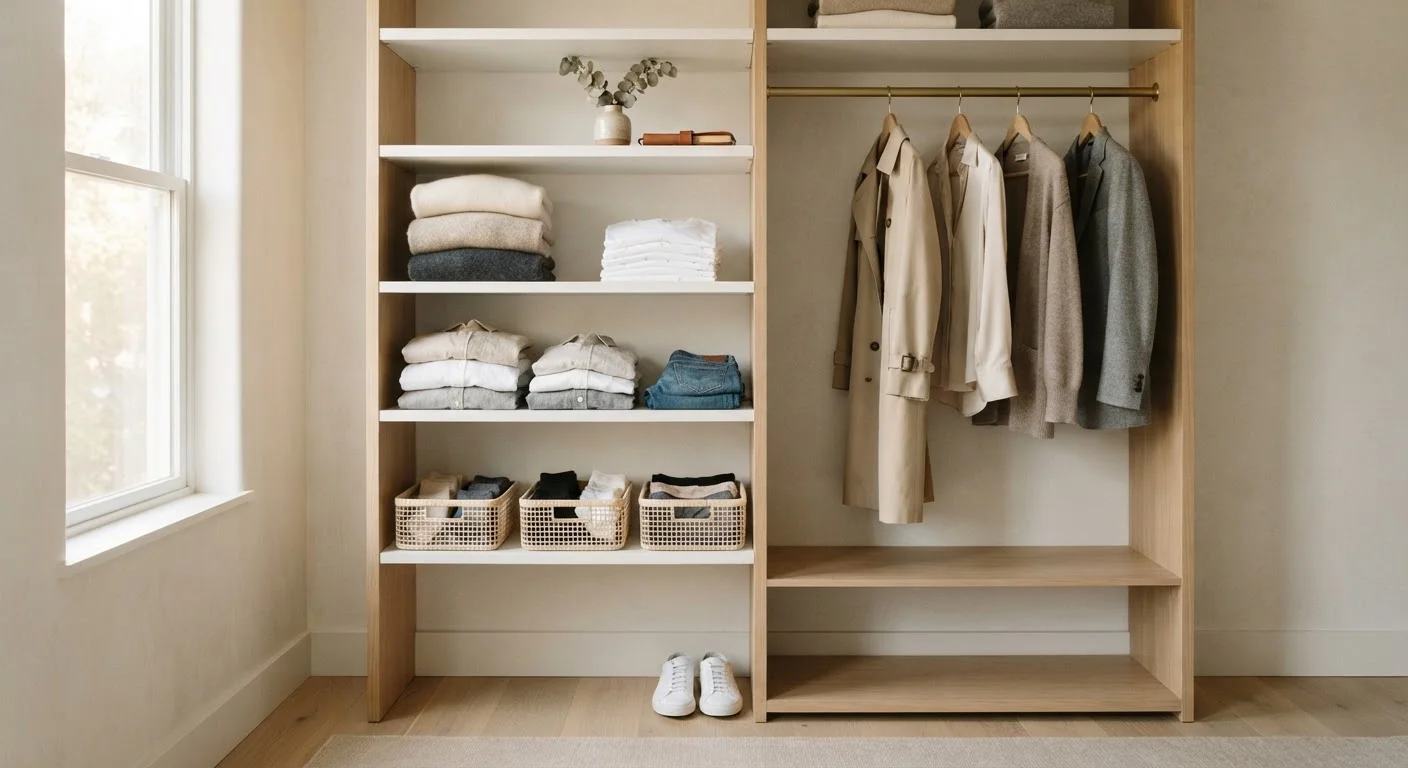
Navy, charcoal, ivory, camel, and stone read as polished in formal settings yet never feel out of place in a relaxed environment. These tones also mix freely with each other, meaning fewer pieces can create more combinations. Avoid overly trendy or saturated colors for your core pieces — they're harder to transition across settings and tend to feel dated more quickly.
Neutral colors are the single biggest predictor of how far a piece will travel across dress codes.
Prioritize Structured Fabric Over Casual Knits
A garment's fabric does a lot of the formality signaling before anyone registers the cut or color. Woven fabrics — cotton twill, ponte, lightweight wool blends — hold their shape and read more formal. Jersey knits and fleece-adjacent textures read casual regardless of the silhouette. When you're shopping for pieces that need to travel, favor structure. A ponte blazer or a woven shirt will step up or down with styling; a slouchy sweater generally won't step up at all.
Fabric structure communicates formality faster than any other design element.
Use Layering as Your Formality Dial
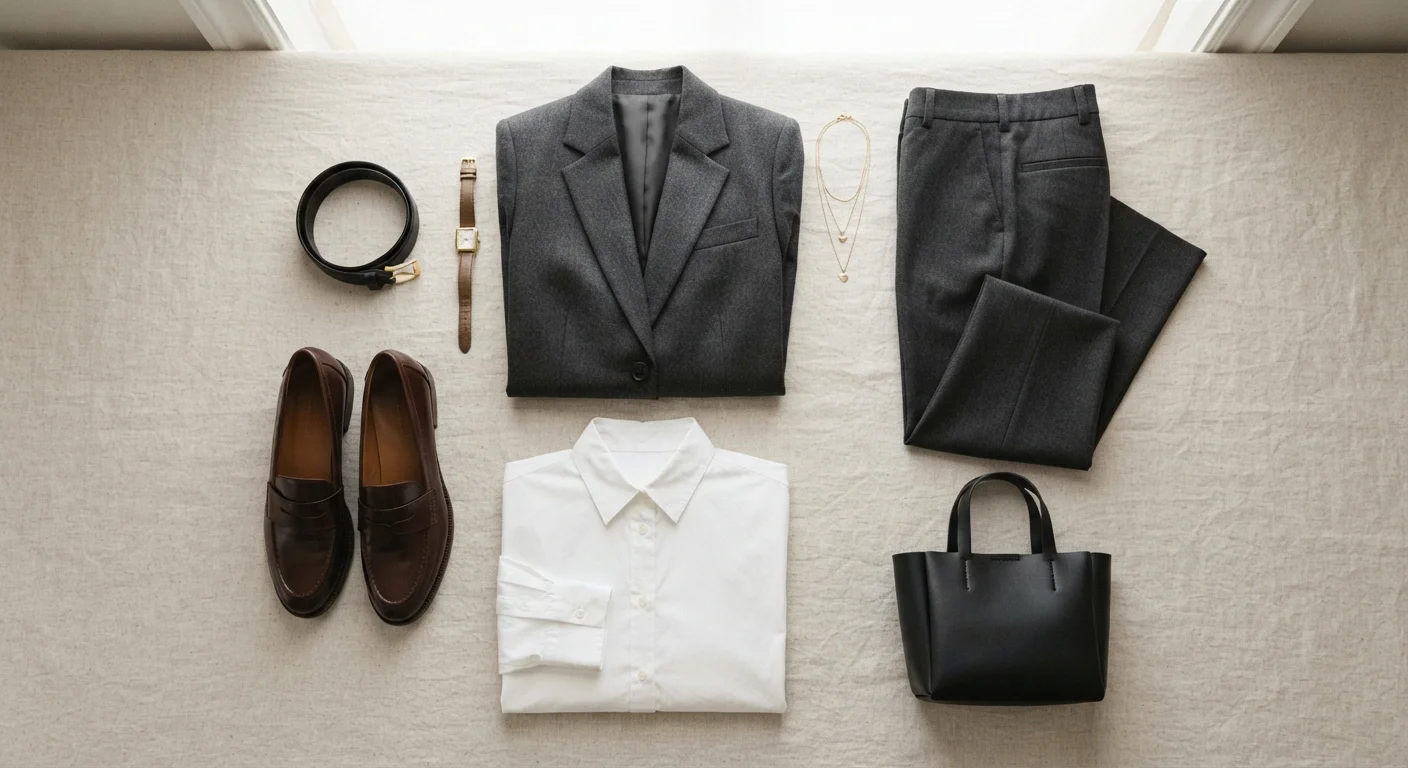
Layering is the most accessible and reversible way to shift an outfit's register. A blazer over a simple blouse and tailored trousers creates a polished, meeting-ready look. Remove the blazer and unbutton the top button and the same outfit reads smart casual. Add a casual jacket and swap to clean sneakers and you're close to relaxed Friday territory. Think of structured outer layers as a dial you can turn up or down as the day demands.
One blazer can effectively give you three different outfit formality levels from the same base.
Choose Trousers Over Jeans for the Core Wardrobe
Trousers in a mid-weight fabric are the most reliable cross-code bottom in a work wardrobe. A clean, straight-leg or slim trouser in charcoal, navy, or camel pairs with everything from a formal button-down to a tucked-in casual tee, and it reads appropriate across a wide formality range. Well-fitting jeans can work in many casual-to-smart-casual offices, but they rarely cross into formal territory without extra effort elsewhere. For genuine cross-code flexibility, trousers are the more reliable investment. If you want a full breakdown of what works where, dressing for vague workplace dress codes covers the nuances clearly.
Tailored trousers in neutral tones are the most versatile bottom in any work wardrobe.
Let Your Shoes Do the Heavy Lifting
Footwear is one of the fastest ways to shift an outfit's formality perception without changing anything else. Clean leather or leather-look loafers, low-heeled mules, and simple ankle boots all sit in a sweet spot — formal enough for most meetings, relaxed enough for casual Fridays. Avoid very high heels or very casual sneakers as your daily defaults if cross-code coverage is the goal. A polished shoe elevates a casual outfit far more than a casual shoe can elevate a polished one.
Swapping footwear is the quickest single-item change that shifts perceived formality.
Keep Accessories Minimal and Interchangeable
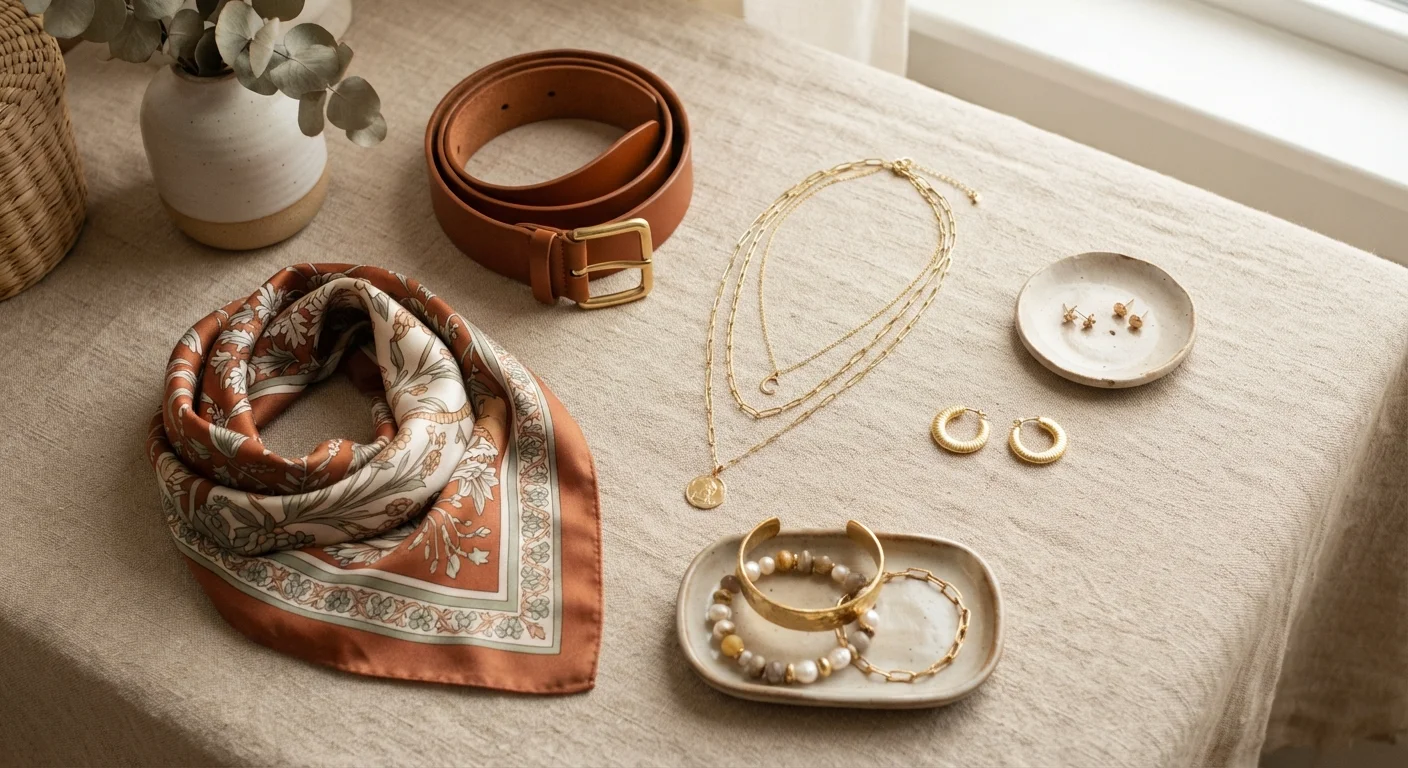
Accessories that are too loud or too themed narrow an outfit's range significantly. A simple watch, a small structured bag, and understated jewelry work across most dress codes without a second thought. When an occasion calls for something more polished, those same accessories don't become a liability. The aim is for accessories to complement rather than define — so the outfit itself does the code-crossing work. For guidance on building a wardrobe where every piece pulls its weight, wardrobe staples that earn their keep is worth a read.
Minimal accessories keep your options open — they add to any look without locking you into one.
Making It Work Every Week
Versatile workwear doesn't happen by accident — it takes a little intention when you're deciding what to keep and what to skip. Focus on pieces that serve at least two occasions well, and you'll naturally start wearing more of what you own. If you're also thinking about how to transition your wardrobe across seasons, shifting your wardrobe without buying everything new offers practical strategies for doing exactly that.
Audit Before You Add
Before purchasing anything new, pull out what you already own and test it against two different formality levels. If a piece can't flex at all, it may be worth replacing with something that does more work. Our seasonal wardrobe checklist is a great structure for this kind of review.
The goal isn't a capsule wardrobe for its own sake — it's a working wardrobe that actually keeps up with your life. A handful of pieces with strong versatility traits will carry you further than a closet stuffed with single-occasion buys.