
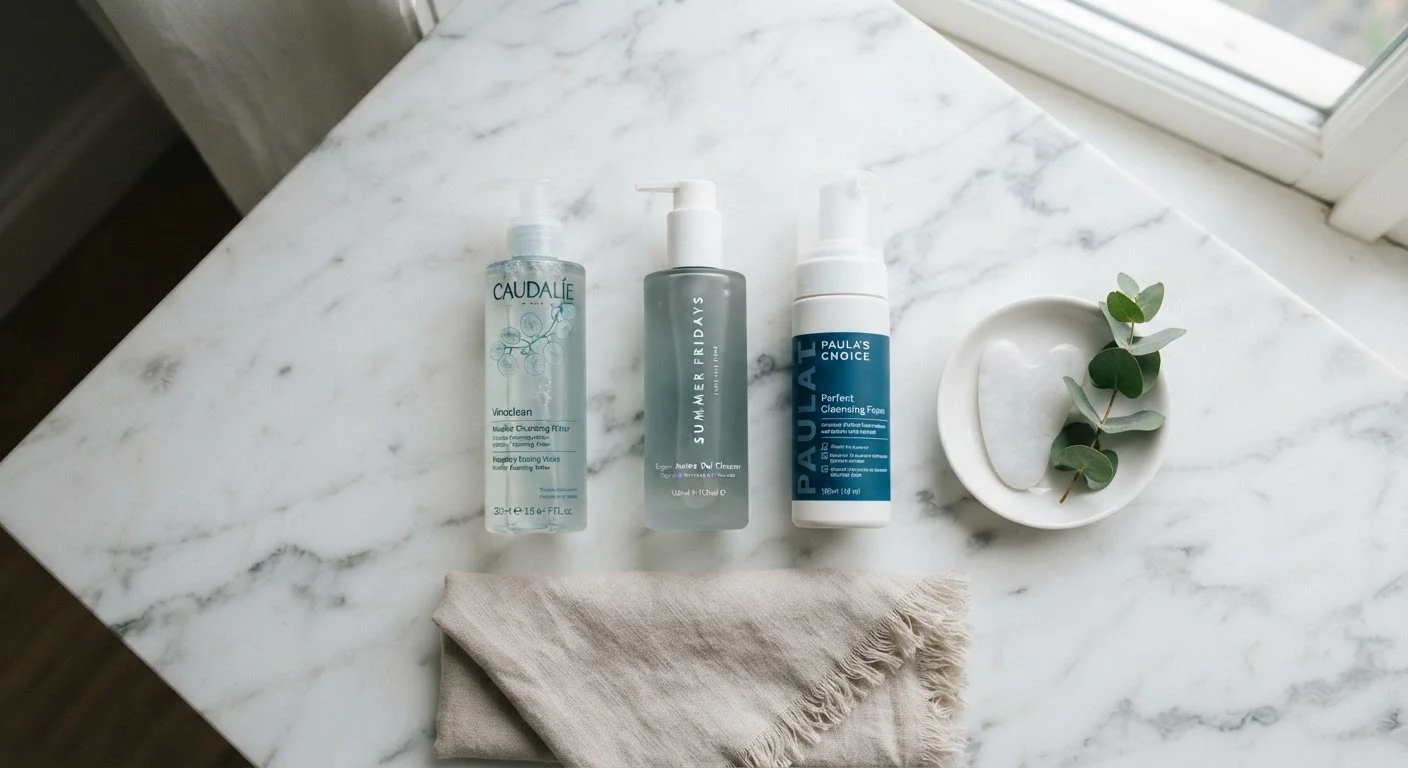
The Core Distinction: Lather vs. Formula Flexibility
If you've ever stood in a drugstore aisle squinting between two nearly identical-looking tubes, you're not imagining it — "face wash" and "cleanser" are often used interchangeably on packaging. But they do have meaningful functional differences worth understanding.
A face wash is a specific type of cleanser that almost always produces lather when mixed with water. It typically contains surfactants — cleansing agents that bind to oil and water simultaneously, allowing them to be rinsed away together. This makes face washes effective at removing excess oil, sweat, and daily grime. The tradeoff: stronger surfactants can strip the skin's natural lipid layer if used on drier skin types.
A cleanser is the umbrella term. It covers a wide spectrum of formulas: micellar waters, balm and oil cleansers, cream cleansers, gel cleansers, and foam cleansers. Many cleansers are designed to work without producing suds, and some don't even require rinsing. This formula flexibility is why cleansers often work better for a broader range of skin types and sensitivities.
Think of it this way: every face wash is a cleanser, but not every cleanser is a face wash.
| Criterion | Face Wash | Cleanser |
|---|---|---|
| Formula type | Typically foaming or gel | Broad: cream, oil, balm, micellar, gel |
| Produces lather | Usually yes | Often no |
| Requires rinsing | Yes | Not always |
| Skin types best suited | Oily, combination, acne-prone | Dry, sensitive, mature, all types |
| Makeup removal | Limited for heavy makeup | Effective (especially oil/balm types) |
| Barrier disruption risk | Higher with harsh surfactants | Generally lower |
| Typical texture | Lightweight, watery to gel | Varies widely by formula |
How Each Works on Your Skin
Face washes rely primarily on surfactant chemistry. Common surfactants like sodium lauryl sulfate (SLS) or gentler alternatives like cocamidopropyl betaine create that familiar foaming action. The foam helps lift oil and debris from the skin's surface efficiently — but the cleansing power varies widely based on which surfactants are used and at what concentration. Harsh formulas can leave skin feeling tight, which is actually a sign of barrier disruption, not cleanliness. If that tight feeling sounds familiar, here's what's happening at the skin barrier level.
Many non-lathering cleansers — particularly oil and micellar formulas — work on the principle that like dissolves like. Oil cleansers attract and dissolve sebum and oil-based impurities such as sunscreen and makeup without needing surfactants to do the heavy lifting. Micellar waters use tiny lipid molecules called micelles that draw out impurities when the product is wiped across the skin. These approaches tend to be far less disruptive to the skin barrier.
What 'Non-Comedogenic' Actually Means
Non-comedogenic is a term used on skincare labels to indicate a formula is designed not to clog pores. However, there is no standardized regulatory definition for the term in the US, so it's best treated as a helpful signal rather than a guarantee. If you're prone to breakouts, checking ingredient lists and consulting a dermatologist is more reliable than relying on label claims alone.
Cream cleansers land somewhere in between — they contain some emulsifying agents but are formulated to leave a thin moisturizing film, making them a popular choice for dry or sensitive skin types.
Matching the Right Formula to Your Skin Type
Skin type is the most reliable compass when choosing between these two options. Here's a practical breakdown:
- Oily or combination skin: A gel or foaming face wash is generally well-suited here. Look for formulas with gentler surfactants if dryness or irritation has been an issue with lathering products in the past.
- Dry or sensitive skin: Cream or micellar cleansers are typically a better fit. They clean effectively without stripping the moisture that dry skin already struggles to retain.
- Normal skin: You have the most flexibility. A gentle gel cleanser or low-foam face wash can work without causing imbalance.
- Acne-prone skin: Look for a face wash that is non-comedogenic (meaning it's formulated not to clog pores). Some include active ingredients like salicylic acid — but consult a dermatologist before relying on medicated cleansers long-term.
Your cleanser or face wash is foundational to everything that follows in your routine. As we break down in our guide to the anatomy of a daily skincare routine, what you use in the cleansing step directly affects how well serums and moisturizers perform afterward.
~60%
Adults who choose cleansers by feel alone
Surveys from the American Academy of Dermatology suggest a majority of consumers select skincare products based on texture preference rather than skin type compatibility.
2-step
Double-cleanse method steps
The double-cleansing method — an oil-based cleanser followed by a water-based face wash — is widely used in Korean skincare routines and has grown in popularity globally.
It's also worth noting that double-cleansing — using an oil-based cleanser first, followed by a water-based face wash — has gained traction as a thorough method for those who wear makeup or SPF daily. This approach pairs two cleansing product types strategically rather than choosing just one.
This article is for general informational purposes only and is not a substitute for advice from a licensed dermatologist or skincare professional.