
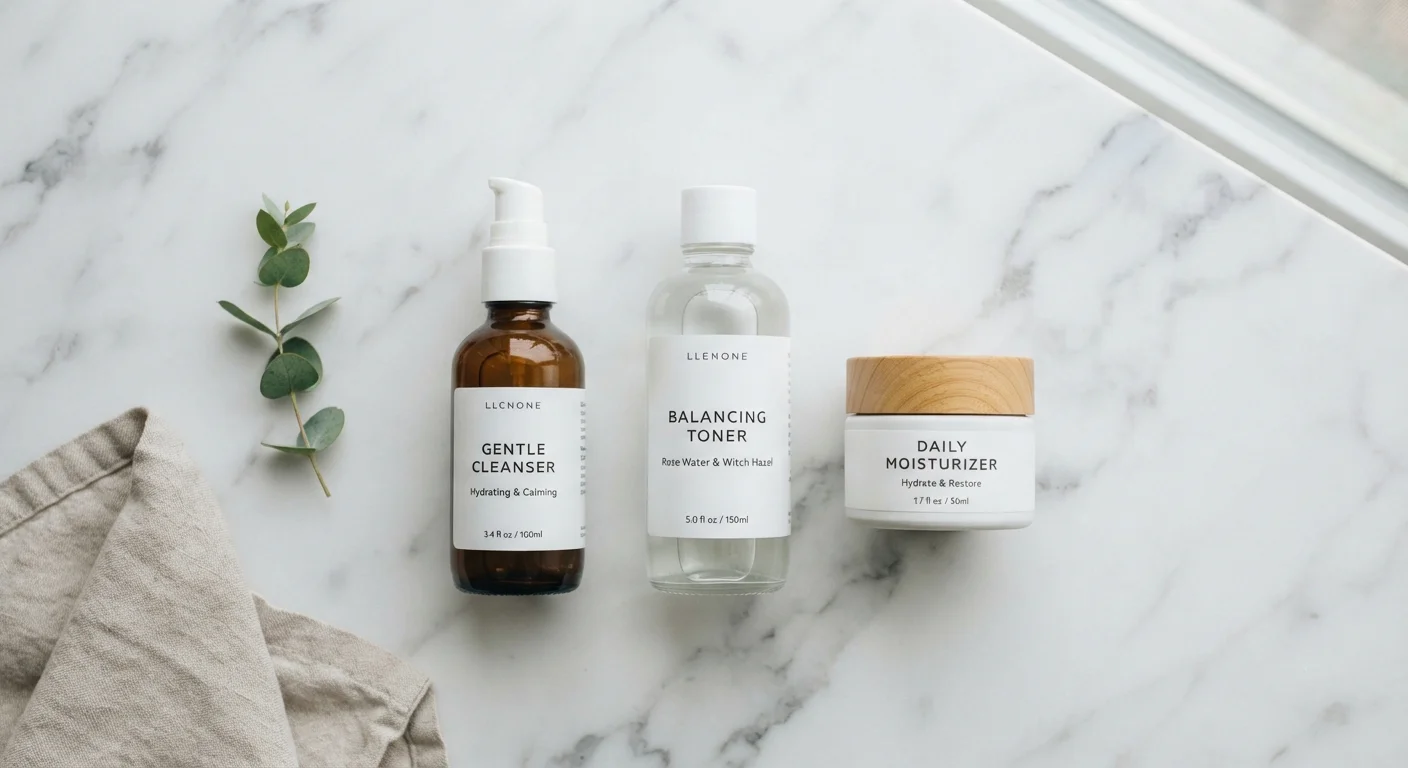
Step One: Cleansing — Start With a Clean Slate
Cleansing is the foundation every other step builds on. Its job is straightforward: remove accumulated oil, sweat, environmental pollutants, and — in the evening — any makeup or SPF left on the skin's surface. What a good cleanser should not do is strip the skin's natural moisture barrier in the process.
Over-cleansing or using formulas that are too harsh is a common mistake. When skin feels tight and squeaky after washing, that's usually a sign the barrier has been disrupted rather than simply cleaned. A gentle, pH-balanced cleanser suited to your skin type is a more sustainable choice for daily use. Most skin types do well with cleansing twice a day — morning and evening — though people with drier skin sometimes prefer a water rinse only in the morning.
Gentle Cleansing Is More Effective Long-Term
If your skin feels tight or dry after washing, your cleanser may be too stripping for daily use. Look for formulas labeled 'pH-balanced' or 'gentle' and check that the first few ingredients are water-based rather than alcohol-heavy. A cleanser that respects your skin's barrier sets up every step that follows to work better.
Step Two: Toner — Balance and Prep
Toner has had a bit of a reputation problem, largely due to older alcohol-heavy formulas that could leave skin feeling dry and irritated. Modern toners are a different story. Today's versions are typically water-based, lightly hydrating, and designed to help rebalance the skin's pH after cleansing — which can run slightly alkaline from even the mildest soaps.
Beyond pH, toners serve as a prep layer: they help the skin better absorb what comes next. Some contain humectants like glycerin or hyaluronic acid to add a first hit of moisture; others include gentle exfoliating acids for texture refinement. Toner is optional, but for many people it fills a useful gap between cleansing and the heavier steps that follow. If you're curious about what's actually inside your products, see our guide on reading a skincare ingredient list without needing a chemistry background.
~90%
Of visible skin aging attributed to UV exposure
According to the Skin Cancer Foundation, cumulative UV exposure — including daily, incidental exposure — is estimated to account for the majority of visible signs of skin aging.
2x daily
Recommended cleansing frequency for most skin types
Dermatologists broadly recommend cleansing morning and evening, with adjustments based on individual skin type, activity level, and product use.
30–60 sec
Wait time recommended between product steps
A brief absorption window between skincare steps — typically 30 to 60 seconds — is commonly advised to allow each layer to settle before the next is applied.
Step Three: Moisturizer and SPF — Protect What You've Built
Moisturizer's primary role is to support the skin's barrier function — locking in the hydration already present and preventing water loss throughout the day or night. It also creates a protective film that helps buffer skin from environmental stressors. Even oily skin types generally benefit from moisturizer; the key is texture and formulation rather than skipping the step entirely.
In a morning routine, sunscreen follows as the final step — and by most dermatological guidance, it's the single most impactful protective measure you can take. SPF guards against UVA and UVB rays that contribute to premature aging and other skin concerns over time. It's applied last in the morning because it needs to sit on top of other products to function as a protective layer rather than being absorbed into them.
For a broader view of how skin care fits into overall personal health habits, the full picture on personal care is a helpful reference. And if sticking to any morning routine is the real challenge, building a morning routine that actually sticks offers a practical framework that works around real schedules.
Evening Routines Can Differ From Morning Ones
Nighttime is when skin naturally enters a repair and renewal phase, making it a good window for treatment-focused steps like retinoids or exfoliating acids — ingredients that are often photosensitive and shouldn't be worn under sunscreen. Your evening routine doesn't need to be more complex, but it can serve a different purpose. See personal care habits that support skin health year-round for guidance on adjusting your approach across seasons.
This article is for general informational purposes only and is not a substitute for advice from a licensed dermatologist or healthcare professional. Skin care needs vary by individual; consult a qualified professional for concerns about your specific skin health.