Why At-Home Nail Care Is Worth the Effort
Healthy nails aren't just a cosmetic concern — they're part of a broader picture of personal wellness. Nails that are clean, trimmed, and moisturized are less prone to breakage, snagging, and infection. And maintaining them yourself, with a modest set of tools, is straightforward once you know the basics.
Part of a well-rounded routine, nail care fits naturally alongside skin and hair habits — something the full picture on personal care covers in detail. The steps below are designed for fingernails, but most apply to toenails too, with a few small adjustments.
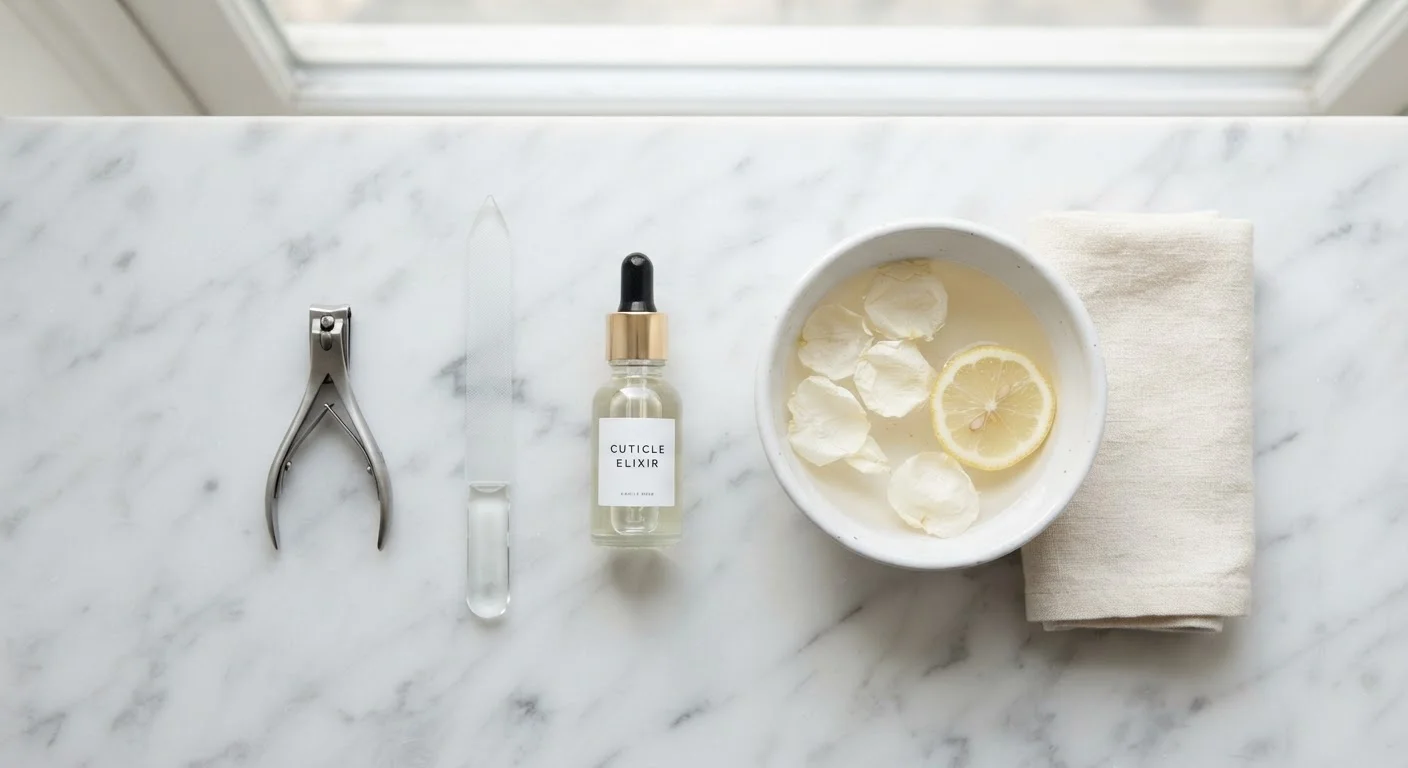
Nail clippers or small scissors
Trimming nails to your desired length cleanly and safely.
Glass or crystal nail file
Smoothing edges after trimming to prevent snags and splits.
Cuticle pusher (rubber-tipped or wooden)
Gently pushing back softened cuticles without cutting them.
Small bowl of warm water
Soaking nails to soften them before trimming and cuticle care.
Cuticle oil or jojoba oil
Moisturizing the cuticle area to prevent dryness and peeling.
Hand and nail moisturizer
Hydrating nails and surrounding skin after washing or soaking.
Nail brush
Cleaning under and around nails during the soak step.
What to Watch For: Nail Changes Worth Noting
While most nail concerns are cosmetic, nails can occasionally show early signs of changes worth monitoring. Healthy nails are generally smooth, consistent in color (pinkish at the base, translucent at the tip), and firmly attached to the nail bed.
When Nail Changes Deserve Medical Attention
Nail appearance can occasionally reflect changes in your overall health. Persistent discoloration (especially dark streaks or greenish tones), significant pitting, unusual thickening, or nails separating from the nail bed are worth discussing with a healthcare provider. This article provides general care information only — it is not a substitute for professional medical evaluation.
Common, usually benign changes include occasional white spots (often from minor trauma) or slight ridging that develops with age. However, a few changes are worth flagging to a healthcare provider:
- Dark streaks or spots under or within the nail
- Greenish or yellowed discoloration that persists
- Significant pitting (small dents across the nail surface)
- Nails lifting from the nail bed
- Thickening or crumbling that doesn't improve
This article is for general information only and is not medical advice. If you notice persistent or concerning nail changes, a dermatologist or primary care provider is the appropriate resource. Good nail hygiene also complements skin health broadly — see personal care habits that support skin health year-round for related guidance.
Make It a Weekly Ritual
Pairing nail care with another weekly habit — like a Sunday shower or a TV wind-down — makes it easier to stay consistent. A weekly personal care audit can help you catch gaps across nails, skin, and more before they become bigger issues.
This article provides general personal care information and is not a substitute for professional medical advice. If you have concerns about changes in your nails or underlying health conditions, please consult a qualified healthcare provider.