
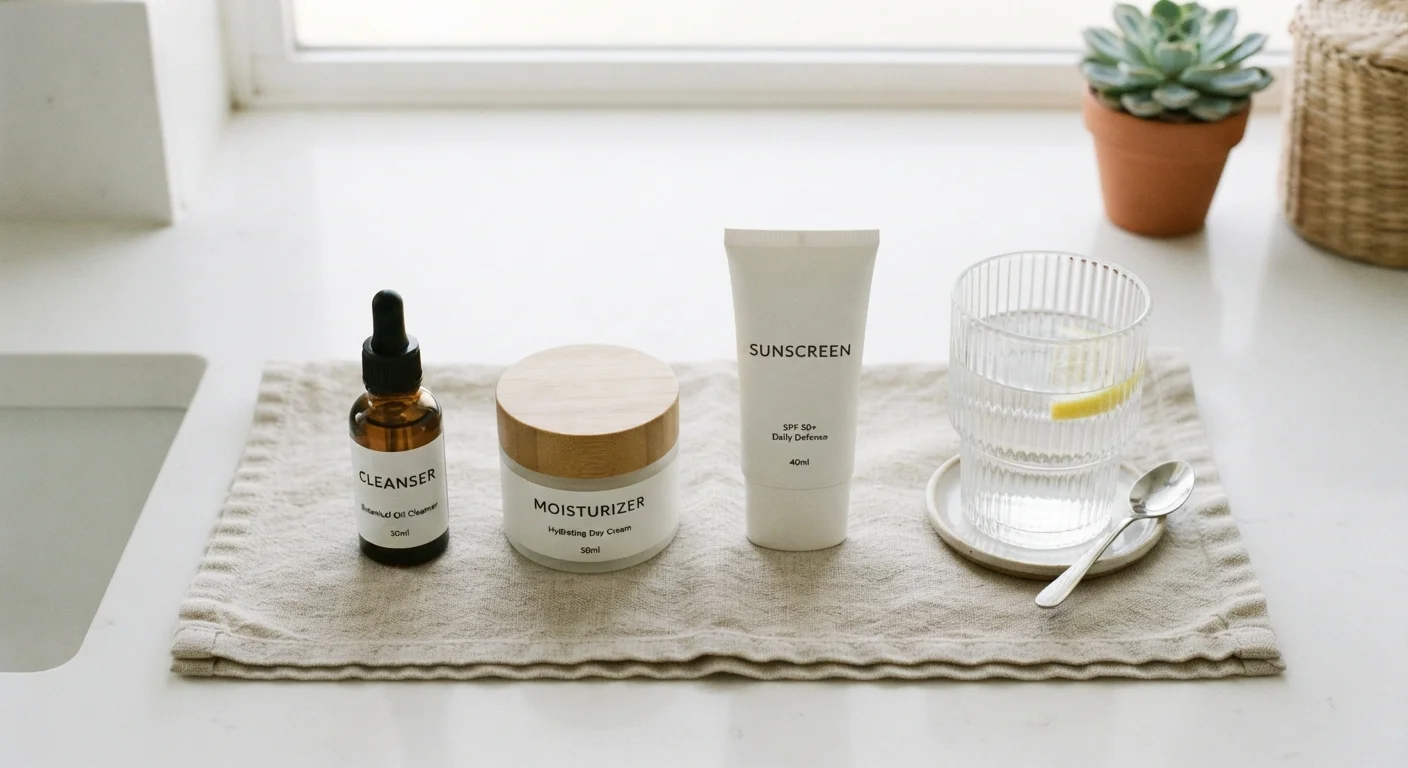
Why Consistency Beats Complexity
Scroll through any beauty platform and you'll find elaborate 10-step routines — but the skin care habits that skin care professionals point to most often are refreshingly simple. The real driver of healthier skin isn't how many products you use; it's how reliably you use a small set of effective ones.
Think of your skin as an organ — because it is. It regulates temperature, protects against pathogens, and constantly renews itself. Supporting that process doesn't require a medicine cabinet's worth of actives. It requires a few foundational habits applied every day, across every season. If you're curious about how skin care habits connect to broader wellness routines, this overview of daily health habits is worth reading alongside this guide.
Apply broad-spectrum SPF every morning, even on overcast or indoor-heavy days.
UV exposure is a leading contributor to premature skin aging, hyperpigmentation, and skin damage — and it occurs year-round, not just in summer. UVA rays in particular penetrate clouds and windows. This one step is cited more consistently than any other by dermatological authorities as high-impact.
Cleanse gently and only as much as your skin actually needs.
Over-cleansing strips the skin's natural barrier — the thin protective layer of oils and moisture-retaining lipids that keep irritants out. A compromised barrier leads to increased sensitivity, dryness, and breakouts, even in people who don't consider their skin sensitive.
Moisturize consistently, choosing a formula suited to the current season.
Skin needs change significantly between winter and summer — cold air and indoor heating drop ambient humidity, increasing transepidermal water loss. A lightweight gel moisturizer may work well in humid months, while a richer cream is often more effective in dry, cold conditions. Rotating formulas seasonally helps maintain the barrier without clogging pores.
Drink water consistently throughout the day to support skin hydration from within.
While topical moisturizers address the outer barrier, internal hydration supports skin cell function and circulation. Mild chronic dehydration can contribute to dullness and reduced elasticity over time, according to general nutritional guidance.
Remove makeup and sunscreen thoroughly before sleep.
Leaving products on overnight prevents normal skin renewal, may clog pores, and can cause low-grade irritation that compounds over time. Full removal before bed is particularly important for people who wear heavier coverage or long-wearing formulas.
Habits That Make a Real Difference
The practices below aren't trends — they're consistently cited by dermatologists and estheticians as the pillars of year-round skin health. Each one is accessible regardless of skin type, budget, or background.
For readers with sensitive skin, some of these habits may need slight adaptation — this guide to sensitive skin care explains which adjustments matter most.
80%
UV rays that penetrate cloud cover
According to the American Academy of Dermatology, up to 80% of UV rays pass through clouds, supporting year-round SPF use.
~28 days
Average skin cell turnover cycle in young adults
General dermatological literature notes the skin renews itself roughly every 28 days in younger adults, slowing with age — underlining why consistent habits have cumulative effects.
Don't Forget What Happens Overnight
Your skin does its most significant repair work while you sleep. Cellular turnover accelerates during rest, which is why sleep deprivation consistently shows up in skin as dullness, puffiness, and slower healing. Prioritizing sleep quality isn't just wellness advice — it's skin strategy.
Overnight personal care practices like applying a moisturizer or facial oil before bed, sleeping on a clean pillowcase, and avoiding harsh actives that increase photosensitivity can all help you get more from those repair hours. And since your scalp is skin too — scalp health deserves its own attention year-round, not just when you notice a problem.
Simplify Before You Add
If your skin is reacting — breaking out, feeling tight, or looking dull — resist the urge to add more products. Stripping back to a cleanser, moisturizer, and SPF for two weeks often reveals whether an existing product is the culprit. A clear breakdown of what each routine step actually does can help you decide what's essential versus optional.
This article is for general informational purposes only and is not a substitute for professional medical or dermatological advice. If you have persistent skin concerns, consult a qualified healthcare provider or licensed dermatologist.