
Understanding Sensitive Skin
Sensitive skin isn't a diagnosis — it's a descriptor. People use the term to describe skin that reacts more readily than average to environmental factors, products, or physical touch. Common signs include redness, stinging, itching, or dryness that flares after contact with certain ingredients or conditions.
The causes vary widely. For some people, a compromised skin barrier allows irritants to penetrate more easily. For others, underlying conditions like rosacea, eczema, or contact dermatitis are the root. And for many, sensitivity is situational — triggered by weather changes, stress, or a new product. If reactions are persistent or severe, a qualified dermatologist can help identify what's actually going on. This article is general educational information and is not a substitute for professional medical advice.
For a broader look at how skin health connects to hair, nails, and oral care, see our full personal care guide.
Don't Self-Diagnose Skin Conditions
Persistent redness, rashes, or severe dryness can signal conditions like eczema, rosacea, or contact dermatitis — all of which benefit from professional evaluation. General sensitive-skin routines are supportive, but they are not a replacement for a dermatologist's assessment if symptoms are ongoing or worsening.
What You'll Need Before Starting
Building a sensitive-skin routine doesn't require an overhaul — just a more deliberate selection of what you use. Before diving in, gather the basics.
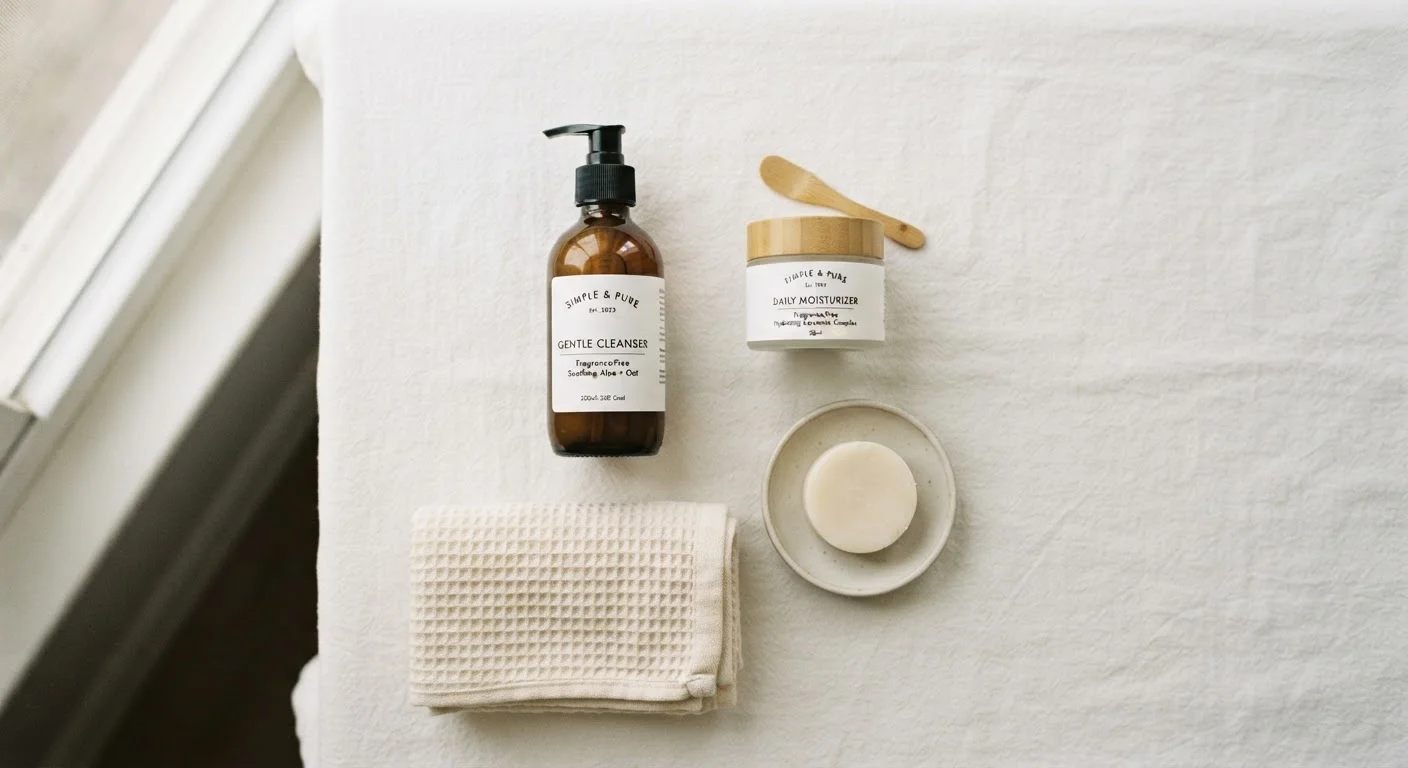
What you will need
Once you have these in place, the steps below walk you through exactly how to build (or adapt) a routine that works with reactive skin rather than against it.
Fragrance-free gentle cleanser
Removes dirt and oil without stripping the skin barrier or introducing common irritants.
Bland, unfragranced moisturizer
Restores and maintains the skin barrier, reducing sensitivity and water loss.
Mineral-based broad-spectrum sunscreen
Protects against UV damage; mineral formulas with zinc oxide or titanium dioxide are generally well tolerated by reactive skin.
Soft, clean washcloth or hands
Minimizes physical friction during cleansing, which can aggravate sensitive skin.
Step-by-Step: Adapting Your Routine for Sensitive Skin
Follow these steps to reduce irritation and build a sustainable care routine. Consistency matters more than complexity — a short, steady routine outperforms an elaborate one you abandon after a week.
Audit your current products
Write down every product you currently apply to your face and body. Check each label for common irritants: synthetic fragrances, alcohol (specifically denatured or SD alcohol), harsh sulfates, and certain preservatives like methylisothiazolinone. You don't need to toss everything — just know what you're working with before making changes.
Simplify your routine to the essentials
Strip your routine down to three non-negotiables: a gentle cleanser, a moisturizer, and sunscreen during the day. More steps mean more potential irritants. Once your skin is calm and stable on a minimal routine, you can thoughtfully reintroduce other products one at a time.
Patch test every new product
Before applying anything new to your face or a large skin area, apply a small amount to the inside of your wrist or behind your ear. Wait 24–48 hours. If no redness, itching, or swelling appears, the product is less likely to cause a broader reaction — though this isn't a guarantee.
Cleanse gently — once or twice a day
Use lukewarm water (hot water can disrupt the skin barrier) and a gentle, fragrance-free cleanser. Apply with your fingertips using light circular motions rather than rubbing. Pat — don't rub — your skin dry with a clean, soft towel. Over-cleansing is a common mistake; twice daily is typically sufficient for most people.
Moisturize immediately after cleansing
Apply your moisturizer while skin is still slightly damp — this helps seal in hydration. Look for formulas containing ceramides, glycerin, or hyaluronic acid, which support the skin barrier. Applying within a minute or two of cleansing is a well-supported practice for maintaining barrier function.
Apply sunscreen every morning
Daily broad-spectrum SPF is relevant for all skin types, including sensitive skin. Mineral sunscreens containing zinc oxide or titanium dioxide are generally considered better tolerated than chemical UV filters for people with reactive skin. Apply as the last step in your morning routine, before any makeup.
For more everyday habits that support skin year-round, check out personal care habits that support skin health. If shaving is part of your routine, understanding shaving irritation is also worth reading.
Less Really Is More
When it comes to sensitive skin, a shorter ingredient list is generally a good sign. Products with fewer components give your skin fewer opportunities to react. Resist the urge to layer multiple active treatments — simplicity and consistency are your most powerful tools.
What Doesn't Change — And Why That's Good News
Here's the reassuring part: the core pillars of personal care stay the same regardless of skin sensitivity. Gentle cleansing, consistent moisturizing, sun protection, and adequate sleep remain the foundation. Sensitive skin simply demands you apply those principles with a lighter touch and more ingredient awareness.
Fragrance-free and hypoallergenic labels can be helpful signals, though they aren't regulated terms — reading the actual ingredient list is more reliable. Ingredients like niacinamide, ceramides, and colloidal oatmeal are widely recognized by dermatologists for their supportive, low-irritation profiles. Avoid making sweeping claims that any one ingredient works for everyone; individual responses vary.
Your nighttime routine is also a valuable window. Skin undergoes repair while you sleep, and keeping that window free of potential irritants is a smart move. Our guide on overnight personal care covers how to support that process simply and effectively.
Melanin-rich skin can experience sensitivity differently — hyperpigmentation from inflammation is a particular concern. The article on skincare across skin tones explores what inclusive personal care really looks like in practice.
Fragrance Is the Number One Irritant
Fragrance — whether synthetic or natural — is consistently cited by dermatologists as a leading cause of contact dermatitis and skin irritation. This includes products labeled 'natural' or 'botanical,' since plant-derived fragrances can be just as reactive as synthetic ones. If your skin is sensitive, fragrance-free is the safest starting point across cleansers, moisturizers, and laundry products alike.
This article is for general informational and educational purposes only and does not constitute medical advice. If you experience persistent, severe, or worsening skin reactions, consult a qualified dermatologist or healthcare professional.