
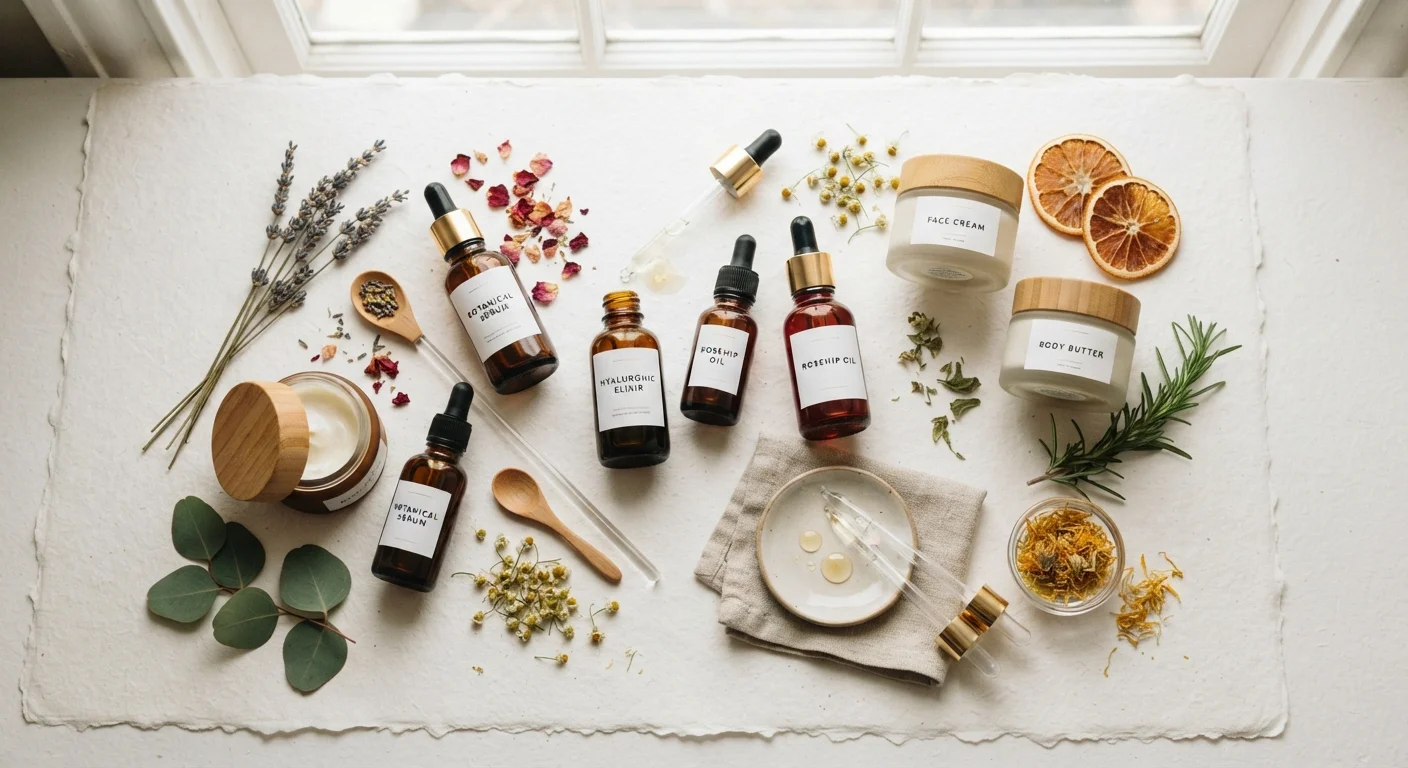
Why the Natural vs. Synthetic Debate Matters
Walk the personal care aisle and you'll see "natural," "clean," and "botanical" plastered across nearly every product. These labels feel reassuring, but the US has no regulatory standard defining what "natural" means on a cosmetic label. Meanwhile, many consumers still assume synthetic automatically means harsh or risky. Neither assumption holds up under scrutiny.
What actually determines whether an ingredient is good for your skin is its function, concentration, and how your individual body responds to it — not its origin story. Understanding what common ingredients actually do is a far more practical starting point than sorting products into "natural good, synthetic bad."
"Natural" Has No Legal Definition in US Cosmetics
The FDA does not define or regulate the term "natural" on cosmetic labels in the United States. Any brand can use the word without meeting a specific standard. This is also true of terms like "clean" and "non-toxic" — none carry a legally enforced meaning in the cosmetics space. The same lack of standardization applies to cleaning products, as explored in this look at what cleaning product labels don't tell you.
The Case for Natural Ingredients
Natural ingredients — plant extracts, oils, butters, and minerals derived with minimal processing — do offer real advantages in certain contexts.
Biodegradability reduces environmental impact
Many plant-derived ingredients break down more readily in waterways and soil compared to some persistent synthetic compounds, which has appeal for environmentally conscious consumers.
Rich in co-occurring beneficial compounds
Whole-plant extracts often contain a range of antioxidants, fatty acids, or polyphenols that work synergistically — something isolated synthetic molecules can't replicate by design.
Familiar chemistry for some skin types
Ingredients like jojoba oil and shea butter have a long history of use, and for many people their skin tolerates them well without a lengthy adjustment period.
Consumer trust and psychological comfort
Research consistently shows that consumers feel more confident using products they perceive as close to nature, which can support routine adherence — a real practical benefit.
That said, natural doesn't equal risk-free. Essential oils, for example, are among the most common causes of contact dermatitis in personal care products. Some botanical extracts contain compounds that are photosensitizing, meaning they increase sun sensitivity when applied to skin. Even ingredients like beeswax or lanolin, widely considered gentle, trigger reactions in a subset of users.
The Case for Synthetic Ingredients
Synthetic ingredients are engineered in labs, either by recreating molecules found in nature or designing entirely new ones. This class includes preservatives, emulsifiers, surfactants, and actives like retinol esters.
Inconsistency between batches
Crop variation, climate, and harvest timing all affect the chemical profile of plant-derived ingredients, meaning formulas can vary subtly from production run to production run.
Shorter shelf life without preservation
Many natural oils and extracts are prone to oxidation and microbial contamination, requiring either synthetic preservatives or careful storage to remain safe and effective.
Higher allergen potential in botanicals
The European Scientific Committee on Consumer Safety lists dozens of plant-derived fragrance allergens that must be disclosed on EU labels; this risk is frequently underestimated by 'natural' marketing.
Environmental sourcing concerns
High demand for popular natural ingredients like rosehip, argan, and certain clays can strain local ecosystems and communities if not responsibly managed.
The consistency advantage is significant: synthetic vitamin C derivatives, for example, are far more stable in a formula than pure ascorbic acid, which oxidizes rapidly. Similarly, synthetic hyaluronic acid performs identically to animal-derived versions — which is why cosmetic-grade hyaluronic acid is now almost exclusively lab-produced. People with sensitive skin often find that well-formulated synthetic actives cause fewer flare-ups than fragrant botanical alternatives.
26
EU-regulated botanical fragrance allergens
The European Scientific Committee on Consumer Safety identifies over 26 plant-derived fragrance compounds that must be individually disclosed on EU cosmetic labels due to sensitization risk.
~80%
Cosmetic-grade hyaluronic acid that is lab-synthesized
Industry estimates suggest the vast majority of hyaluronic acid used in personal care is now biofermentation- or lab-derived, delivering consistent molecular weight and purity regardless of origin claims.
What's Often Left Off the Label
One complicating factor in this debate is fragrance. Whether a product uses natural or synthetic scent compounds, the word "fragrance" on an ingredient list can legally represent a blend of dozens of undisclosed chemicals. What that single word on a label can conceal surprises many consumers — and it applies equally to "natural" rose extract and synthetic musk compounds. If you react to a product and can't identify why, fragrance is frequently the culprit regardless of whether the product markets itself as natural.
It's also worth knowing that many ingredients exist in both forms simultaneously. Lactic acid occurs naturally in fermented foods and is also synthesized for cosmetic use; the molecule is chemically identical either way. The same applies to squalane, niacinamide, and several peptides. Distinguishing between them on a label is essentially impossible without brand transparency. For a deeper look at how labels can mislead, the fragrance-free vs. unscented distinction is a useful companion read.
Building a Smarter Routine
The most practical approach is to focus on ingredients rather than marketing categories. A few habits help:
- Scan for known irritants first. Whether natural or synthetic, certain ingredients — essential oils, sulfates, certain preservatives — are well-documented sensitizers for many people.
- Patch test new products. This applies regardless of ingredient origin.
- Prioritize formulation transparency. Brands that disclose full ingredient lists and sourcing give you more to work with than those leaning on vague "clean" claims.
For a practical reference on what individual ingredients do and which skin types they suit, this plain-language ingredient glossary covers the most common ones. The goal isn't to avoid one category wholesale — it's to understand what's actually in the bottle.
This article is for informational purposes only and does not constitute medical or dermatological advice. Consult a qualified healthcare provider or dermatologist for guidance on skin conditions or reactions.