Why Laptop Longevity Is Worth Your Attention
The average laptop costs between several hundred and several thousand dollars. Yet many end up slow, unreliable, or dead within three to four years — often not because of any unavoidable failure, but because of preventable wear. A few consistent habits can realistically push that lifespan to five, six, or even seven years, which has a real impact on your household budget.
Laptop hardware degrades through heat, physical shock, accumulated dust, battery chemistry changes, and software bloat. Most of those forces are at least partially controllable. This article focuses on the habits that actually matter, based on how the underlying hardware works — not on myths or marketing claims. For a deeper look at how manufacturers' battery figures compare to real-world use, see how battery life is actually determined.
300–500
Typical lithium-ion battery charge cycle rating
Most laptop battery manufacturers rate cells for 300 to 500 full charge cycles before significant capacity loss, underscoring why partial cycles matter.
5–7 years
Potential laptop lifespan with consistent care
Industry observers generally note that well-maintained laptops can remain reliably functional for five to seven years, compared to three to four for neglected machines.
Heat: Your Laptop's Quiet Adversary
Electronics degrade faster at high temperatures. Inside a laptop, sustained heat accelerates wear on the battery, shortens the lifespan of the processor and memory, and can cause solder joints to fail over time. The good news: most heat problems stem from user habits, not hardware defects.
- Use on hard, flat surfaces. Soft surfaces like beds, couches, and laps block the vents underneath the machine, trapping heat. A hard desk or a dedicated laptop stand keeps airflow open.
- Clean the vents regularly. Dust accumulates inside vents and on internal fans over months. A can of compressed air aimed at the vents every three to six months prevents the fan from working harder than it should. If the machine regularly runs hot or the fan is audible under light tasks, a more thorough cleaning may be overdue.
- Don't leave it in a hot car. Ambient temperatures above roughly 95°F (35°C) accelerate battery chemistry breakdown. A parked car in summer can easily exceed 130°F inside.
A Laptop Stand Solves Multiple Problems
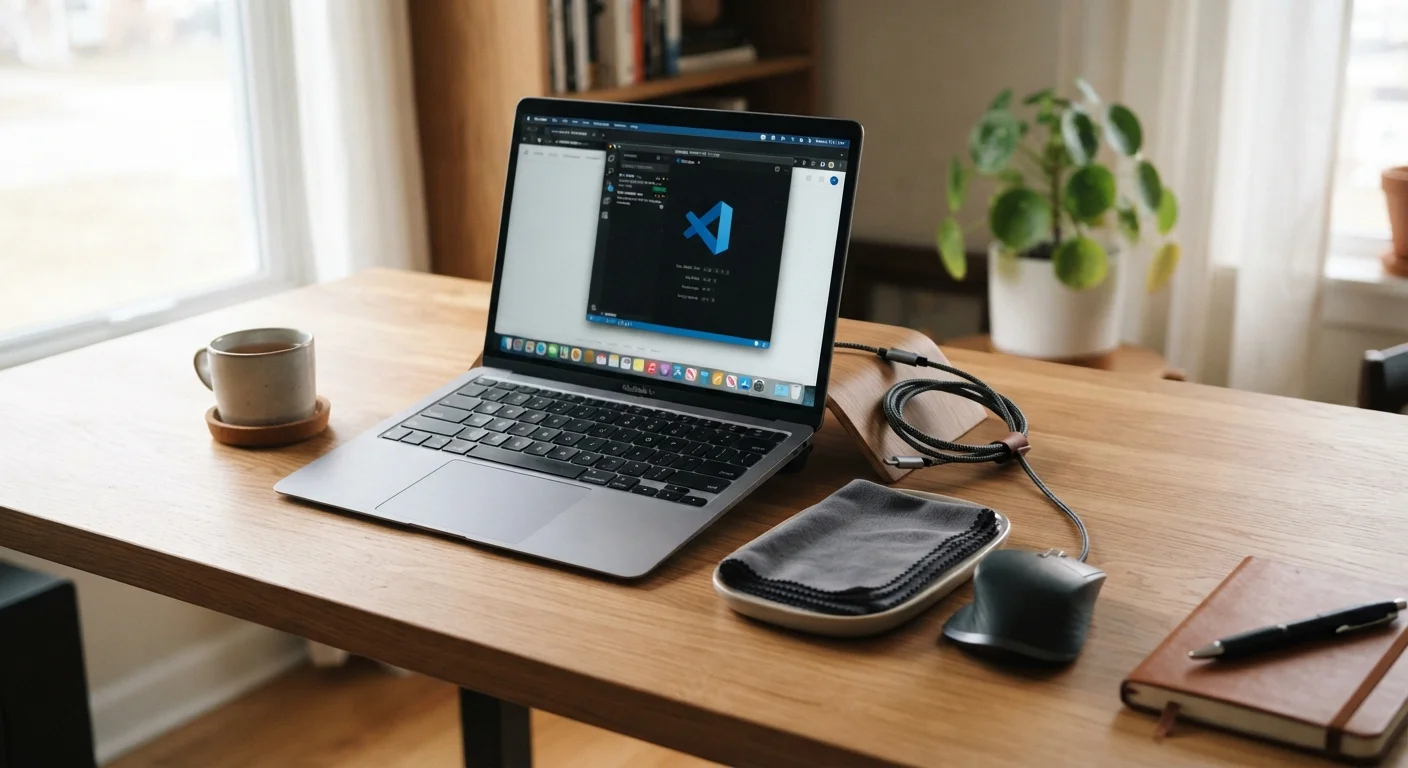
Raising your laptop even an inch or two on a stand improves airflow, reduces neck strain by lifting the screen closer to eye level, and makes it easier to connect a keyboard and mouse for ergonomic desktop-style use. Stands are widely available and relatively inexpensive — the ergonomic and thermal benefits make them one of the highest-value accessories for a laptop owner.
Battery Care That Actually Works
Lithium-ion batteries — the type in virtually every modern laptop — degrade through charge cycles and heat. Each full discharge-and-recharge counts as one cycle, and most batteries are rated for 300–500 cycles before noticeable capacity loss. Partial cycles count proportionally, so charging from 50% to 80% uses far less of your cycle budget than 0% to 100%.
The most widely supported guidance from battery researchers is to keep a lithium-ion battery between roughly 20% and 80% for daily use, avoiding both deep discharges and prolonged 100% states. Many laptops now include a "battery health" or "conservation mode" setting in their power management software that automatically caps charging at 80% — worth enabling if you mostly work plugged in.
Leaving a laptop plugged in at 100% continuously isn't ideal, but modern charge controllers limit trickle-charging damage. A bigger concern is heat while plugged in — if the machine runs warm while charging, improved ventilation helps both issues simultaneously. For a myth-busting look at common battery misconceptions, common laptop myths explained honestly is worth a read.
Keep your laptop on a hard, flat surface whenever possible during use.
Soft surfaces block the bottom vents, causing the internal temperature to rise rapidly. Sustained elevated temperatures accelerate battery degradation and can shorten the life of processors and other components.
Blow out vents with compressed air every three to six months.
Dust buildup forces cooling fans to work harder and reduces airflow efficiency. Over time, inadequate cooling is a leading cause of thermal-related hardware failure.
Charge the battery between 20% and 80% for everyday use.
Lithium-ion batteries experience more chemical stress at the extremes of their charge range. Keeping the level in the middle band conserves total cycle capacity over the battery's lifetime.
Enable your laptop's built-in battery health or conservation mode.
Many modern laptops include firmware-level settings that cap charging at 80% automatically, taking the guesswork out of preserving battery chemistry during long plug-in sessions.
Keep the operating system, drivers, and firmware updated.
Updates frequently include fixes for power management and thermal control, not just security patches. Outdated firmware can cause a laptop to run hotter or drain faster than necessary.
Transport the laptop in a padded case or sleeve.
Physical impact from drops or jostling in a bag is a leading cause of screen damage and — on laptops with older spinning hard drives — data loss. A modest investment in a sleeve significantly reduces this risk.
Physical Care and Software Hygiene
The physical condition of a laptop — how it's handled, transported, and stored — affects both its hardware life and its resale or trade-in value. A few straightforward habits make a meaningful difference:
- Use a padded sleeve or case. Dropping or knocking a laptop is the fastest way to damage the screen, hard drive (on older mechanical-drive machines), or chassis. A basic sleeve costs very little relative to a repair bill.
- Keep liquids away. Keyboard spills are one of the most common causes of sudden laptop death. The damage from liquid can spread to the motherboard within seconds.
- Close the lid carefully. The hinge is a stress point. Closing it with one hand while the other pulls the desk edge is a habit worth building; it avoids torque on the screen bezel and hinge screws.
On the software side, keeping the operating system, drivers, and firmware updated closes security vulnerabilities and often improves hardware efficiency — both of which support long-term performance. Periodically reviewing startup programs and uninstalling software you no longer use prevents the gradual slowdown that makes older machines feel obsolete before their hardware actually is. The same logic applies to other home technology — protecting home electronics from heat and dust outlines similar principles for TVs and other devices.