The Accumulation Problem: Software Piles Up Silently
When a computer is new, very little is competing for its resources. Over time, that balance shifts. Every application installed adds potential background processes, scheduled tasks, and startup entries. Many programs are designed to launch automatically when your computer starts — not because you need them immediately, but because it improves their own perceived responsiveness when you do open them.
The result is that a two-year-old machine may be running a dozen background processes that didn't exist when it was new. Each one is small; collectively, they consume meaningful amounts of RAM (the memory used for active tasks) and processing power. For a closer look at how these components interact, see our explainer on RAM, storage, and processing power.
Operating system updates also contribute. Each major version of Windows or macOS introduces features — search indexing, telemetry, syncing services — that run quietly in the background and weren't present on day one.
Check What's Running at Startup
On Windows, open Task Manager (Ctrl + Shift + Esc) and navigate to the Startup tab to see which programs launch automatically. On macOS, check System Settings > General > Login Items. Disabling programs you don't need at startup is one of the most effective low-effort ways to reclaim performance on an aging machine.
Storage Slowdowns: The Full-Drive Effect and Drive Wear
Storage capacity affects performance more directly than many people realize. Operating systems constantly write temporary files, swap data to disk when RAM is insufficient, and index file contents for fast searching. When a drive is nearly full, this background work becomes constrained — the system must search harder to find usable space, and operations that should take milliseconds stretch noticeably longer.
Drive technology also matters over time. Traditional HDD drives contain spinning mechanical platters; as they age, performance can degrade due to fragmentation and mechanical wear. SSD drives are faster and more durable, but they too experience gradual write performance changes as cells are reused over many cycles — though for most everyday users, this takes years to become perceptible.
~10–15%
Minimum free storage recommended for stable performance
Most operating system documentation and storage guidance suggests keeping at least 10–15% of drive capacity free to allow for temporary files and system operations.
3–5 years
Typical timeframe for noticeable performance gap to emerge
Industry observers and hardware analysts generally note that the gap between fixed hardware capability and evolving software demands becomes perceptible within three to five years of purchase for most consumer computers.
Heat and Throttling: When Your Processor Slows Itself Down
Processors generate heat during use, and every processor has a maximum safe operating temperature. When that threshold is approached, modern CPUs automatically reduce their clock speed — a behavior called thermal throttling — to bring temperatures down. From a user's perspective, this looks like sudden sluggishness during demanding tasks.
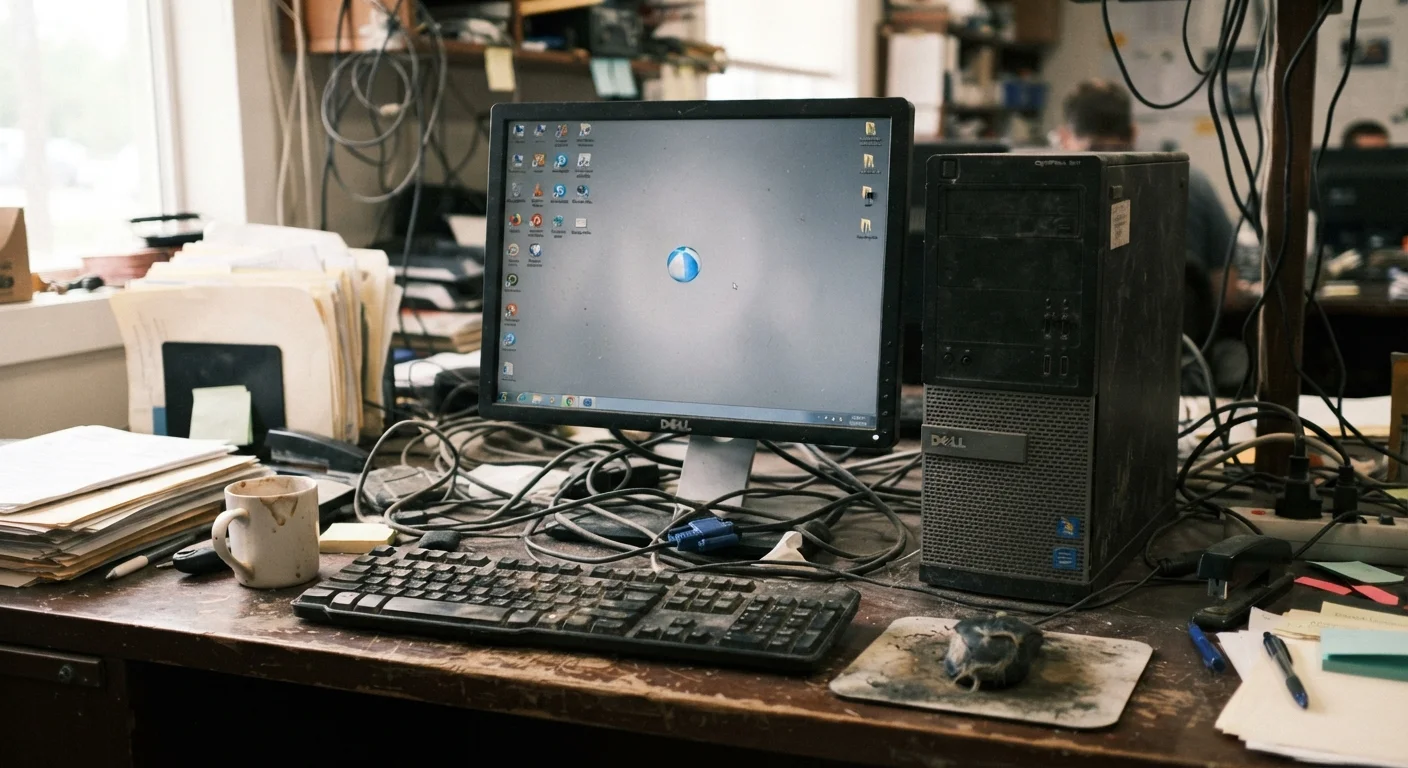
In a new computer, cooling systems handle heat easily. Over years of use, dust accumulates on fans and heat sinks, reducing airflow efficiency. The thermal paste between the processor and its cooler — a compound that transfers heat — also dries out and becomes less effective. The result is that the same workload generates more heat than it once did, triggering throttling more frequently.
This is one reason computers often feel slowest during heavy tasks like video calls or editing, while light browsing feels relatively normal — throttling only kicks in when heat builds up under load.
The Software Demand Gap: Hardware Ages Relative to Expectations
Hardware doesn't change after you buy it, but the software environment around it does. Web browsers have grown significantly more resource-intensive over the past decade as websites incorporate more complex code, video, and interactive elements. Productivity applications, operating systems, and even security software all tend to demand more over successive versions.
A computer bought five years ago was designed to meet the software expectations of that era. Running today's applications on it isn't the same experience, even if the hardware itself is physically unchanged. This isn't a flaw — it's the natural consequence of software evolving faster than any fixed hardware configuration.
This dynamic is similar to what happens with smartphones; for a comparison, see our look at why phones slow down over time. The underlying mechanisms differ, but the demand-gap pattern is consistent across devices.
Malware Can Mimic Normal Slowdowns
Malicious software — including cryptomining programs and spyware — consumes processor and network resources in the background, producing symptoms identical to ordinary performance degradation. If a computer slows down suddenly rather than gradually, running a reputable malware scan is a sensible first step before assuming hardware causes.
What's Worth Addressing — and What Isn't
Many early-stage slowdowns are genuinely fixable. Reducing startup programs, clearing storage space, and removing software you no longer use can produce real improvements. Dust removal and improved ventilation can reduce thermal throttling on laptops and desktops that run hot. In some cases, adding RAM addresses a real bottleneck — but only if memory is actually the constraint.
Hardware aging — processor wear, storage degradation, motherboard component fatigue — is real but slower-moving than software causes. For computers more than five to seven years old, some slowdowns reflect genuine hardware limitations that can't be fully reversed by software maintenance alone.
Understanding which cause applies to your situation helps you make a realistic decision: whether targeted maintenance will restore usable performance, or whether the gap between hardware capability and current software demands has simply grown too wide. Our look at common laptop myths addresses several related misconceptions worth reviewing before drawing conclusions.