Why Smart TV Myths Persist
Smart TVs have become the dominant format for home television in the United States, yet widespread misunderstandings about how they work continue to shape purchasing decisions and daily habits. Some myths stem from outdated information; others reflect genuine complexity that manufacturers rarely explain clearly. The result is that many households either pay for features they don't need or miss out on capabilities they already own.
The myth-vs-fact pairs below address the most common misconceptions — from privacy fears to picture quality assumptions — grounded in how these devices actually function.
Myth
My smart TV is constantly spying on me and sending everything I watch to advertisers.
Fact
Smart TVs do collect viewing data through a technology called ACR, but this is a disclosed, opt-out feature — not covert surveillance.
Automatic Content Recognition (ACR) is software built into most smart TV platforms that identifies what's on screen — whether streamed, broadcast, or played from a disc — and links that data to advertising profiles. This practice is real, widely documented, and worth understanding. However, calling it "spying" overstates the situation: ACR is disclosed in setup agreements, and virtually every major TV platform provides a way to disable it in the privacy or settings menu. The TV is not recording your voice or video by default. Reviewing your TV's privacy settings periodically is a reasonable habit, just as it is with a smartphone.
Myth
A bigger screen always looks better, so I should buy the largest TV that fits my room.
Fact
Perceived picture quality depends heavily on viewing distance and source content quality, not screen size alone.
A very large screen viewed at close range will make individual pixels more visible, not less. The general rule used by display engineers is that the ideal viewing distance is roughly 1.5 to 2.5 times the screen's diagonal measurement for 4K content. Sit too close to a large screen showing compressed streaming video, and you may notice artifacts and softness that a smaller, well-calibrated display at the correct distance would not show. Screen size is a factor in the viewing experience, but it is not a substitute for panel quality or appropriate room sizing. Our explanation of TV resolution covers how distance interacts with resolution in more detail.
Myth
You need a cable or satellite subscription to get any value out of a smart TV.
Fact
Smart TVs operate independently of cable or satellite services and provide access to a wide range of free and subscription-based streaming content.
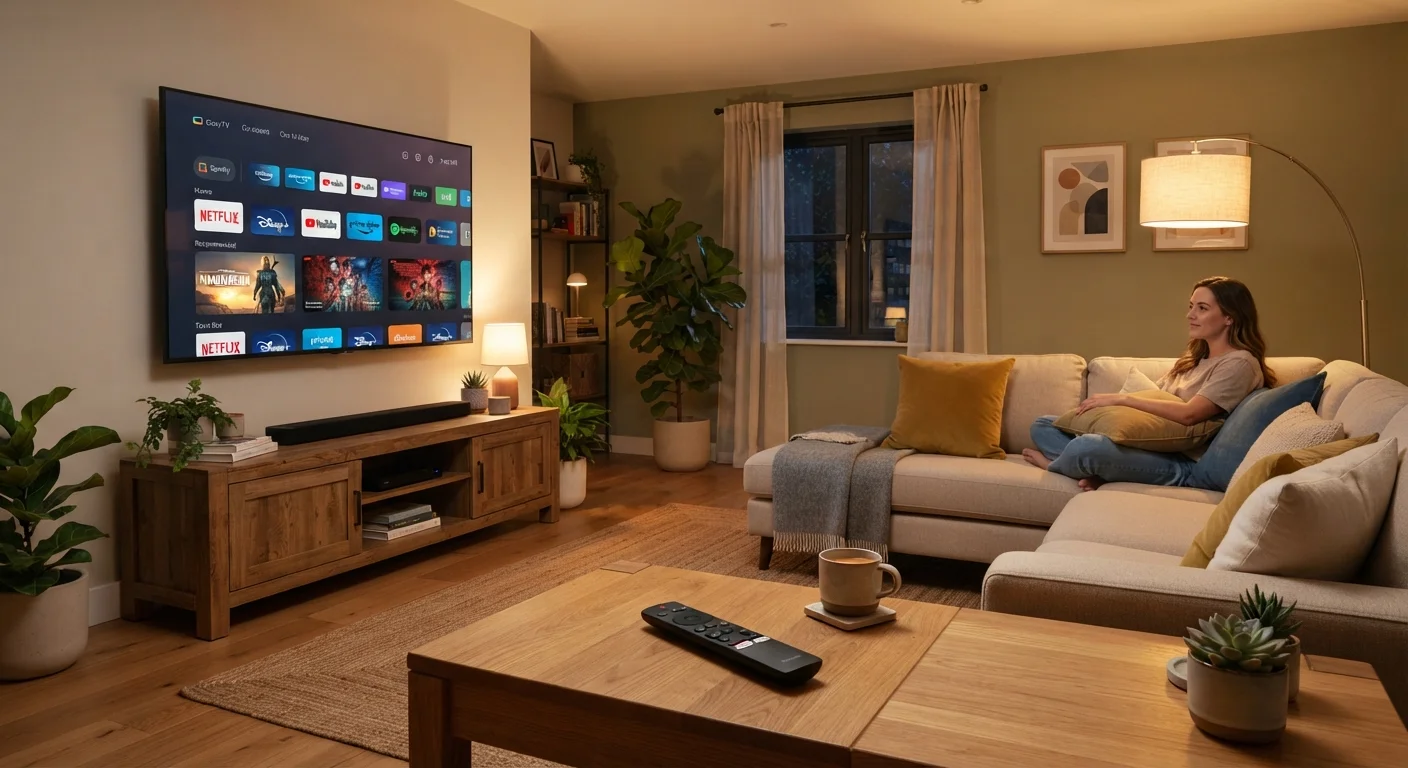
A smart TV's built-in platform — such as Roku TV, Google TV, Amazon Fire TV, or a manufacturer's own interface — connects directly to the internet through your home Wi-Fi or an Ethernet cable. From there, it can access free ad-supported streaming services, subscription video platforms, and free broadcast TV via a digital antenna connected to the TV's coaxial input. Cable or satellite is an entirely separate layer that sits on top of the TV's own capabilities. Many households have eliminated cable subscriptions entirely while continuing to use their smart TVs as their primary screen.
Myth
Higher refresh rate numbers (like 120Hz) always mean a smoother, better picture.
Fact
Advertised refresh rate figures on smart TVs are often achieved through motion-processing software rather than the panel's native refresh rate, and the effect is not universally preferred.
A television's native refresh rate describes how many times per second the panel physically updates. Many TVs advertise numbers such as "240 effective Hz" or "TruMotion 120" that refer to motion interpolation — a software process that generates artificial frames between real ones to reduce blur during fast motion. This effect, sometimes called the "soap opera effect," makes film content look unnaturally smooth to many viewers. It is not a sign of a higher-quality panel; it is a processing mode that can typically be turned off. When comparing refresh rates, look for the panel's native rate (60Hz or 120Hz are the two common native rates in consumer TVs) rather than the manufacturer's marketed figure.
Myth
Turning off a smart TV completely eliminates its energy draw.
Fact
Most smart TVs continue to draw a small amount of power in standby mode to maintain network connections and enable instant-on features.
Standby power consumption for a smart TV is typically low — often between 0.5 and 2 watts — but it is not zero. Over a year, that adds up to a modest but real addition to your electricity bill. For households concerned about standby consumption, using a power strip with an on/off switch to fully cut power when the TV is not in use is an effective solution. Our overview of home electronics and idle energy use looks at which devices draw the most power when not actively in use.
Myth
Smart TVs receive software updates indefinitely, just like a phone or computer.
Fact
Most smart TV manufacturers support software updates for a limited number of years, after which the built-in apps and security patches may stop arriving.
Unlike smartphones — where a defined update window is increasingly communicated to buyers — smart TV software support timelines are rarely advertised clearly at point of purchase. In practice, many TVs stop receiving meaningful platform updates within three to five years of manufacture. When this happens, streaming apps embedded in the TV may fail to load new content libraries or stop functioning altogether as app developers move on to newer platform versions. Connecting an external streaming device (a small HDMI dongle or set-top box) to an older TV is a common and cost-effective way to extend its useful life without replacing the hardware.
What These Facts Mean for How You Use Your TV
Understanding what smart TVs actually do — and don't do — gives you meaningful control over your setup. If data collection concerns you, spend 10 minutes in your TV's privacy or settings menu; most platforms offer an opt-out for automatic content recognition (ACR), the primary data-gathering tool built into smart TV software. Disabling ACR does not affect streaming or picture quality.
On the picture side, resolution is only one variable. Panel technology (OLED, QLED, or standard LED-LCD), local dimming, and peak brightness all influence what you actually see. Our guide to TV resolution labels breaks down what 4K, 8K, and HD really mean in a typical living room context.
For households thinking about placement, mounting a TV on the wall involves safety and viewing-angle considerations that go well beyond screen size. And if you're comparing myths across device categories, the truth behind common laptop myths follows the same evidence-based approach applied here.
Check Privacy Settings When You First Set Up a TV
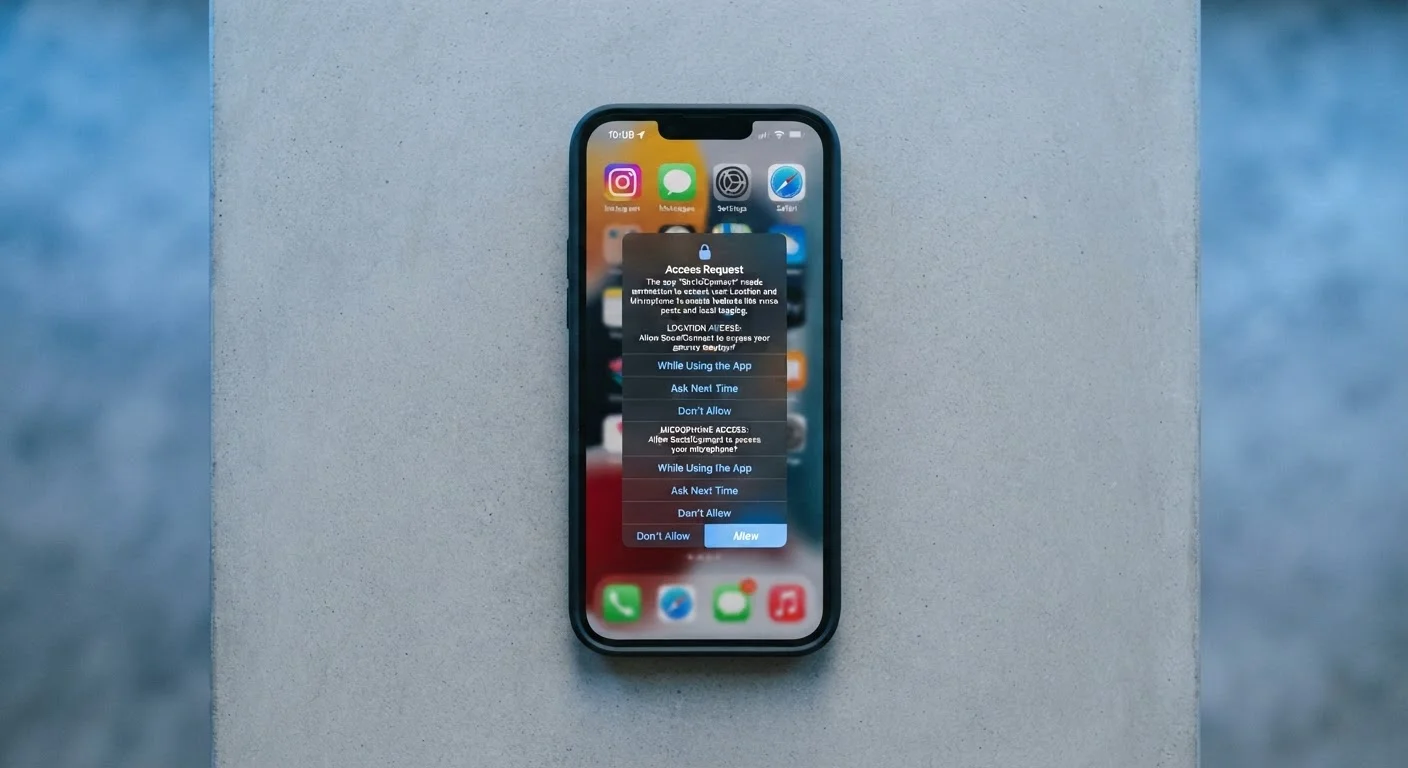
Most smart TVs enable data collection features like ACR during initial setup, often buried in terms you scroll past quickly. Before you start watching, navigate to the privacy or data settings menu and review what's enabled. Opting out of ACR and limiting ad personalization takes only a few minutes and does not affect the TV's core functionality.
Smart TV software longevity is a practical concern worth planning for. Unlike smartphones, which receive more predictable update windows, smart TV platforms vary widely by manufacturer in how long they receive security patches and app updates. When a TV stops receiving updates, its built-in apps may become unreliable or stop working — though an external streaming device plugged into an HDMI port can extend the TV's usefulness considerably.