Why Some Staples Are Built for Bulk
Bulk buying works when two conditions align: the item has a long shelf life, and your household uses it often enough that none goes to waste. For pantry staples, those conditions come together more reliably than almost anywhere else in the grocery store.
The per-unit savings from larger package sizes are real and well-documented in consumer pricing research — but they only translate into actual savings when the product gets used before it expires or degrades. That's why understanding when bulk buying actually makes sense is worth doing before you commit to a warehouse membership or a 25-pound bag of anything.
The items below are consistently identified as strong candidates for bulk purchasing based on shelf stability, price-per-unit differences, and practical household utility. Think of this as a framework, not a universal prescription — your storage capacity and cooking habits are the final word.
White and Brown Rice
Rice is one of the most straightforward bulk buys in any pantry. Properly stored in an airtight container in a cool, dry location, white rice can remain usable for several years. Brown rice has a shorter window — roughly six months to a year — due to its natural oils, but it's still a strong candidate if your household eats it regularly.
The per-pound price difference between a 2-pound bag and a 20-pound bag is typically substantial, often exceeding 30–40% depending on the retailer and variety. For a household that eats rice multiple times a week, the math favors buying larger quantities consistently.
White rice stored properly can remain usable for years — making it one of the most reliable bulk purchases available.
Dried Lentils and Beans
Dried legumes — lentils, black beans, pinto beans, chickpeas — are exceptionally shelf-stable and nutritionally dense. Stored correctly, they last one to two years without meaningful quality loss. They're also one of the more affordable protein sources in any grocery category, and the unit price drops noticeably in larger bags.
Unlike canned beans, dried legumes require advance soaking and cooking time, so they suit households that plan meals rather than cook on impulse. If that describes your routine, buying dried beans in quantity offers reliable savings with minimal risk of waste.
Dried legumes combine long shelf life with one of the sharpest per-unit price drops when purchased in bulk.
Rolled Oats
Plain rolled oats — not instant flavored packets — store well for one to two years in a sealed container and are used across breakfasts, baked goods, and savory dishes. The bulk price advantage is consistent: larger containers at warehouse or bulk-food stores routinely cost significantly less per ounce than standard grocery shelf sizes.
Because oats are versatile and have broad household appeal, they tend to get used before quality declines — which is what separates a smart bulk purchase from a potential waste.
Rolled oats are versatile enough that large quantities rarely go to waste before the shelf life runs out.
Cooking Oil
Cooking oils like canola, vegetable, and olive oil are used in nearly every home kitchen on a near-daily basis. Larger containers typically cost less per fluid ounce, and oil's shelf life — generally one to two years unopened — makes bulk sizing practical for most households.
The key caveat: once opened, oil should be used within a few months and stored away from heat and light to prevent rancidity. If your household goes through oil slowly, a moderately large bottle may be smarter than the largest available size.
Cooking oil's daily utility and multi-year shelf life make larger containers a practical and consistent money-saver.
Canned Tomatoes and Tomato Products
Canned tomatoes, crushed tomatoes, and tomato paste have shelf lives measured in years and serve as the base for an enormous range of everyday meals. Buying a case or larger pack typically yields a meaningfully lower per-can cost, and these items don't require any special storage conditions beyond a cool, dry shelf.
Because they're versatile and appear in cuisines across the board — pasta sauces, soups, stews, chilis — the risk of over-purchasing is lower than with more specialized ingredients. This is the kind of item where bulk purchasing almost always pays off in practice.
Canned tomatoes check every box for bulk buying: long shelf life, daily utility, and a clear per-unit price advantage.
All-Purpose Flour
For households that bake with any regularity, all-purpose flour in larger quantities — typically 10- to 25-pound bags — costs noticeably less per pound than standard 5-pound grocery store bags. Stored in an airtight container, all-purpose flour stays fresh for roughly 12 to 18 months.
Specialty flours (almond, coconut, buckwheat) are a different story — their higher fat content shortens shelf life considerably, and they're typically used in smaller quantities. For those, standard retail sizes are usually the wiser choice.
All-purpose flour rewards regular bakers with clear bulk savings, while specialty flours are better bought in smaller amounts.
Pasta
Dried pasta is shelf-stable for two or more years and is one of the most consistently used pantry staples in American households. Unit price differences between standard grocery packs and bulk or warehouse sizes are reliable and predictable — this isn't a category where you need to do extensive price research to confirm the savings are real.
Variety is worth considering: buying large quantities of a single shape works best if your household consistently uses that type. Mixing formats — spaghetti, penne, rotini — in reasonable quantities keeps options open without overcommitting to any one item.
Dried pasta's two-year shelf life and near-universal household use make it one of the safest bulk pantry purchases.
Making Bulk Buying Work for Your Household
Stocking up on the right staples is only half the equation. How you store and rotate items determines whether the savings hold. Airtight containers protect dry goods from moisture and pests, extending usability well beyond what a loosely sealed original bag would allow. Label purchases with the date opened so nothing sits forgotten at the back of a shelf.
Use Airtight Containers to Extend Shelf Life
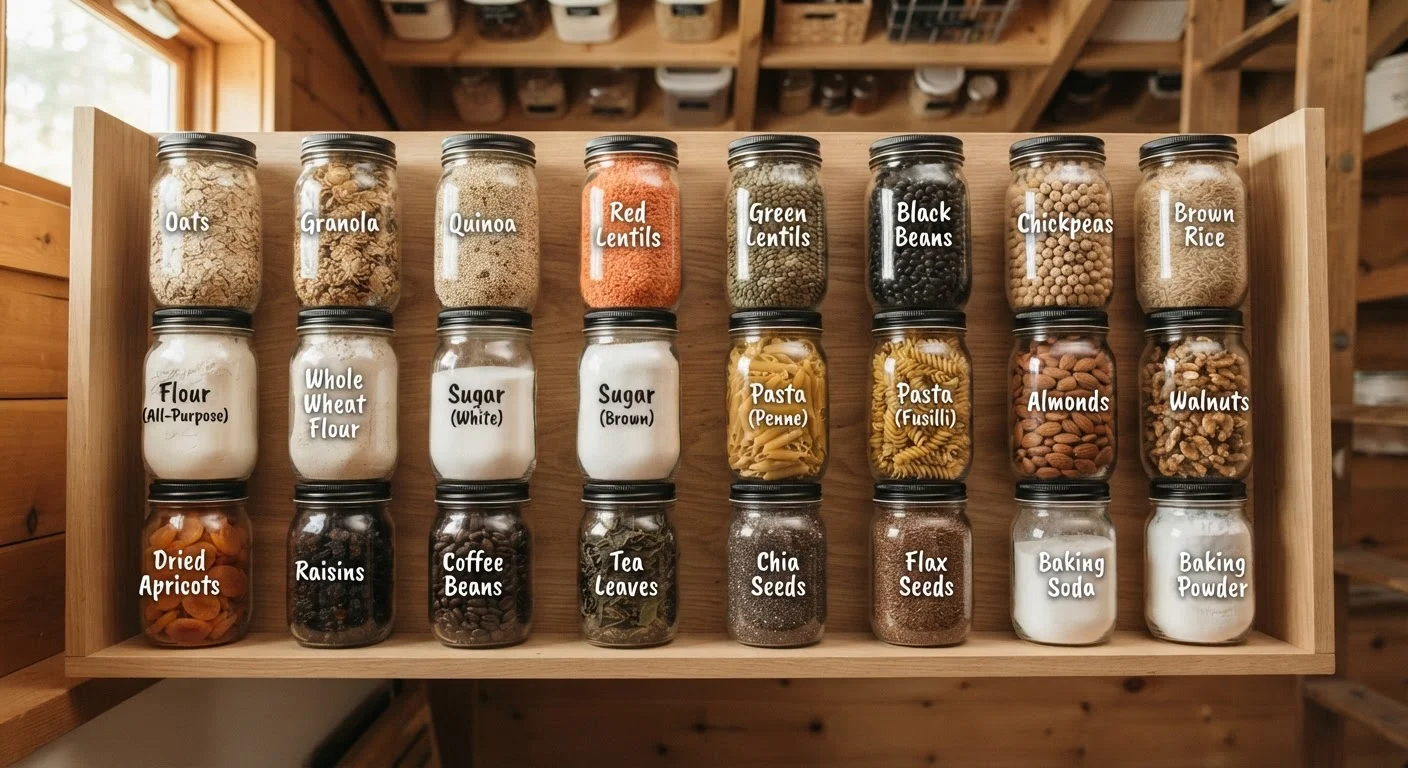
Transferring bulk dry goods into airtight containers — glass jars or food-grade plastic bins — immediately after purchase significantly reduces moisture exposure and pest risk. Label each container with the purchase date and estimated use-by window. This simple step is often the difference between a bulk purchase that delivers savings and one that gets thrown out half-used.
If storage space is limited, consider splitting bulk purchases with a neighbor or family member — you each capture the lower unit price without committing to quantities you can't realistically use. It's a simple approach that fits naturally into a structured grocery planning habit.
Not every pantry item is a smart bulk purchase. Spices, specialty flours, and items you use only occasionally can lose potency or go stale long before you reach the bottom of a large container — some seemingly economical staples quietly drain grocery budgets exactly this way. For broader household value decisions, the same logic applies: knowing where to spend more and where to hold back is the foundation of confident household budgeting.